Part 2
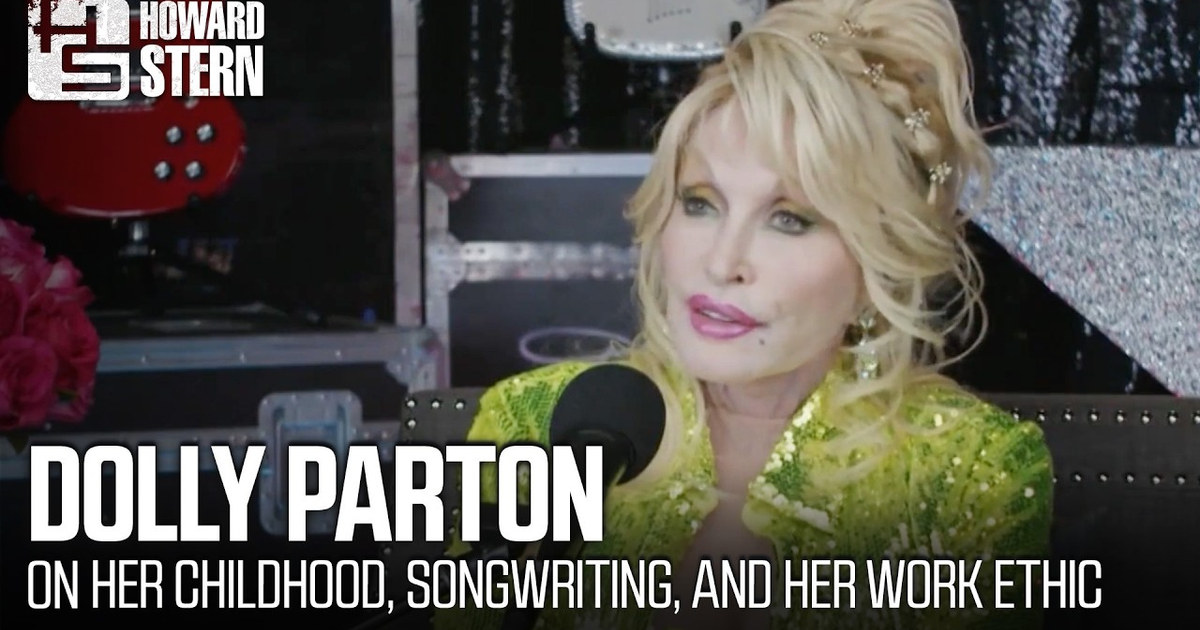
That's the thesis of this whole article in one exchange. Nobody hands you a career. You build the rig, you learn the glass, you show up. Dolly knew the second she stepped on that stage that it was what she was supposed to do for the rest of her life. She's still doing it. That's not luck. That's a locked-off shot that's been running for six decades.
When Stern presses on the guitar playing — the finger-picking, not just strumming a couple of chords — Dolly downplays it again. But here's the technical read: she's an accomplished player who learned from a relative in a living room, not a conservatory. That's a natural-light education. No budget, no crew, just a family that sang and one uncle who took an interest. The production value came later. The craft started at seven.
Now look at the family like a lighting rig. Twelve kids. A mother who had all of them by the time she was 35. A father who, in Dolly's words, made his living by the sweat of his brow and the bend of his back. Dolly says she's a good combination of mom and daddy — spiritual and musical from her mother's people, work ethic from her father. That's a classic two-source setup: a soft, warm key from one side, a hard, directional backlight from the other. Neither source alone makes the portrait. Together they give it dimension.
[[AD]]
This matters because people love to frame Dolly's story as pure God-given sparkle. It isn't. The musicality came from Mama's people, sure. But the discipline — the thing that actually gets a song finished, a show booked, a career sustained — came from a father who worked with his back. Dolly didn't inherit a spotlight. She inherited a work rate and a melody. Then she combined them.
Stern goes for the psychological close-up: twelve children, a mother who had them all by 35, no wealth, no time. Was the whole drive just "can someone please notice me?" It's a good question. It's also the kind of question that wants a trauma narrative. Dolly doesn't give one. She says she wasn't to that depth or degree. She just noticed she was getting attention. Her mama would say, "We're going to get you a little guitar — I want you guys to hear what this little young'un wrote." So Dolly played, and she got the attention. She realized early on that if nothing else, it was a good way to be noticed.
Notice what she does and doesn't say. She doesn't say she was neglected. She doesn't say she was desperate. She says she was serious about the work. And she says she saw this was a way out of the mountains — not because she was ashamed of where she came from, but because she was proud of her family and her personality was enough to get out and maybe make something of it. That's not a wound talking. That's a location scout looking at the terrain and figuring out the exit route.
Then there's the early material. Dolly wrote what she calls "pretty morbid songs at 7 and 8 years old" — about relatives killed in the war, based on everything she heard them talk about. She wrote about what she heard, what she felt, what she saw. That's a young writer processing real material, not a novelty act doing a cute trick for the grown-ups. Seven years old, writing about war dead. That's not a child star. That's a documentarian with a guitar.
Stern asks the jealousy question straight: were the siblings envious? Dolly says they were more proud. Some were just as good, she says, but she had that extra drive. And if anyone said something bad, Mama would have smacked them. That's the whole dynamic in three sentences. A big family, real talent spread across it, one kid with the engine to actually leave the holler — and a mother enforcing the peace. Several siblings went on to record and write songs too. This wasn't a zero-sum house. It was a house where the one with the drive got the green light.
Here's where Stern brings in Arnold Schwarzenegger's book on hard work, and where the thesis snaps into focus. Dolly's lyric from "Sacrifice" says it better than any motivational book: you don't drink the water if you don't dig the well. That's not a decoration on this story. That's the story. The well is the guitar lessons from Uncle Bill. The well is the rhyming at the kitchen table. The well is the drive that got her out of the mountains and onto a stage at nine. The water is everything since.
So when people call Dolly Parton a natural, a savant, a born star — they're only seeing the final grade. They're not seeing the lighting rig. Twelve kids, one mother, one father, one Uncle Bill, one little guitar, and a seven-year-old who decided the stage was where she belonged for the rest of her life. That's the setup. Everything after is just her holding the frame.
The Grip Work: Ziploc Bags, Daily Pages, and Why Momentum Is a One-Take Shot
[[VIDEO]]
Howard Stern sets the scene like a second-unit director blocking a crucial insert: Dolly Parton carries a pad and pen in a Ziploc bag so her ideas stay waterproof. It’s not a cute anecdote. It’s a rain cover for inspiration—the unglamorous grip and electric work that keeps the shot alive when weather, chaos, or life tries to kill the take.


