Part 2
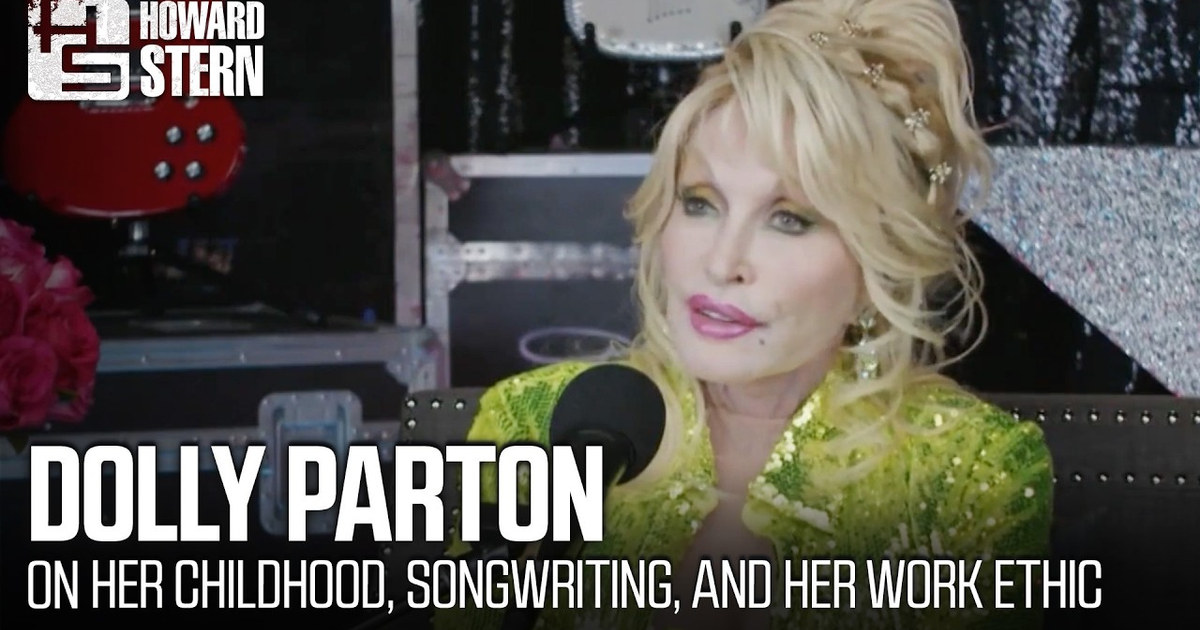
Here's the part that reads like a design decision. In a family of twelve, talent wasn't just expression — it was a mechanism for getting noticed. Dolly has been candid with Stern about that dynamic. The spotlight wasn't handed to her; she engineered her way into it. That's the first commit in a career-long repo of self-promotion, and the architecture never really changed. She just kept scaling it.
Now let's talk about the early songwriting, because this is where the craft nerds get to feel superior for a second — and then immediately get humbled. The young Dolly was pulling from dark material. She overheard adult stories, hard stories, and turned them into songs. Themes that a nine-year-old had no business accessing emotionally, let alone rendering. But — and this is the honest part — the craftsmanship wasn't there yet. Early work was raw. Rough edges. The kind of code that runs but you wouldn't ship.
[[VIDEO]]
What separates a hobbyist from a professional isn't the first draft. It's the commit loop. Dolly kept improving. Relentlessly. The songwriter who would eventually write "Jolene" and "I Will Always Love You" — both released in 1973 and 1974 respectively — didn't arrive fully formed. She was iterated. And that's the thing about treating filmmaking and songwriting as engineering with a soul: the soul is the part you can't teach, but the engineering is the part you can. Dolly had the soul at nine. She spent the next several decades building the engineering.
There's a fascinating tension in how she talks about her own skills. She downplays them. Constantly. The guitar playing, the songwriting — she'll wave it off. But watch the actual output. The guitar work is deceptively precise. The song structures are airtight. The storytelling is economical in a way that takes most writers decades to learn. Dolly didn't skip the learning curve. She just refuses to brag about climbing it.
For the genre fans: this is why the rhinestones work. The glamour isn't a mask over an empty core — it's the UI on top of a very robust backend. For the craft nerds: this is why the songs endure. Every one of them is built on a foundation that was poured when she was a kid in Sevierville, learning that attention is earned, not given.
And here's the bridge to everything that comes next. The same person who engineered her own spotlight as a child would go on to engineer one of the most durable careers in entertainment history. Not by accident. By design. The prodigy didn't just have talent. She had a plan. And she's been executing it for over sixty years.
Rockstar, Rhinestones, and the Art of Reinvention
If you came for the genre thrills, you already know the headline: Dolly Parton released her first rock album, *Rockstar*, in 2023. And if you came for the craft, you know the headline is actually a subheadline — because the real story is how she engineered a late-career pivot with the precision of a systems architect migrating a legacy codebase to a new platform. No downtime. No data loss. Just a seamless rollout.
*Rockstar* isn't a vanity project. It's a stress test. Dolly didn't just cover rock songs; she rebuilt them with a guest list that reads like a Rock & Roll Hall of Fame induction ceremony. Paul McCartney and Ringo Starr show up. So do Steven Tyler, Elton John, Sting, Joan Jett, and Lizzo. The album runs 30 tracks and clocks in around two hours and twenty minutes — a runtime that would be indulgent if it weren't so meticulously sequenced. For genre fans, it's a jukebox dream. For craft nerds, it's a masterclass in collaboration logistics.
Consider the engineering challenge: Dolly's voice is a high, bright, crystalline signal. Rock is a low, distorted, analog wall of sound. Most producers would compress one to fit the other. Instead, she re-arranged the entire signal chain. On 'Let It Be,' she trades verses with McCartney and Starr, letting the original's melancholy sit inside her Tennessee twang. On 'Free Bird,' she doesn't try to out-Lynyrd Lynyrd Skynyrd; she turns the guitar solo into a vocal harmony. It's not imitation. It's translation.
[[AD]]
The genre fan gets the spectacle: Dolly in leather, Dolly with a Gibson, Dolly trading licks with actual gods. The craft nerd gets the process: how do you honor a canon without becoming a cover band? Answer: you treat every song as a spec, not a scripture. You identify the invariant (the melody, the emotional core) and you refactor everything else. That's not blasphemy. That's engineering with soul.
Then there's *Behind the Seams: My Life in Rhinestones*, the book she released alongside the album. On the surface, it's a coffee-table tome: 300 pages of costumes, wigs, and that legendary 1978 *Playboy* cover. Genre fans will flip through it like a museum catalog. But read the captions. Dolly doesn't just describe the outfits; she describes the decisions. Why this rhinestone pattern? Why this collar? Why this wig for this tour and not that one? Every garment is a design document.
For the craft nerd, the book is a version history. You can trace her visual API from the early Porter Wagoner Show days to the *9 to 5* era to the *Rockstar* press tour. She admits some looks were mistakes. She admits she was 'just being myself' — but that self was iterated, debugged, and redeployed for six decades. The book is not nostalgia. It's a changelog.


