Part 1
The Two Audiences: Genre Fans and Craft Nerds
There are two kinds of Dolly Parton fans. The first kind loves the rhinestones, the wigs, the Playboy cover, the sheer spectacle of a woman who once said it costs a lot of money to look this cheap. The second kind loves the songwriting, the fingerpicking, the vocal phrasing, the sheer engineering of a hit like "Jolene" or "9 to 5." If you're reading this, you're probably a little of both. And that's exactly the point.
Dolly Parton has spent six decades satisfying both crowds without ever privileging one over the other. She's a genre icon and a craft engineer, a pop-culture monument and a working musician's musician. You can love her for the sparkle or you can love her for the structure. Most of us end up loving her for both.
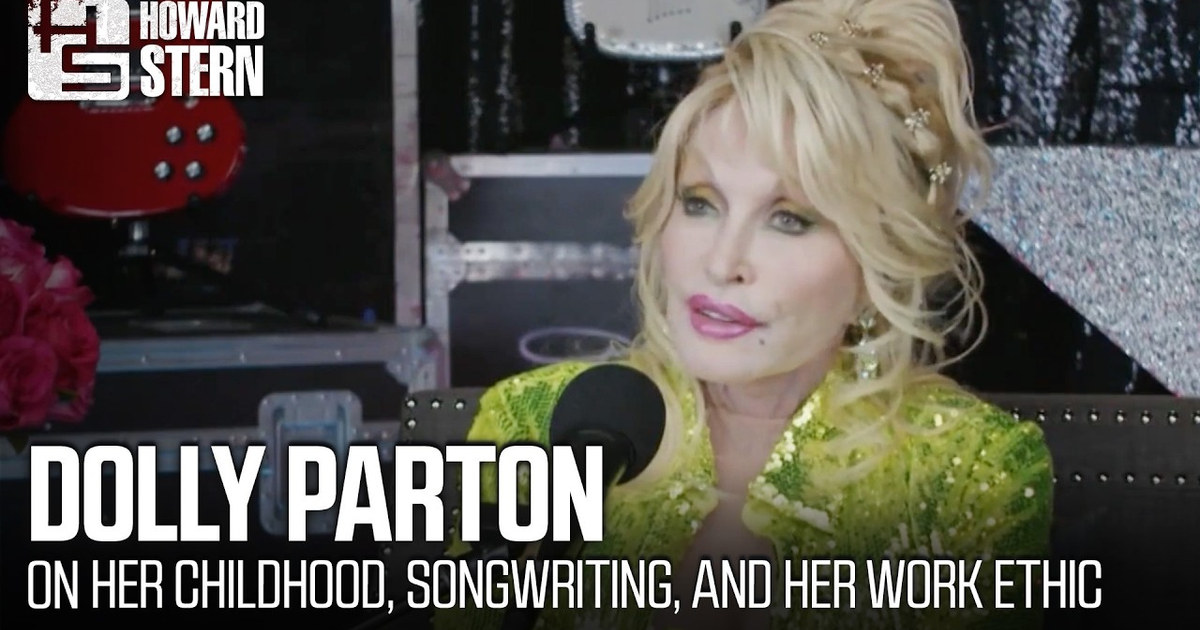
Her recent appearance on The Howard Stern Show was a perfect example of this dual appeal. She was there to promote two very different projects: her 2023 rock album Rockstar and her 2023 book Behind the Seams: My Life in Rhinestones. One is a genre exercise, a late-career pivot into rock and roll. The other is a visual memoir, a coffee-table monument to her own image. Together, they capture the two halves of Dolly Parton: the entertainer and the archivist, the showman and the engineer.
Stern, to his credit, seemed genuinely dazzled. "You look fantastic," he told her, after she explained that her Nashville studio was dressed with props and that she'd chosen "the most sparkly thing" in her wardrobe to "dazzle" him. It was a classic Dolly move: self-aware, playful, and completely in control of the frame. She knows exactly what she's doing. She always has.
For the genre fans, this is catnip. Dolly's style is not an accident; it's a system. The rhinestones, the heels, the hair — they're not just decoration. They're branding, armor, and punchline all at once. Her Playboy cover, which she recreated decades later for her husband Carl Dean's birthday, is the ultimate example. It's a gag, a tribute, and a power move. And it's all documented in Behind the Seams, a book that treats costume design with the same seriousness a director's commentary treats cinematography.
But here's where the craft nerds start paying attention. Dolly didn't just wear the rhinestones; she wrote the songs that paid for them. She was on television at nine years old, writing songs and singing on local Knoxville stations. By the time she moved to Nashville the day after her high school graduation in 1964, she had already spent a decade honing her craft. That's not luck. That's iteration.
Stern asked her if she considered herself a savant or a prodigy. It's a fair question. At nine, she wasn't just performing; she was composing. She was moving on her own, without an overbearing stage mother, driven by something internal. That's the engineer's mindset: build, test, refine, repeat. The genre fans see the sparkle. The craft nerds see the version control.
This is why Dolly Parton is such a fascinating subject. She's not a guilty pleasure or a niche obsession. She's a case study in how to build a career that satisfies both the people who want to be entertained and the people who want to understand how the entertainment is made. You can analyze her chord progressions or you can just enjoy the show. Both are valid. Both are rewarded.
In the sections that follow, we'll alternate between these two lenses. Some sections will lean into the genre appeal: the glamour, the myth, the cultural moments. Others will dig into the craft: the songwriting, the musicianship, the business decisions. Because Dolly Parton doesn't make you choose. She's been running both tracks in parallel for sixty years, and she's not slowing down.
So whether you're here for the rhinestones or the rhyme schemes, you're in the right place. Dolly's career is a masterclass in giving the audience exactly what they want while never dumbing down the work. That's not just showmanship. That's engineering with a soul.
The Prodigy Who Engineered Her Own Spotlight
Let's get the timeline straight, because the numbers matter if you're the kind of viewer who audits the commit history. Dolly Parton was born in 1946 in Sevierville, Tennessee — one of twelve children. Twelve. That's not a family, that's a distributed system with no load balancer. Attention was the scarcest resource in the house, and every kid was competing for a slice of it.
So what does a seven-year-old do in that environment? She picks up a guitar. Her Uncle Bill taught her the fundamentals, and by all accounts she absorbed them fast. By nine she was writing songs. By nine she was also appearing on television. Read that again: writing and performing on TV in the same year, before double digits. If you're here for the genre-icon stuff, that's the origin story of the rhinestone legend. If you're here for the craft, that's a kid who identified a bottleneck — visibility — and started building her own pipeline to it.
[[AD]]
Howard Stern put it to her directly: at nine years old, writing songs, singing, on television — was she a savant or a prodigy? And he noted something sharp: it wasn't like she had some overbearing mother pushing her. She was moving on her own. Dolly's answer was simple. At nine, she was determined to start singing on TV. Determined. Not encouraged. Not enrolled. Determined.


