Part 1
The Consensus: Dolly Parton Is America's Beloved Saint
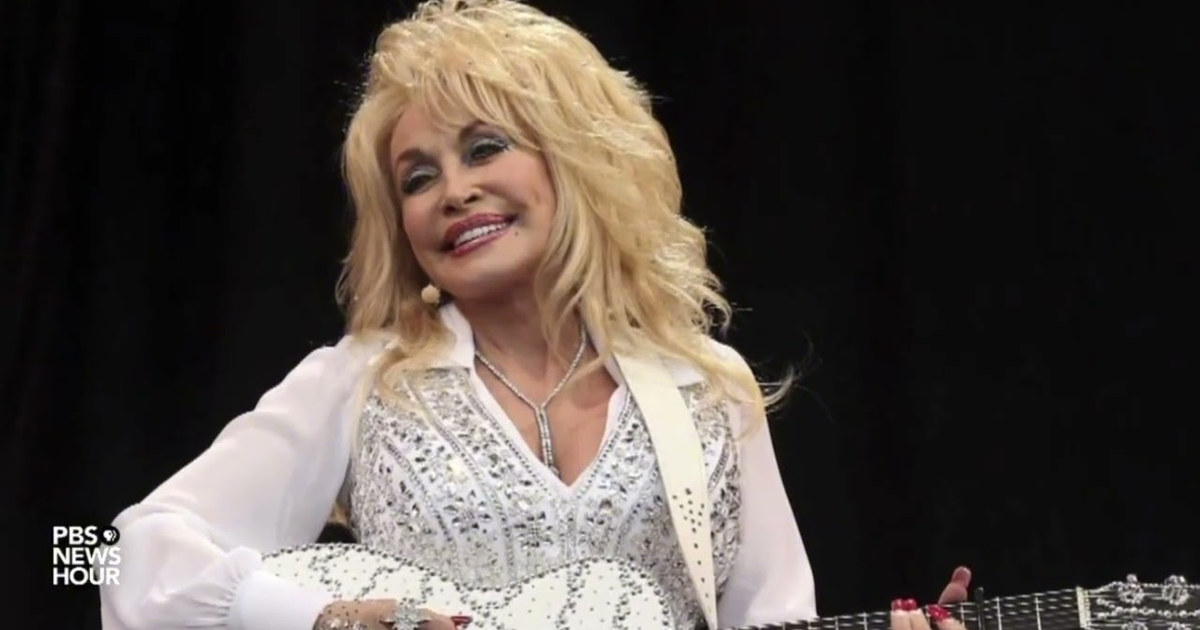
The consensus is in, and it is unanimous: Dolly Parton is a saint. She is America's bipartisan national treasure, the one celebrity you are not allowed to dislike. She is the glittering, wig-wearing grandmother of us all, and her only controversy is that she refuses to have one. Everyone from 9-to-5 office workers to her conservative Tennessee neighbors to liberal Hollywood elites claims her. She is the rare figure who does not make anyone choose a side.
And look, the numbers back up the sainthood. Dolly became the first country artist to chart a Top 20 Billboard hit across seven consecutive decades, beginning in the '60s. Seven decades. That kind of longevity usually invites backlash. The Beatles got backlash. Taylor Swift gets backlash. Bruce Springsteen gets backlash. Dolly Parton gets a statue proposal and a Tennessee license plate.
But here is my contrarian thesis, and I will state it plainly: the saint framing is not just wrong. It is condescending. It reduces a sharp, driven, self-described workaholic to a mascot. It turns a songwriter who has been producing hits since before most of us were born into a hug with a punchline. The consensus wants the wigs and the warmth. It does not want the craft.
When the interviewer asks Dolly whether she sees herself more as the singer or the writer, she does not hesitate. "I take myself more serious as a songwriter than anything else," she says. "There are many writers greater than me, but that's just been the thing that I've seemed to enjoy the most cuz it's my therapy, it's my pleasure, it's my job, it's my joy." That is the real Dolly talking. The consensus ignores that answer because it complicates the mascot. Saints do not have jobs. Saints have halos.
Now, to be fair to the other side — and I genuinely mean this — there is a reason the saint read exists. In a polarized era, Dolly is the rare figure who does not make people choose sides. She talks about family rifts over politics in Tennessee without naming enemies. "I've seen what a great divide it has caused even within my own family and amongst my own friends," she says. "We need to pay a little more attention to being human beings rather than getting so caught up in so much other stuff." That is genuinely rare. That is genuinely valuable. But valuable is not the same as accurate.
The saint story also flattens a career that is almost absurdly wide. This is the woman who wrote "Jolene" in 1973 and "I Will Always Love You" in 1974 — two songs that have been covered, sampled, and wept over for half a century. She starred in the 1980 workplace comedy 9 to 5, directed by Colin Higgins, and turned it into a franchise. She headlined the 1982 musical The Best Little Whorehouse in Texas, based on the Broadway show. She executive produced and wrote new music for the 2018 Netflix film Dumplin', starring Danielle Macdonald and Jennifer Aniston. Those are not just credits. They are proof of range the saint narrative flattens into a single warm smile.
So here is what I am going to do over the next few sections. I am going to dismantle the consensus in three parts. First, the songwriter is the real Dolly, not the saint — and the songwriter is far more interesting. Second, the Imagination Library is not just a sweet tearjerker about her father; it is a business and legacy play, and that is a compliment. Third, her refusal to fight is a strategy, not sainthood — and it has costs. Then, at the end, I will give you the strongest counter-argument, the one that says her soft power actually changes more lives than combat ever could. I will take it seriously. I still think the saint framing is wrong.
Because saints do not write "Jolene." Saints do not run a business empire. Saints do not tell an interviewer, without blinking, that they take themselves more seriously as a songwriter than as anything else. That is not a mascot. That is a professional. And professionals are a lot more interesting than saints.
Wrong #1: The Saint Story Buries the Songwriter — and the Songwriter Is the Real Dolly
The consensus goes like this: Dolly Parton is America's sweetheart, a living saint in a rhinestone halo. She's the benevolent queen of country, the patron saint of literacy, the woman who can heal political divides with a wink and a joke. It's a lovely story. It's also wrong. Not because Dolly isn't warm or generous—she is—but because the saint framing buries the actual artist underneath. And the artist is far more interesting than the saint.
Start with her own words. In a recent interview, Dolly was asked whether she sees herself more as a singer or a writer. Her answer wasn't a humble deflection. It was a declaration: "I take myself more serious as a songwriter than anything else. There are many writers greater than me, but that's just been the thing that I've seemed to enjoy the most cuz it's my therapy, it's my pleasure, it's my job, it's my joy." Therapy. Pleasure. Job. Joy. That's not a hobby. That's an identity. And notice the humility—"many writers greater than me"—which is the opposite of saintly grandiosity. Saints don't admit competition. Working artists do.


