Part 3
The Ripple Effect: Why the Imagination Library Matters
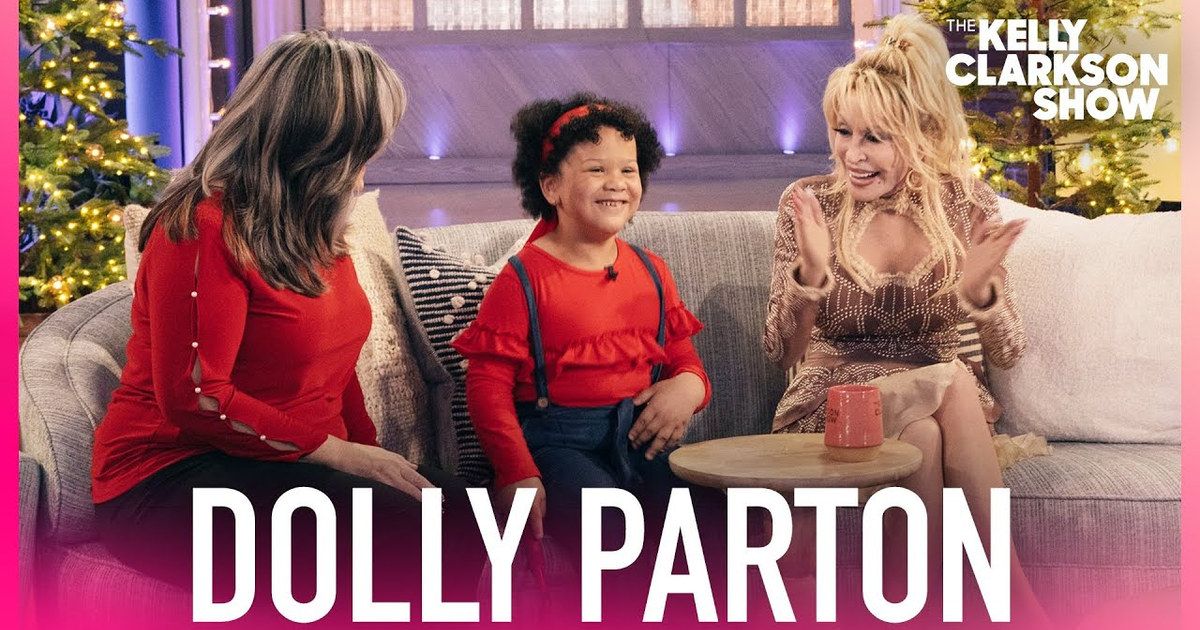
You have probably seen the clip by now: a six-year-old blind girl named Rosie singing “Amazing Grace” with Dolly Parton on The Kelly Clarkson Show, the audience melting, Dolly beaming like a proud grandmother. It’s a tearjerker, sure. But it also raises a bigger question: can a single celebrity’s pet project actually move the needle on early childhood literacy? The Imagination Library is the test case. And the evidence—from Rosie’s story to the program’s global footprint—suggests the answer is a resounding yes.
[[AD]]
Launched in 1995, the Imagination Library mails free, high-quality books to children from birth to age five, regardless of family income. Nearly 200 million books later, one in 10 American children under five receives a monthly package. That’s not a vanity project; it’s infrastructure. And like any good infrastructure, its impact ripples outward in ways you can’t always predict.
Take Rosie. Born medically fragile with septo-optic dysplasia, she was blind and not expected to walk or talk. But when she was eight months old, she hummed Marvin Gaye’s “What’s Going On” perfectly in tune. Soon after, braille books from the Imagination Library started arriving. Today, Rosie is in first grade at RideOut Elementary School in Clay County, Florida, reading and writing braille before most kids read print. Her teachers say she may be gifted. Her mother, Liz, credits the program with opening the door. “Only about 10% of blind children have the opportunity to be braille-literate,” Liz told Dolly. “Our daughter was exposed to pre-braille and braille, and that is so important.”
Dolly’s response? “That’s what makes it all worthwhile.” You can hear the emotion in her voice. This isn’t a corporate spokesperson reading a script; it’s a woman who grew up poor in rural Tennessee, the fourth of twelve children, and knows firsthand what a book can do. Her father, Robert Lee Parton, was illiterate—a fact she’s often said inspired the Imagination Library. When she says her dad would be proud, you believe her.
The viral moment—Rosie and Dolly singing “Amazing Grace” and then “The Lion Sleeps Tonight” together—is more than just a feel-good clip. It’s a perfect illustration of what the program does: it doesn’t just drop books into homes; it creates moments of connection, joy, and discovery. Rosie’s request—“How about you sing me a song?”—and Dolly’s immediate willingness to share the spotlight show the heart behind the initiative. This is literacy as love, not charity.
But the Imagination Library isn’t the only player in the early literacy game. Reach Out and Read, founded in 1989, partners with pediatricians to give books to children at checkups and coach parents on reading aloud. First Book, started in 1992, distributes new books to schools and programs serving kids in need. Both are vital. What sets Dolly’s program apart is its direct-to-home model and its scale. By mailing books monthly, it builds a personal library for every child, turning reading into a routine. And with braille and bilingual editions now available, it’s reaching communities that are often overlooked.
The program has expanded to five countries—the United States, Canada, the United Kingdom, Australia, and Ireland—and shows no signs of slowing. In 2023 alone, it distributed over 2 million books per month. That’s a lot of bedtime stories. And while critics might argue that simply giving books isn’t enough without parental involvement, the data suggests otherwise: studies show that Imagination Library participants are more likely to be read to daily and enter kindergarten better prepared. It’s not a silver bullet, but it’s a powerful nudge.
Rosie’s story is the anecdotal proof. Here’s a child who beat the odds, who found her voice through braille and music, and who now sees the world “through the love and generosity of people like you, Dolly.” That’s the ripple effect. One book leads to another, one child inspires a family, one celebrity uses her platform to change millions of lives. Dolly Parton may be known as the Queen of Country, but to kids like Rosie, she’s simply the Book Lady. And that legacy—quiet, consistent, and profound—might just be her greatest hit.
As for what’s next? Dolly’s brand of philanthropy raises a bigger question: can other celebrities follow suit without making it about themselves? That’s a story for another day. For now, let’s just appreciate the music, the books, and the blind girl who sang “Amazing Grace” with the woman who gave her a world of words.


