Part 3
But here's where Rosie's story cracks the whole thing open. When Liz, Rosie's mom, told Dolly that only about 10% of blind children have the opportunity to be braille-literate, you could see Dolly's face shift. That statistic isn't just sad. It's a systemic failure. Braille books are expensive. A single print book might cost $10. A braille book? Try $100 or more. They're bulky. They're heavy. They're produced by specialized presses. Most school districts don't have the budget. Most libraries don't have the shelf space. So blind kids grow up without the same access to language, to stories, to the sheer joy of reading that sighted kids take for granted. The Imagination Library doesn't just mail books. It mails braille books. It mails pre-braille books for babies. It levels a playing field that has been tilted against blind children for generations.
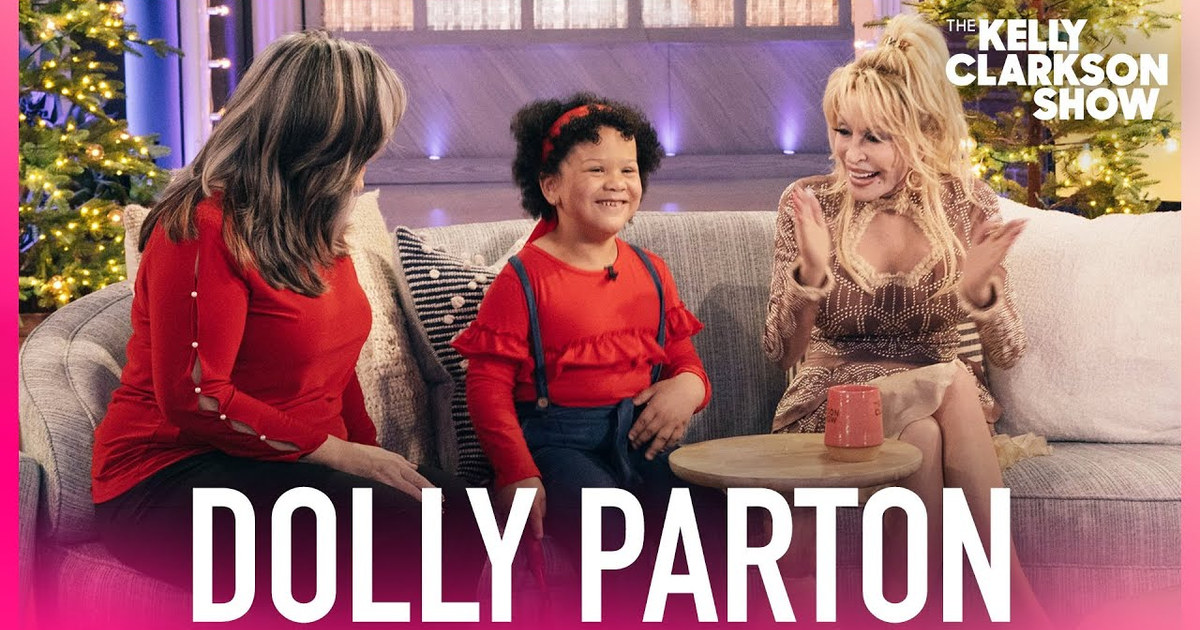
And that's why Rosie matters. She's not just a cute kid with a great voice. She's proof of concept. She started receiving braille books at eight months old. By first grade at RideOut Elementary School in Clay County, Florida, she was reading and writing braille before most of her sighted peers could read and write print. Her teachers think she might be gifted. But Liz said it best: the big story is that once language came together—through braille, through music, through love—Rosie started singing "Amazing Grace" on her sit-and-spin and got to the line "was blind, but now I see." And her mother thought, my daughter does see. She sees the world through the generosity of people who stand in the gaps. That's not just a tearjerker. That's a thesis statement for why early literacy intervention works.
Now, let's talk about Dolly herself. Because if you only know her from "Jolene" or "9 to 5" or her role in the 1980 film 9 to 5 opposite Jane Fonda and Lily Tomlin, you're missing the bigger picture. Dolly has been a literacy advocate for nearly thirty years. She's not just a celebrity face on a charity. She funds it. She promotes it. She shows up. When she told Rosie, "I'm the book lady," that wasn't a cute line. That's her identity. And when she said her dad would be proud—Robert Lee Parton, who never learned to read—she was connecting the dots between her own family's struggle and the millions of kids who now get books because of her.
The Imagination Library is now a global operation. It partners with local affiliates—schools, libraries, nonprofits—to cover the mailing costs. In the US alone, there are over 1,600 local programs. In the UK, it's partnered with Penguin Random House. In Australia, it's reached over 100,000 children. In Ireland, it's growing. And everywhere it goes, the mission is the same: get books into the hands of kids, especially those who might otherwise never have them. For blind children like Rosie, that means braille. For kids in poverty, that means free. For kids in rural areas, that means a connection to the wider world. It's not just about reading. It's about representation. It's about hope.
So what comes next? For Rosie, it's first grade, more braille, more singing, and a future that her doctors once said might not happen. For the Imagination Library, it's another 200 million books. For us, it's a reminder that literacy isn't a luxury. It's a right. And sometimes, the people who fight for that right aren't politicians or educators. They're country music stars who never forgot where they came from.
But Dolly isn't the only celebrity using their platform to get kids reading. Next time, we're diving into other famous literacy initiatives. We'll look at LeVar Burton's Reading Rainbow, which ran from 1983 to 2006 and won 26 Emmys, and his newer podcast LeVar Burton Reads. We'll talk about Reese Witherspoon's Hello Sunshine book club, which has boosted dozens of female authors onto the bestseller list. We'll compare their approaches, their impact, and what makes them work. But before you go anywhere, do yourself a favor: watch the full clip of Rosie and Dolly. The link is below. You'll want to see the moment Rosie asks Dolly to sing for her, and Dolly happily obliges. It's pure magic.
And if you're not crying by the time Rosie sings "was blind but now I see," check your pulse.


