Part 3
His daughter watched him. That's the whole story of Dolly Parton's business education, right there — a girl in Sevier County, Tennessee, watching her father maneuver. Watching him make something out of nothing, over and over, with nothing but his wits and his word. She calls it horse sense. City people call it street smarts. Her daddy just called it Tuesday.
Dolly has always split her inheritance cleanly in two. The music came from her mother's side of the family. The work ethic came from her father. And she has said plainly that most musical people don't want to work at anything else — they want to sing, and let somebody else count the money. Dolly looked at that arrangement and decided it was a bad deal.
So she made a different one. She looked around at the industry she was standing in and noticed something almost funny: everybody kept calling it the music business. Two words. Most artists only ever showed up for the first one. Dolly decided to lean heavy on the second. That single decision — made early, made deliberately, made by a woman with no formal business training — is why the name Dolly Parton sits on one of the most valuable song catalogs in American music.
What did leaning heavy actually look like? Keeping her publishing. Starting her own publishing company instead of handing her songs to somebody else's. Protecting her copyrights like they were land — because they were. Every one of those moves was a fence post she drove into the ground herself, and every one of them is still standing.
[[AD]]
Picture her at eighteen, stepping off a bus in Nashville. Talented, ambitious, and walking straight into an industry that in the 1960s and '70s had almost no doors marked for women — especially not women who wanted to own things. The men in those rooms weren't used to being asked for a meeting instead of a date. So how did she keep them focused on business?
Her answer is disarmingly practical. She had brothers. Uncles. A father. Grandfathers. She grew up around men and she knew exactly how they thought. She has said it plainly: she looked like a woman, but she could think like a man. She was not intimidated, not by the executives, not by the producers, not by the room. Intimidation requires you to believe the other person holds something you can't get yourself. Dolly never believed that.
And then there's the flirtation question, which she has never once dodged. She took male attention as a compliment, not an insult. She used her looks as an asset without ever trading on them. Her line on it is the spine of this whole section, and she delivers it with the same flat directness she'd use to quote a price: "I never slept with anybody to get anywhere; if I slept with somebody it's because I wanted to." That's it. That's the whole policy. No apology, no defensiveness, no lecture. She knew what she was worth in every sense of the word, and she never confused the two currencies.
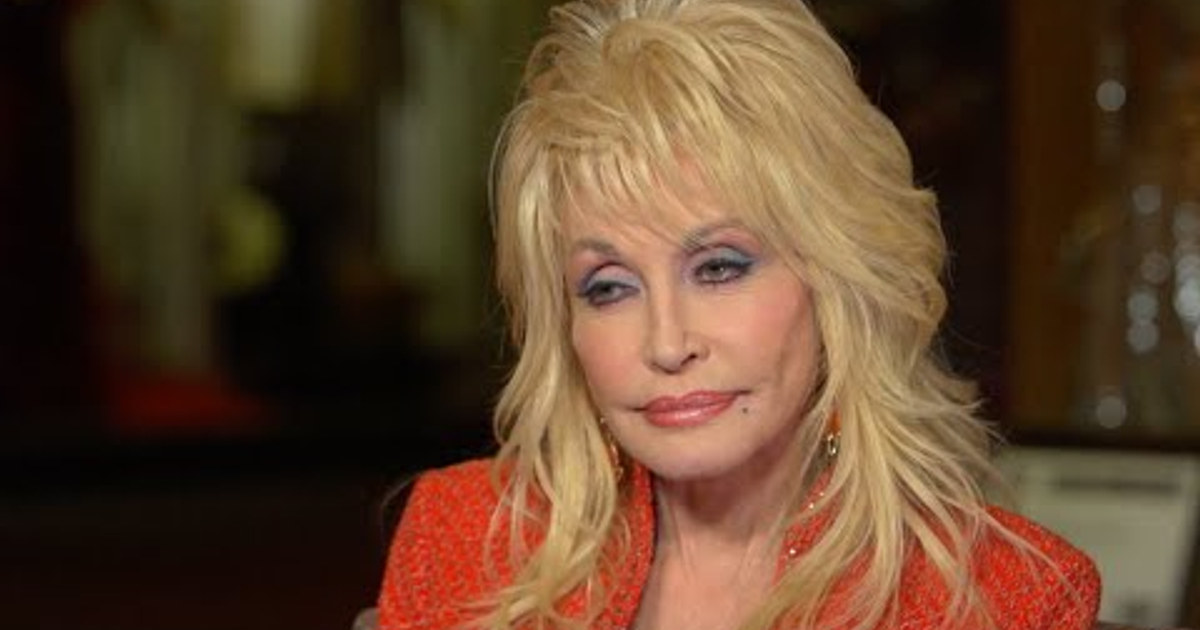
There was also a tactical signature, and it's the most Dolly thing about her. Some people looked at the big hair, the overdone makeup, the exaggerated look, and assumed the woman underneath it was dumb. That was the mistake of a lifetime, and plenty of people made it. She would have the deal done and gone before they realized what had happened. Underestimated on purpose. Paid on purpose. That's the entire career in one sentence.
Widen the lens and you see what all that horse sense built. A publishing company. A catalog of copyrights she owns outright. A business that generates tens of millions of dollars a year — not because a song got lucky once, but because she refused to give away half of a song that had already proved itself. She credits good people around her. She credits luck. But the choices were hers, and she knows it, and she says so without flinching.
The through-line runs clean and unbroken: Elvis in 1974, Whitney Houston in 1992, and every deal in between. Same woman. Same catalog. Same instinct. When Elvis wanted the song, the answer was no. When the world wanted it again eighteen years later, the answer was yes — because by then she owned one hundred percent of the publishing and one hundred percent of the writing, and the check had her name on every line of it.
Which brings us back to the phone. Same phone. Same song. Same young woman standing in her own kitchen, hearing Colonel Tom Parker's voice on the other end of the line. We've heard that pause before — the one after she said she couldn't give up half the publishing. We used to hear heartbreak in it. Listen again. That's not just heartbreak in that pause. That's arithmetic. That's a woman who already knew exactly what her song was worth, running the numbers one more time before she opened her mouth.
The heartbreak was real. She has never pretended otherwise — she was devastated, she had to call her friends and tell them Elvis wasn't cutting it after all. But the arithmetic was real too. Dolly chose the arithmetic and let the heartbreak come along for the ride. That's the deal she made with herself, and it's the deal that made everything else possible.
The song outlived the deal. It outlived the Colonel. It outlived Elvis himself, and then it got a second life in a voice Dolly never saw coming — a voice that stopped her heart on the drive home from Brentwood. A song she wrote in a few minutes, protected for a lifetime, is now bigger than every man who ever tried to take half of it.
That's the lesson hiding in the farmhouse, in the horse trading, in the big hair and the bigger brain underneath it. Own your work. Read the contract. Know what you're worth before anybody tells you. Dolly Parton learned it from a man who couldn't read a single word of the paper he was signing — and she turned it into an empire. Next time: more stories from that catalog, more deals that got away, and the ones that paid off for decades. Stay tuned.


