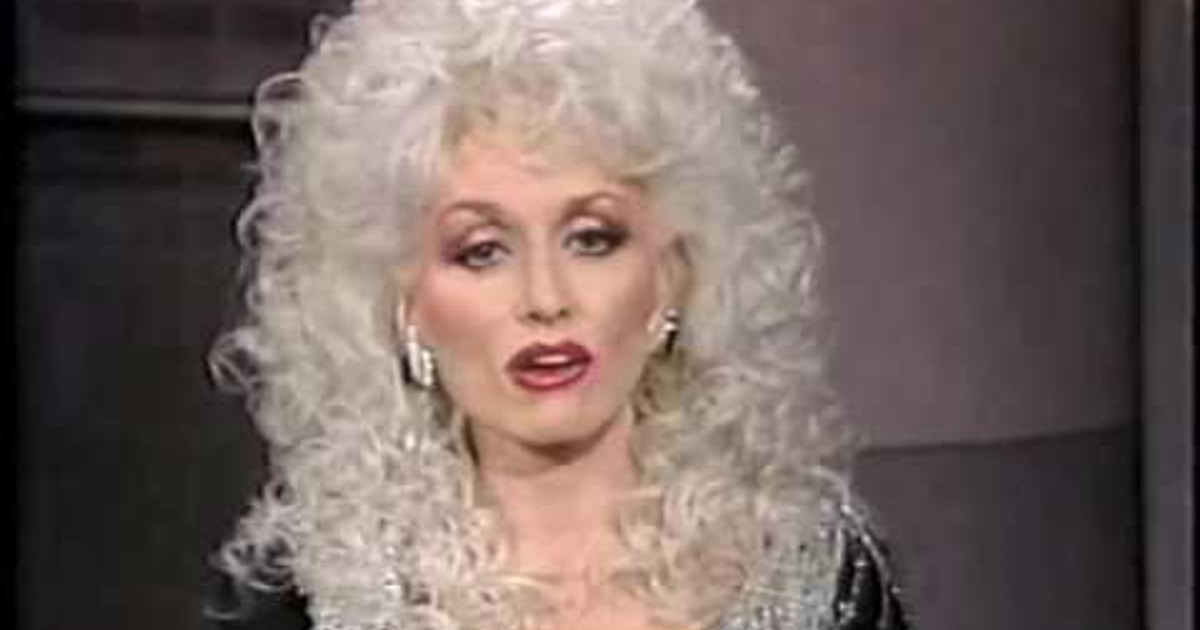
You have probably seen the clip for its easy laugh: a host flirting with Dolly Parton, Dolly batting the jokes right back, and a ceramic monkey apparently being given away for free. But beneath the comic rhythm sits a bigger question: What is fame for, once you have it? Dolly’s answer is less glamorous—and more exciting—than another spotlight. You take what you have built and bring something home.
That answer gives this exchange its lift. The conversation bounces from perfume to marriage to a high-school yearbook, but it keeps circling back to Dollywood, the theme park Parton helped establish in the Smoky Mountains. She is not selling a fantasy of celebrity escape. She is talking about a place tied to where she grew up, the people there, and the work it can provide.
The clip feels like a little country-music cousin to The Muppet Show (1976): warm, unruly, and built around the pleasure of watching a performer steer the room without making the steering obvious. Parton can flirt, tease, and tell a story, then land on a serious point without changing the mood. That balance is the show.
[[AD]]
1. Fame matters when you bring it home
Parton describes Dollywood as a dream that took years to pull together. As a child, she was fascinated by the county fair; later, she wanted to return to the Smoky Mountains and give something back to the community where she was born and raised. The park, she says, was meant to preserve Smoky Mountain heritage while also creating jobs. Her pitch is personal, but it is not small.
The details make that ambition feel tangible. Parton says the park sits on 700 acres near Pigeon Forge, features crafts such as candle making and basket weaving, and welcomed 1.5 million visitors in its first season. She talks about being actively involved, visiting throughout the year and sometimes getting onstage to sing with her family. The point is not just that Dolly Parton has a theme park. It is that she wants to be present in the place her name represents.
That’s a different kind of celebrity story from The Founder (2016), where building a recognizable brand becomes its own contested drama. Here, Parton frames success as a return trip: take the reach and resources that fame gives you, then put them to work near the people and landscape that shaped you. It is a big idea delivered in the casual language of a conversation about admission prices and where Knoxville is.
[[AD]]
2. A public image is not the whole person
The interview also gives Parton room to talk about how people read her. Looking back at her high-school years, she jokes that she was popular for the wrong reasons: she wore a lot of makeup, tight clothes, and her hair high. Others thought she might be a bad influence. Her own version is more playful: she had an outgoing personality, told jokes, and sometimes got credit for behavior that belonged to the people around her.
The story is funny because Parton knows exactly how a reputation gets made. A big hairstyle and a bold look can become a whole character in other people’s minds. She does not seem wounded by the label; she can see the gap between how she appeared and who she felt she was. That self-awareness lets her enjoy the joke without becoming the joke.
There is a trace of Some Like It Hot (1959) in the way this moment plays with appearances: the image is part of the fun, but it never tells the whole story. Parton’s confidence is not a rejection of her style. It is the confidence to own it and still insist there is a person underneath the hair, makeup, and public assumptions.
[[AD]]
That same ease shapes the interview’s teasing. The host jokes about marrying her and imagines her husband selling corn dogs at the park. Parton plays along, then explains that her husband has a different life and career, and that she values the friendship at the center of their marriage. She describes them as proud of one another, with enough time together to enjoy each other and enough time apart to keep things interesting.
3. The best punchline leaves room for the truth
The jokes never require Parton to surrender control of her own story. She can laugh at the marriage proposal without pretending her real marriage is a bit. She can take a gag about the park and keep explaining what it means to her. And when the conversation wanders through old classmates and hometown memories, she stays affectionate rather than turning the past into a polished legend.
That is why the small exchanges matter. Asked whether she is hands-on at Dollywood, she makes clear she did not simply attach her name and walk away. Asked about the Smokies, she admits she does not know the highest peak’s elevation—then happily accepts the answer when the host finds it. The confidence is real, but so is the willingness to be imperfect in public.
For a comparison, think of Dolly Parton’s Coat of Many Colors (2015), which also makes warmth feel like a form of strength. The interview is looser and funnier, but the same quality shines through: sentiment does not have to be solemn, and humor does not make the feeling less sincere. Parton can turn a story about a theme park, a husband, or a yearbook into a little declaration of what she values.
[[AD]]
The final stretch brings that charm into focus. The host and Parton revisit the old yearbook, tease one another about classmates, and close on easy affection. Nothing has to become a grand speech. By then, the point is already clear: she can be a motion-picture star, a Grammy winner, a songwriter, and the face of Dollywood without letting any one title swallow the person underneath.
[[VIDEO]]
So what is fame for? In this clip, it is not an answer you deliver from a pedestal. It is something you can turn into a place people visit, a source of local work, a way to celebrate home—and, when the moment calls for it, a reason to laugh at yourself. Dolly Parton makes the case with warmth and a quick comeback, which may be the most convincing way to make it.
The question changes by the end. It is no longer only what fame can do for you, but what you are willing to do with it once it arrives. Parton’s answer is still in motion: a park, a hometown, a room full of jokes, and another story waiting just around the corner.


