Part 2
Building an Empire: Dixie Stampede, Dollywood, and Southern Light
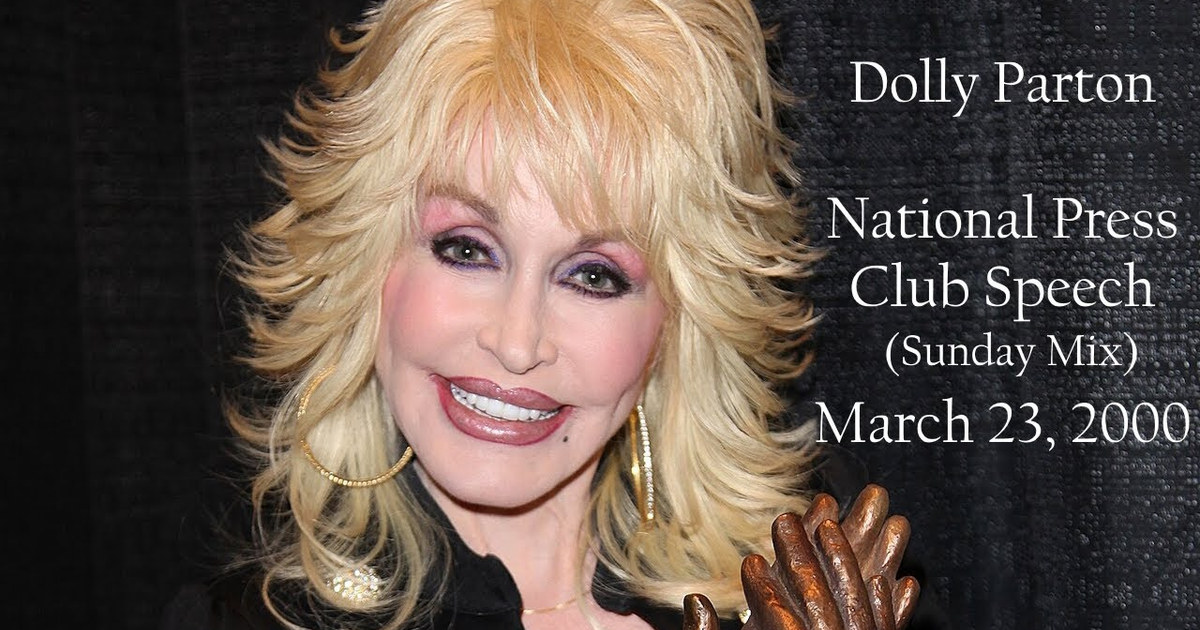
If you're the kind of viewer who shows up for genre, you already know Dolly Parton isn't just a songwriter — she's a world-builder. And if you're here for craft, you're about to see the blueprint. In her 2001 press conference, Parton laid out an expansion plan that reads like a systems architecture diagram: new nodes, redundant revenue streams, and a vertically integrated media stack. Let's break it down.
First, the fourth Dixie Stampede dinner attraction, slated for Orlando, Florida. Parton called it a '$2 million project' — assuming city officials approve everything — and positioned it on I-4, right between Disneyland and Universal Studios. That's not a random pin on the map; that's a deliberate routing decision. She's capturing tourists who are already in theme-park mode, not trying to convert locals.
[[AD]]
The Dixie Stampede concept itself is dinner theater with horses — a hybrid entertainment format that's part rodeo, part musical revue, part family meal. Existing locations in Branson, Missouri; Pigeon Forge, Tennessee; and Myrtle Beach, South Carolina had already proven the model. Orlando would be the fourth. And then, almost as an aside, she mentioned a fifth Stampede in Surfers Paradise, Australia, on the Gold Coast. That's a partnership, she said, and more details would come later. But the signal is clear: the Stampede isn't a regional novelty. It's a franchise.
Now, the Dollywood update. Parton noted that 2001 marked the park's 15th season — 'just seems like yesterday we started that,' she said. Since opening, Dollywood had absorbed a $100 million investment and entertained over 30 million visitors. For the 2001 season, the new children's attraction was Dreamland Forest. And next year, a $2 million water park would follow. She admitted the water park was originally planned for this year but didn't get done in time — a rare moment of operational transparency from a brand that usually only shows the polished surface.
[[VIDEO]]
Here's where the location strategy gets clever. The Smoky Mountains National Park is the most visited national park in the United States, pulling in about 10 million people a year. Parton's phrasing was folksy — 'we get a few of the spillovers when people get tired of camping up there' — but the business logic is ruthless. Dollywood doesn't need to out-market Disney. It just needs to sit downstream from a natural tourist magnet and offer a comfortable landing spot. That's not luck. That's placement.
Then she pivoted to her production company, Southern Light. This is the part that should make film nerds sit up. She was writing music for movies, doing television movies of the week, and developing projects for feature films. One was a CBS gospel musical called Milk and Honey, set to air that fall. She described it as a 'real wonderful story' and said casting wasn't finished, but she was looking at Patti LaBelle and Gladys Knight. 'If I'm lucky enough to get them,' she added. That's not just star power — that's a deliberate pairing of legendary voices with a genre that demands authenticity.
She also mentioned a remake of the 1949 Judy Holliday film It's a Great Feeling for Turner Classic Movies. (In the transcript she says 'solo Cadillac,' which is almost certainly a transcription error — the Judy Holliday vehicle is It's a Great Feeling, directed by David Butler, runtime 85 minutes, released by Warner Bros.) The original was a backstage musical comedy about Hollywood trying to manufacture a star. A remake for TCM in the early 2000s is a fascinating choice: it's meta, it's archival, and it signals that Parton sees herself as part of a continuum, not just a contemporary hitmaker.
So what's the business approach? Three pillars. First, leverage location: Orlando between the two biggest theme-park brands, the Gold Coast for Australian tourism, and the Smokies for natural spillover. Second, partnerships: the Australian Stampede was explicitly a partnership, and the CBS and TCM projects involved network and studio collaborations. Third, vertical integration: she owns the music, the production company, the theme park, the dinner theaters, and the foundation. Each piece feeds the others. A song from a movie can become a show at Dollywood. A Dollywood visitor can buy the soundtrack. The Imagination Library — which we'll get to — builds the audience of the future.
For the genre fan, this is empire-building on a scale that rivals any fictional universe. For the craft enthusiast, it's a case study in how to design a career like a well-architected system: modular, resilient, and self-reinforcing. Parton isn't just announcing projects; she's showing you the wiring diagram.
And she did it all with a joke about wearing glasses and a self-deprecating nod to her nerves. That's the interface layer. Underneath, the machine is humming.
The Heart of the Matter: Imagination Library and the Coat of Many Colors
If you’re the kind of viewer who showed up for the genre thrills—the dinner shows, the theme park rides, the rhinestone spectacle—you might think philanthropy is where Dolly Parton gets boring. You’d be wrong. This is where the plot thickens. And if you’re the craft enthusiast who’s been waiting for the engineering behind the empire, this is the load-bearing wall. The Dollywood Foundation isn’t a side quest; it’s the main quest, and it runs on the same code as everything else she builds.


