Part 2
Let's start at the very beginning, because the timeline matters. Dolly Rebecca Parton was born on January 19, 1946, in Sevierville, Tennessee — a small town tucked in the Smoky Mountains. She was the fourth of twelve children, raised in a one-room cabin with no electricity or running water. That's the humble origin story everyone knows. What they often skip is what happened next: Dolly started performing as a child, appeared on local radio and TV in Knoxville by age ten, and recorded her first single, 'Puppy Love,' at age thirteen in 1959. Thirteen. Most kids are worried about middle school. Dolly was already in a recording studio.
[[VIDEO]]
She graduated from Sevier County High School in 1964 and moved to Nashville the very next day. Not a year later. Not after saving up. The day after graduation. That's not the move of someone waiting to be discovered. That's the move of someone who had a plan and was executing it. In Nashville, she moved in with her uncle Bill Owens, a songwriter who helped her navigate the music business. She signed with Monument Records in 1965, initially marketed as a bubblegum pop singer. It didn't work — the label didn't know what to do with her. But she kept writing.
And here's where the consensus really falls apart: Dolly was writing hits for other artists before she was famous as a performer. In 1966, Bill Phillips recorded her song 'Put It Off Until Tomorrow,' and it became a top-ten country hit. The song won a BMI Award in 1966 for being one of the most-performed country songs of the year. Dolly was twenty years old. She wasn't on the radio as a star yet, but her songwriting was already earning industry recognition. That's not obscurity. That's a career in motion.
Then came Porter Wagoner. In 1967, Porter — already a country music icon with his own syndicated TV show — invited Dolly to join The Porter Wagoner Show. She replaced Norma Jean and became a regular on the program, which aired from 1967 to 1974. This was the gig that made her a household name in country music. Not Carson. Porter. The Porter Wagoner Show was seen in millions of homes across the South and Midwest. Dolly wasn't just a singer on that show — she was a personality, a duet partner, a comedian. She and Porter recorded hit duets like 'The Last Thing on My Mind' and 'We'll Get Ahead Someday.' They won a CMA Award for Vocal Duo of the Year in 1968. By the late '60s, Dolly Parton was already a star in the world that mattered most to her career at that point: country music.
Her solo breakthrough came in 1971 with 'Joshua,' her first No. 1 country single. That was three years before her first Tonight Show appearance. Let that sink in. She had already topped the country charts. Then, in 1973, she released 'Jolene' — a song that would become one of the most-covered tracks in music history. In 1974, she wrote 'I Will Always Love You,' which she took to No. 1 on the country chart that same year. These weren't flukes. They were the work of a disciplined, prolific songwriter who had been honing her craft for over a decade.
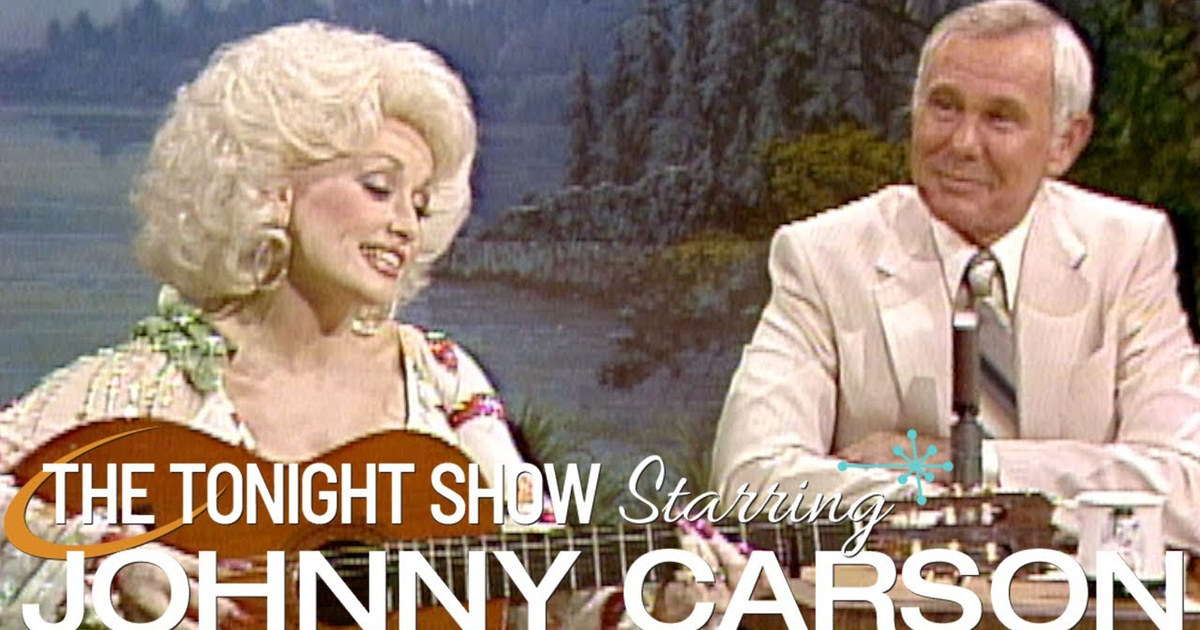
The transcript from her Carson appearance actually proves this point, even though it's being used to argue the opposite. During the interview, Dolly mentions a lawsuit filed by her former senior partner — that's Porter Wagoner — and a deposition she had to give. She also notes that the CMA didn't nominate her in any categories that year, joking that they probably thought she'd be in jail. These are not the problems of an unknown. These are the problems of a star. Lawsuits, depositions, CMA snubs — that's the machinery of fame. Carson didn't introduce her to the spotlight; she was already navigating its highs and lows.
Now, let me be fair to the other side. Yes, Johnny Carson introduced Dolly to a massive non-country audience. The Tonight Show had millions of viewers who had never listened to a country station in their lives. That exposure was real and valuable. But here's the thing: that audience was ready for her because of her existing reputation. They had heard 'Jolene' on the radio. They knew her name from the country charts. They had seen her on Porter's show if they lived in the right markets. Carson didn't create Dolly Parton. He amplified a signal that was already strong.
The consensus confuses exposure with creation. It assumes that because Carson was the first place many people saw her, he was the reason she became a star. But stars aren't made in a single TV appearance. They're made through years of grinding, writing, performing, and building a fanbase. Dolly did all of that before she ever said hello to Johnny. The Sevierville-to-Nashville pipeline was already flowing. Carson just opened a bigger faucet.
The Carson Show Needed Dolly as Much as She Needed It — The Guest Who Made the Host Laugh
Here’s the second pillar of the consensus that needs to come down: the idea that The Tonight Show Starring Johnny Carson was a one-way star-making machine. You went on, Carson anointed you, and you were made. That’s the story people tell about Steve Martin, Jerry Seinfeld, and Roseanne Barr. But it skips a crucial detail: Carson’s show was a platform, and platforms are only as powerful as the people standing on them. Dolly Parton didn’t just stand there. She took over the room.


