Part 2
She mentions they thought about naming Interstate 40 after her. She laughs. But the pride is real. “That was one of the greatest compliments that I’ve had paid to me.” Not an award. Not a chart. A road. Something that stays.
It’s a trailer beat. The wide shot of a highway. The voiceover: “She came from nothing. Now she’s on the map.”
But the next cut isn’t a celebration. It’s a courtroom.
[[AD]]
Carson pivots. He’s read something. “You were in some trouble. Jail or something?”
Dolly doesn’t flinch. She explains: a lawsuit from a former business partner. A deposition. The threat of jail if she didn’t answer questions. She name-drops Raymond Burr. Perry Mason. She jokes about the warden. “Accepting for Dolly Parton is the warden.”
It’s a bit. But underneath: the fear of losing control of her own story. A deposition is not a performance. It’s a trap. Every answer is a potential weapon. She says, “I have nothing to hide.” But she also says, “I’ve seen too many television shows.” That’s the tell. She knows the script. She’s been watching.
Carson asks about the CMA Awards. No nominations this year. Dolly says, “They thought I would be in jail.” She’ll still perform. She jokes about Carson accepting for her if she goes to jail. The warden bit again. It’s funny. It’s also a window into how public trouble becomes material.
That’s the cut. The pivot from a road to a courtroom. From a permanent tribute to a temporary mess. The rhythm is classic Dolly: laugh first, think later. But the editor in me sees the splice. She’s not just deflecting. She’s reframing. The lawsuit is a story. She’s telling it her way.
Then Carson asks if she has close friends. She says she has about four great ones. Her best girlfriend is Judy. Known her since they were seven. Judy knows everything. Judy would never tell.
Dolly says she’s an open book but has a few secrets. The library card line. The hard time in prison line. It’s a bit. But it’s also a thesis: trust is the only real currency in showbiz.
Think about it. A deposition is a forced confession. A friendship is a chosen silence. Judy is the anti-deposition. She knows the answers but never asks the questions. That’s the cut. The contrast between a legal system that demands everything and a friendship that protects everything.
Dolly’s career is full of these juxtapositions. The girl from Sevierville who wrote “Jolene” and “I Will Always Love You” in the same afternoon. The country star who crossed over to pop with “Here You Come Again” in 1977. The actress who held her own opposite Jane Fonda and Lily Tomlin in 9 to 5 (1980), directed by Colin Higgins. The businesswoman who launched Dollywood in 1986. The philanthropist who started the Imagination Library in 1995. She’s always been a double exposure.
But here, on Carson’s couch, she’s just Dolly. Talking about a road. A lawsuit. A friend named Judy. The three threads weave together. The road is public. The lawsuit is public. Judy is private. That’s the balance.
The Carson interview aired in 1982. The Tonight Show had been on since 1954. Johnny Carson took over in 1962. By the early ’80s, he was the kingmaker. A spot on his couch could launch a career or cement one. Dolly was already a star. But this was different. She was there as herself. Not a character. Not a persona. Just Dolly.
[[VIDEO]]
And she brought her whole world with her. The telegram. The deposition. The girlfriend. It’s a masterclass in narrative control. She gives Carson the story he wants. But she keeps the ending.
That’s the rhythm. Setup. Punchline. Pivot. Repeat.
The parkway dedication was real. The lawsuit was real. The CMA snub was real. But the way she tells it, it’s all material. That’s the lesson. Showbiz isn’t about avoiding trouble. It’s about how you cut it.
And Judy? She’s the safety net. The one person who knows the uncut version. The one who will never sell the outtakes.
So when Dolly says, “I’m an open book,” she’s lying. But she’s lying with a smile. And that’s the truth.
The next section will replay that opening line—‘I never really made it until the Johnny Carson show’—in light of everything we’ve seen. The road. The deposition. The friend. It all comes back to that one sentence. And it lands harder than ever.
The Song, the Seventeen Years, and Why the Line Still Lands
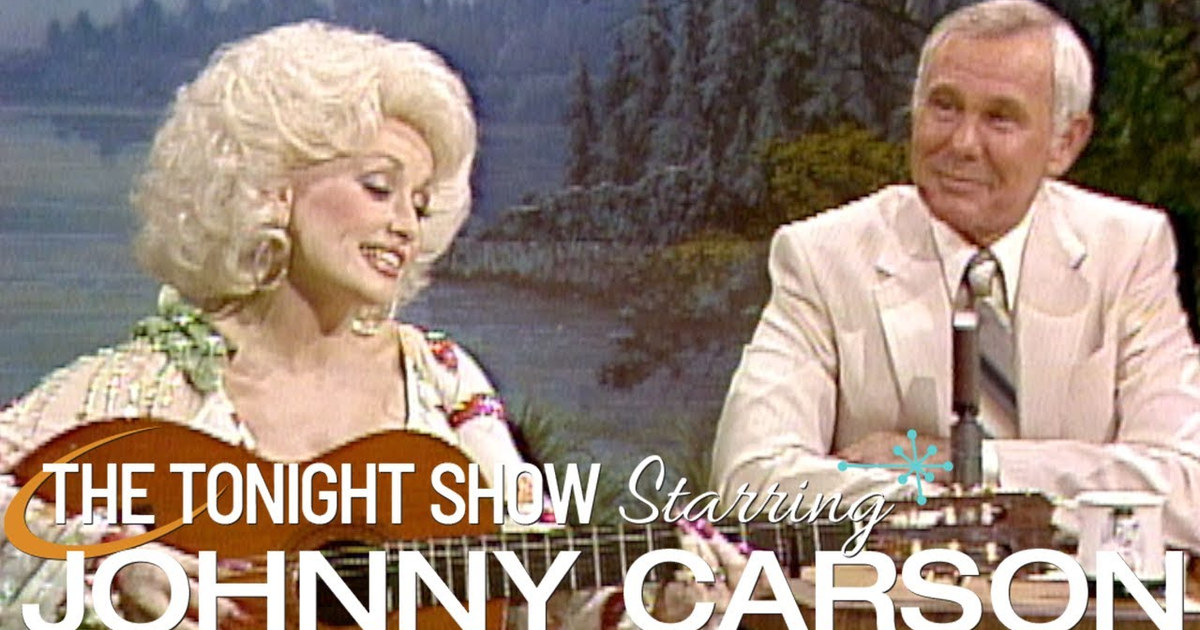
Cut to: Dolly Parton, sitting on Johnny Carson’s couch, October 1978. She’s just been handed a telegram from the mayor of Sevierville. The Dolly Parton Parkway is about to be dedicated. She jokes about the flattest stretch of ground. The crowd eats it up.
But then she says it. The line that’s been the spine of this whole piece.
“I never really made it until the Johnny Carson show.”
Now replay it. After the parkway. After the deposition. After the CMA snub. After the friend who knows everything. That line isn’t just a compliment. It’s a thesis statement. And Dolly, being Dolly, turned it into a song.
She performs it right there. A little tune about coming a long way from the hills of Tennessee. Working hard to make folks back home proud. Everybody knowing her name. But never really making it until the Johnny Carson show.


