Part 3
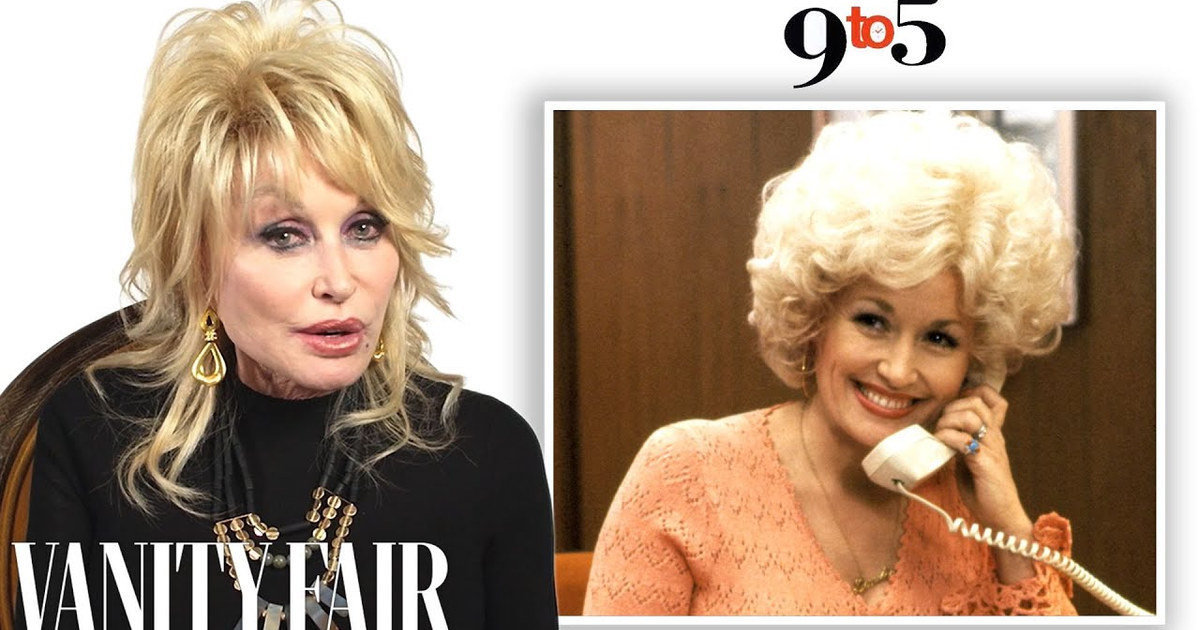
The film itself became one of the biggest hits of 1980. Then it spun off into an ABC sitcom in 1982 — different cast, same workplace, same fantasy of three women taking over the office. The beat kept beating. Different drum.
1974 — The Split That Kept Time
[[VIDEO]]
Rewind. Before the desk. Before Hollywood.
- Dolly joins The Porter Wagoner Show. Five years of duets, TV, touring, matching outfits, the whole package. Porter gave her a national stage. She gave him hits.
Then 1974. She leaves. Not a slow fade. A cut.
And on the way out, she writes him a goodbye. "I Will Always Love You." Sits down, writes it, sings it. It goes to No. 1 on the country chart. Then it goes to No. 1 again when she re-records it in 1982 for The Best Little Whorehouse in Texas. Then, in 1992, Whitney Houston cuts it for The Bodyguard and it becomes one of the best-selling singles of all time.
Same song. Same hands. Different decade. That's what a signature rhythm does. It doesn't expire. It gets re-cut.
The Porter years ended. The beat didn't. It just changed tempo.
- "Here You Come Again." Produced by Gary Klein. Her first real pop crossover. It wins her a Grammy for Best Female Country Vocal Performance in 1979. Country girl, pop chart. Nobody told her to pick a lane, so she didn't.
She'd already been an Opry member since 1969. She'd already written "Coat of Many Colors." She already had the catalog. What she got in the late '70s was the reach — the audience on the other side of the wall. And she walked straight through it wearing heels and acrylics.
Every reinvention used the same engine. Small motion. Repeat. Get loud.
The Nails Go to Hollywood
Back to the films. Back to the click.
9 to 5 was the debut, but it wasn't the accident. Hollywood figured out fast what the typewriter rhythm already proved: Dolly doesn't just perform a scene. She times it. Every line lands on a downbeat.
- The Best Little Whorehouse in Texas. Colin Higgins again — the same director who put her behind that desk. Burt Reynolds. Dom DeLeise. Charles Durning. A musical comedy about a brothel, and Dolly walking through it like she owns the deed. She re-recorded "I Will Always Love You" for the soundtrack. It went to No. 1 on the country chart. Again.
That soundtrack gave the world "Hard Candy Christmas" too. A Christmas song that isn't really about Christmas. That's a Dolly move. Take the format. Flip it. Keep the beat.
Rhinestone. Bob Clark directs. Sylvester Stallone plays a New York cabbie who bets he can turn any nobody into a country star in two weeks. It's a mess of a movie. She isn't. Watch her in it and count the beats. She never misses one, even when the script does.
Steel Magnolias. Herbert Ross directs. Sally Field, Julia Roberts, Shirley MacLaine, Olympia Dukakis, Daryl Hannah. Just under two hours of Louisiana women talking over each other in a beauty shop — and Dolly plays Truvy Jones, the shop owner, the woman with the nails, the one who holds the whole town's secrets while she does somebody's hair.
Look at that role again. A woman with tools in her hands, running the rhythm of a room. Talking while she works. Making the ordinary sound like a song.
[[AD]]
That's not typecasting. That's her, restated.
- Straight Talk, with James Woods — a talk-radio comedy where she plays a woman who accidentally becomes America's advice columnist. Then 2012. Joyful Noise, with Queen Latifah, a gospel choir movie that lives or dies on rhythm, and guess who keeps time.
And then the loop closes hard. 2009. 9 to 5 comes back — not as a movie, as a Broadway musical. 9 to 5: The Musical. Dolly writes the score. She earns a Tony nomination for Best Original Score.
The typing nails. Four decades later. Filling a theater.
The Beat Becomes an Empire
Here's where the click gets loud.
Dollywood. Pigeon Forge, Tennessee. Opened in 1986, renamed and rebuilt around her name a year later. Rides, shows, a steam train, a gate with her signature on it. That's not a side hustle. That's a rhythm you can walk through.
Then the Imagination Library. Founded in 1995. Free books mailed to kids from birth to age five, starting in her home county and spreading worldwide. Millions of books. Kids who never owned a book, holding one with their name on the envelope.
Same impulse as the nails. Something small. Something repeatable. Something that lands once a month, or once a page, or once a beat — and adds up to something enormous.
1987 to 1988. Her own variety show. Dolly. Network TV, her name in the title, her band, her guests. Not everyone gets that. She did it the way she does everything: show up, sing, work, smile, repeat.
Kennedy Center Honors. 2019. Dolly Parton's Heartstrings, an eight-episode anthology on Netflix, built from her own songs. Each episode a story. Each story a beat from a different record.
Rock & Roll Hall of Fame. A country singer with acrylic nails, inducted by an institution that spent fifty years pretending genre was a wall. She'd already knocked the wall down. She just walked through where it used to be.


