Part 2
And once you hear it, you can't unhear it. The click of Dolly Parton's nails. The click of a typewriter. The click of a career that's still going, still tapping, still writing the next line.
That's the beat that built everything. And it's just the first bar.
The Girl Singer Who Refused to Be Just a Girl Singer
Cut to 1967. The Porter Wagoner Show is a country music institution. Porter Wagoner, the man in the rhinestone suit, rules the airwaves. But his girl singer, Norma Jean, is leaving. She's getting married and moving to Oklahoma City. Porter needs a replacement. Fast.
Enter Dolly Parton. She's 21. She's got a top 10 record under her belt: "Dumb Blonde." The song's a defiant little anthem: "Just because I'm blonde don't think I'm dumb / 'Cause this dumb blonde ain't nobody's fool." It's a warning shot. Porter hears it. He sees the fire. He calls her.
Dolly thinks she's being hired to record songs. She shows up to Nashville. She's ready to write, to sing, to lay down tracks. But Porter has other plans. He wants her on his TV show. Every week. In living rooms across America. As his duet partner. The girl singer. The blonde. The foil.
She says yes. But she sets a limit. Five years. She tells Porter: "I'll stay five years." She's got a plan. She'll learn the ropes. She'll study the business. She'll watch the cameras. She'll write songs on the bus. She'll build her own name. Then she'll leave. She's not there to be a sidekick. She's there to be a star.
The chemistry is instant. Porter is the stoic, silver-haired country gentleman. Dolly is the bubbly, blonde bombshell with a mountain twang. Fire and ice. They trade barbs. They trade harmonies. They trade looks. The audience eats it up. They become a phenomenon. Like Sonny and Cher, but with more rhinestones and less fur.
Their duets are legendary. "The Last Thing on My Mind." "We'll Get Ahead Someday." "Just Someone I Used to Know." They win awards. They top the charts. They tour. They sell out shows. Porter Wagoner and Dolly Parton are the king and queen of country music. But behind the scenes, the tension is building.
Dolly is writing. Constantly. She's writing songs that Porter doesn't want to hear. Songs about independence. Songs about leaving. Songs about being your own woman. She's writing "Jolene." She's writing "I Will Always Love You." She's writing her escape plan. Porter wants to keep the duo together. Dolly wants to fly solo. The five-year clock is ticking.
She's not just a girl singer. She's a songwriter. A businesswoman. A brand. She's watching everything. She's learning everything. She's taking notes. She's counting the days. And when the five years are up, she walks. She doesn't burn the bridge. She just crosses it. And she never looks back.
That's the beat. The click. The rhythm of a woman who knew exactly what she wanted. She used the platform. She used the partnership. She used the spotlight. And then she stepped out of it. Into her own. The girl singer became the main event.
The Rhythm That Never Stopped
Cut back to the desk.
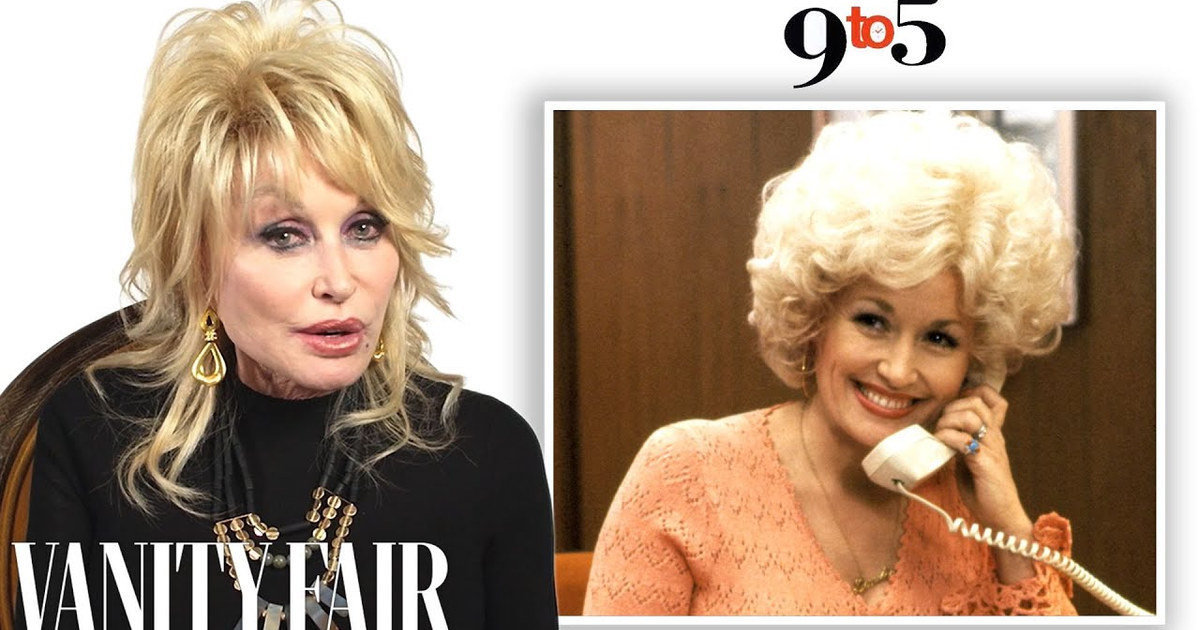
- The set of 9 to 5. A secretary's workstation — a phone, a stack of paper, a chair that's been sat in by a hundred takes. And ten acrylic nails drumming against the wood. Dolly Parton, in character as Doralee Rhodes, waiting for the call. Click. Click-click. Click.
[[AD]]
Nobody else on that crew heard it. She did. Not a typewriter on the desk. A typewriter in the rhythm. The entire pitch of the movie, sitting right there in her own hands.
She took the beat home. She turned it into a No. 1 record. And then she never put it down.
One Movie, One Beat, One No. 1
9 to 5 hit theaters on December 19, 1980. Twentieth Century Fox. Directed by Colin Higgins. 110 minutes. Jane Fonda, Lily Tomlin, Dabney Coleman — and Dolly Parton, in her first film role, playing the secretary every boss in America deserved to fear.
She wrote the title song herself. Not from a demo. From the set. From the sound of her own nails tapping through take after take, waiting for action, listening to the rhythm of a typing pool she'd never worked in but understood in her bones.
Listen to the record. It opens on that click. A typewriter groove — percussion built to sound like an office. Then the bass walks in. Then Dolly.
The single went to No. 1 on the Billboard Hot 100. It topped the country chart too. Pop radio took it. Country radio took it. The song crossed over the way she'd been crossing over her whole career — one beat at a time.
The album it came from, 9 to 5 and Odd Jobs, went platinum.
Then the Oscar nomination. Best Original Song, 53rd Academy Awards. She lost to "Fame." Fine. The beat didn't care. At the 1982 Grammys, "9 to 5" took Best Country Song and Best Female Country Vocal Performance. Two trophies for a click.
That's the lesson hiding in the story. She didn't wait for a producer to hand her a hook. She found one on a soundstage, in a pause between setups, in her own fingers. The best ideas are usually already in the room. You just have to be the one who hears them.


