Part 1
The Click That Started Everything
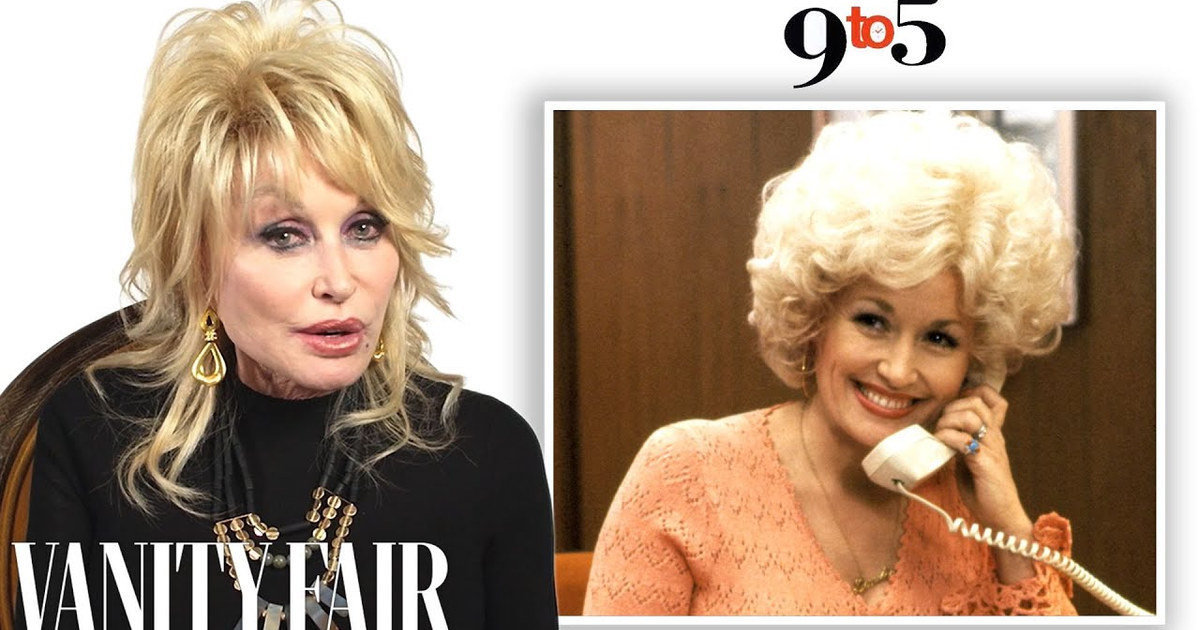
The set of *9 to 5* (1980). Dolly Parton sits at a desk. She's not acting yet. She's watching. Listening. And her acrylic nails — long, lacquered, lethal — tap against the wood. Click. Click. Click. It sounds like a typewriter. It sounds like a secretary. It sounds like work.
That's the beat. That's the whole thing right there. A rhythm born on a movie set, but a rhythm that started way before. A rhythm that started in a Nashville studio in 1967. A rhythm that started the moment a country girl from Sevierville, Tennessee, realized she wasn't just singing anymore — she was a professional.
Every career has a sound. For Dolly Parton, it's the click of nails, the strum of a guitar, the tap of a typewriter. It's the sound of a woman who turned her own fidgeting into a hit song. Who turned nervous energy into an anthem. Who turned a movie role into a Grammy-nominated soundtrack and a No. 1 single.
But let's back up. Because before the nails, before the typewriter, before the office comedy that made her a movie star, there was a first album. And there was fear. And there was Fred Foster.
Monument Records. 1967. Dolly Parton is 21 years old. She's been writing songs since she was a kid. She's been on the *Cas Walker Show*. She's been in Nashville, grinding. But this is different. This is *Hello, I'm Dolly* — her debut album. And Fred Foster, the man who owned Monument Records and the publishing company Combine, is watching her. He took a personal interest. He believed.
Dolly remembers thinking: *I'm doing my first album. This is amazing.* But she also remembers the nerves. The kind that hit when you're new and you want to be good. The kind that hit when you're working with people you've never met. She's a country girl. Excited. Nervous. Hoping for the best. Wanting to sing her best. Wanting to impress the musicians and the background singers. Wanting to prove that the songs she wrote — and she wrote a lot of them — were worth their time.
That's the moment. That's the click. Not the nails yet. The click of a career shifting into gear. The click of a girl becoming a pro. She says it herself: that's when she felt like a real professional. That's when she knew she was in the business. That's when she knew she was going to be doing all right.
And everybody was supportive. Kind. Generous. That's country music, she says. That's country people. But don't mistake kindness for softness. Dolly wasn't just being welcomed. She was being launched.
The first album didn't produce a monster hit. Not yet. But it set the rhythm. It established the beat. And a few years later, that beat would pay off. *Dumb Blonde*. Her first Top 10 record. The song that said: *Just because I'm blonde don't think I'm dumb, 'cause this dumb blonde ain't nobody's fool.*
That's the click again. The sound of a woman refusing to be underestimated. The sound of a blonde bombshell with a brain. The sound of Dolly Parton.
But let's go back to the set of *9 to 5*. Because that's where the click became a song. Dolly watched what was going on. She saw the secretaries. She heard her own nails. And she thought: *That's it.* She looked around. She started writing. *Tumble out of bed and stumble to the kitchen.* *Pour myself a cup of ambition.* *Yawn and stretch and try to come to life.* *Jump in the shower and the blood starts pumpin'.* *Out on the street the traffic starts jumpin'.* *With folks like me on the job from 9 to 5.*
That's not just a song. That's a rhythm. That's the click of nails on a desk. That's the tap of a typewriter. That's the beat of a career that started in 1967 and never stopped.
*9 to 5* the movie — directed by Colin Higgins, co-starring Jane Fonda, Lily Tomlin, and Dabney Coleman — came out in 1980. Runtime: 109 minutes. It was a hit. But the song? The song was a monster. It went to No. 1 on the Billboard Hot 100. It earned Dolly a Grammy nomination for Best Female Country Vocal Performance and an Academy Award nomination for Best Original Song. It lost the Oscar to *Fame*, but it won the People's Choice. It became an anthem for working women. It became a musical. It became a legacy.
And it all started with a click. A nervous tap. A habit. A sound that Dolly noticed and turned into gold.
That's the thread. Every career has a sound. For Dolly, it's the click of nails, the strum of a guitar, the tap of a typewriter. It's the sound of work. The sound of rhythm. The sound of a woman who never stopped moving, never stopped writing, never stopped turning the ordinary into the extraordinary.
But the click on the set of *9 to 5* wasn't the beginning. It was a echo. A callback. A rhythm that started in a Nashville studio with Fred Foster and a 21-year-old girl who was scared and excited and ready. That's where the beat was born. That's where the click first clicked.


