Part 3
[[VIDEO]]
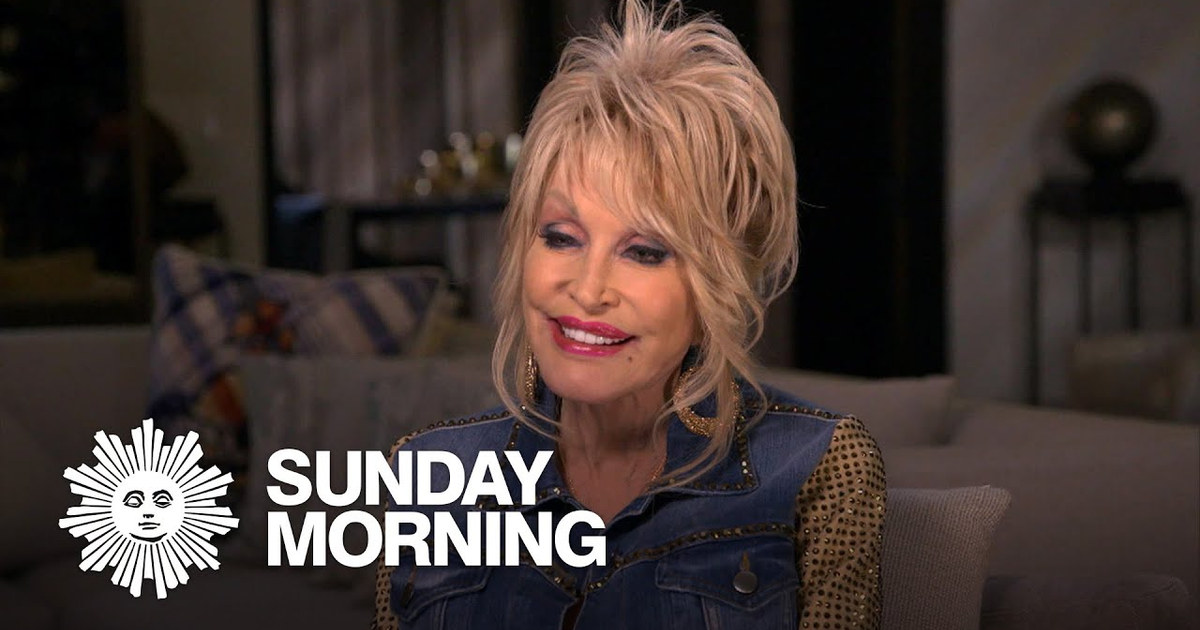
The songs outlived the decade. 'Jolene' outlived the 1970s. 'I Will Always Love You' outlived the 1990s. '9 to 5' outlived the office. And Dolly Parton is still writing, still recording, still touring. She's 73 in this interview, and when people ask when she's going to retire, she doesn't even understand the question. 'Sit on your pile of money and awards?' she says. 'I don't care.' She counts blessings more than money. She never worked for the money. She worked for the art. And the art keeps coming.
That's the thing about a name on a bus. You never know what it's going to become. Dolly Parton heard 'Jolene' and held onto it like a secret. She turned it into a song that's been sung for fifty years. She turned a bank teller's flirtation into a permanent ache. She turned a coat of rags into a lesson about love. She turned a breakup into a Whitney Houston anthem. She turned her own artificiality into a statement of authenticity. And she did it all while never looking back. The applause is still going. And she's still walking that road.
Dora Lee, the Feminist Question, and the Applause That's Still Going
There’s a scene in 9 to 5 where Dora Lee—Dolly’s big-screen debut—finally gets the best of her abusive male boss. It’s a small, specific moment of triumph, the kind that makes a theater erupt. And it’s the seed for everything that follows: Dolly’s Hollywood turn, the feminist question she’s been asked a thousand times, and the applause that started in a tiny room when she was ten and still hasn’t stopped.
That 1980 film, directed by Colin Higgins, turned Dolly into a movie star overnight. She played Dora Lee, a secretary who joins forces with Jane Fonda and Lily Tomlin to take down their sexist, egotistical, lying, hypocritical bigot of a boss. The movie was a hit—and for many viewers, Dora Lee became a feminist hero. Not because she gave speeches, but because she got even. She got the best of the man who’d been pushing her around. And she did it with a wink, a wig, and a whole lot of nerve.
But ask Dolly if she’s a feminist and she’ll give you that trademark laugh. 'Well, I guess I am,' she says, 'but I don’t think of it like they do. I’m a feminine girl. I’m a working girl. I think we all should be treated with respect and if we do a good job we should get paid for it. So I’m all about that.'
That’s Dolly in a nutshell: she sidesteps labels and goes straight to the heart. Respect. Fair pay. A good job. It’s not a political platform—it’s just common sense. And it’s why she’s resonated for decades, from country music fans to Hollywood audiences to anyone who’s ever felt underestimated.
She’s still walking that road, too. 'I knew early on that I was going to walk that road till God told me to stop,' she says, 'and I’m still walking it and he said nothing to me about couldn’t yet.' That includes a sequel to 9 to 5. She mentions it casually, like it’s just another item on a to-do list that never ends. No cast details, no release date—just the promise that Dolly isn’t done yet.
At 73, she still works 24/7. Retirement? She laughs at the idea. 'People always say, why don’t you retire?' she says. 'What does that even mean? Sit on your pile of money and awards? I don’t care. I always count my blessings more than I count my money. I don’t work for money, never did. I just wanted… it was the art. It was the job I loved. The work. And I’ve done well and I’m thankful for it.'
[[AD]]
That’s the thing about Dolly. The money, the awards, the hundred million albums—they’re just byproducts. The real reward is the work itself. Songwriting, she says, is her 'god zone.' Her little guitar is her friend. And when she’s in that zone, nothing else matters. Not the critics, not the charts, not the endless speculation about her appearance. Just the song.
She’s open about everything, including her cosmetic surgery. In her song 'Backwoods Barbie,' she sings, 'Don’t be fooled by thinking that the goods are not all there. It is true that I look artificial, but I believe that I’m totally real.' And she’ll tell you straight: 'I wasn’t naturally pretty, so I make the most of anything.' She’s not ashamed of it. She’s not apologizing. She’s just Dolly.
That honesty is part of her charm. She’s full of one-liners, too. When asked how long it takes to do her hair: 'I wouldn’t know, I’m never there.' Are they real? 'They’re real expensive.' How does she want to be remembered in 100 years? 'I want them to say, God, don’t she look good for her age.' It’s self-deprecating, but it’s also true. She’s built a persona that’s larger than life, and she’s in on the joke.
But behind the jokes is a work ethic that’s almost superhuman. She’s written more than 3,000 songs. Her favorite? 'Coat of Many Colors,' a story from her childhood about a coat her mother made from rags. It’s a song about poverty, but also about love. And it’s that love—for her family, for her fans, for the music—that keeps her going.


