Part 1
The Night a Ten-Year-Old Heard the Clapping
She is ten years old, and the room is nothing like the rooms she knows. It is not the crowded bedroom she shares with brothers and sisters, not the porch with the guitar she has not yet learned to hold right. It is a stage, or something that will have to pass for one, and the audience is a blur of faces she cannot name. Her uncle brought her here. He said sing, so she sings.
When the song ends, something strange happens. The clapping does not stop. It keeps going, palm against palm, a wave that does not break where she expects it to break. She is scared. She is nervous. She is a country kid with a voice too big for her body, and the sound is louder than her heartbeat. Her mind has not caught up yet. Her body knows first. The skin on her arms knows. The back of her neck knows. And somewhere in that endless second, a thought arrives that will never leave her: this is what I think I'm gonna do.
That is the seed. Everything else — the wigs, the rhinestones, the hundred million albums, the shelf of Grammys, the theme song that still plays every Labor Day — grows out of that one room, that one clap, that one child deciding she has found the thing she is supposed to do.
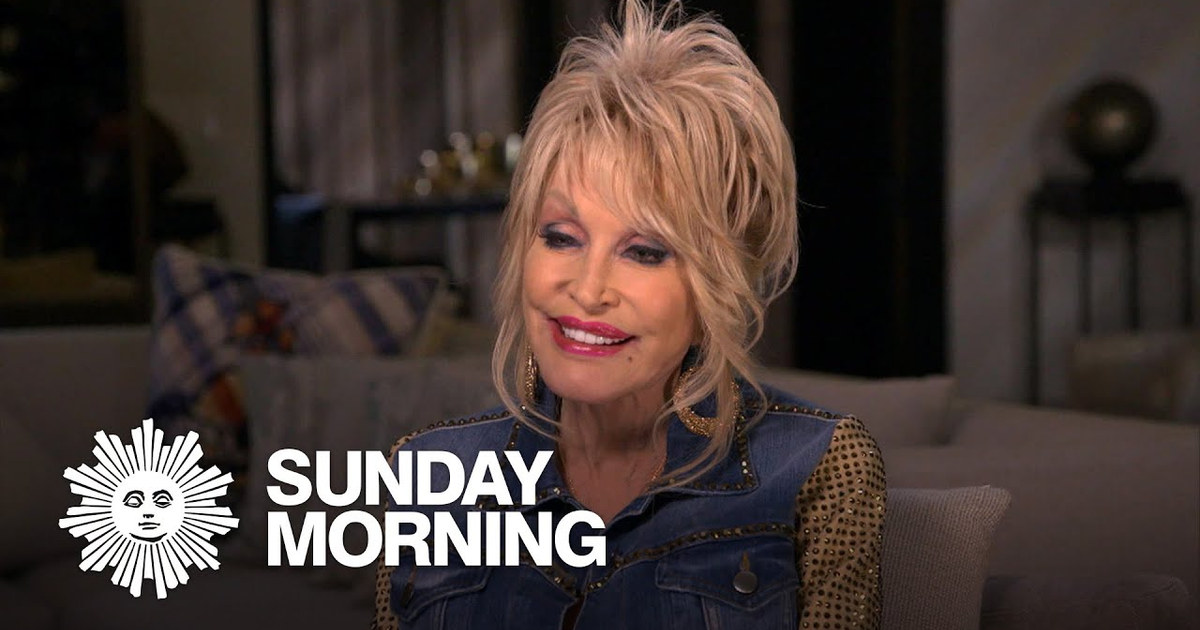
Dolly Parton tells this story to Lee Cowan in a CBS Sunday Morning interview, and she tells it plainly, the way you tell a story you have told a thousand times because it is the truest thing you know. She was the fourth of twelve children in rural Tennessee. Her mother, impressed by the songs her daughter was already writing, would tell her: honey, don't get a guitar out, you just sing them. And then she would turn to whoever was in the room and say, I want you to hear this song this real thing wrote. That is where the applause began, long before any audience showed up. A mother's pride is its own kind of clapping.
Parton wrote a song years later called "In the Good Old Days (When Times Were Bad)." The line goes: no amount of money could buy for me the memories that I have of them, but no amount of money could pay me to go back again. That is the whole equation of her life in two sentences. The memories are precious. The poverty was not. She has never pretended otherwise, and she has never stopped being grateful for the way music made everything a little brighter. When she says she loved the sound of the instruments, loved being able to create something, loved the little space in the little world of her home where she could just live and be creative — she is describing a private country. A god zone, she calls it now. My little guitar is my friend. Songwriting is my therapy.
Here is the thesis, and it is simple enough to fit on a postcard: Dolly Parton's career is not a business plan. It is one child's private god zone that happened to scale. She did not sit down at ten years old and map out a five-year strategy for dominating country music, crossing over to pop, and becoming a cultural institution. She heard applause and thought, this is what I think I'm gonna do. The rest is just the sound of that decision echoing outward for sixty-plus years.
Follow the echo and you get the whole career. The echo goes to Nashville, where a teenage girl with a guitar and a voice too big for any room starts knocking on doors. It goes to the Porter Wagoner show, where she sings before a national audience and learns how to hold a camera the way she once learned to hold a note. It goes to a little redheaded girl with green eyes who gives her a name — Jolene — and to a bank teller who flirted with her husband, and to a song that will outlive everyone in this paragraph. It goes to 1980, to a movie called 9 to 5, to a character named Doralee Rhodes who gets the best of an abusive male boss, and to a title song that becomes a working girl's anthem. It goes to 1992, to Whitney Houston and The Bodyguard, to "I Will Always Love You" becoming one of the biggest songs of all time. It goes all the way back to that first clap, which is still happening, somewhere, every time someone presses play.
Lee Cowan's CBS Sunday Morning interview is the frame that holds this story together. It is where Parton says she works way more than 9 to 5, where she calls her creative time her god zone, where she says she counts her blessings more than her money, where she admits she was not naturally pretty and made the most of everything anyway. It is where she delivers the line about "I Will Always Love You" — she can have the credit because I get my cash — with the timing of a stand-up comic. And it is where she tells the story of the ten-year-old and the applause, which is the moment this whole piece radiates from.
It is worth pausing on the Labor Day hook, because it is not an accident that CBS ran this interview when it did. "9 to 5" is the song that made Dolly Parton a legend of country music and a working girl's anthem at the same time. The movie came out in 1980, directed by Colin Higgins, starring Jane Fonda, Lily Tomlin, and Dolly Parton as three secretaries who turn the tables on their sexist boss. The song went to number one on the country charts and crossed over to pop, and it has been playing in offices ever since. It is a song about getting paid what you are worth, about respect, about the difference between a job and a calling. Parton has said she is all about that. She has also said she is a feminine girl, a working girl, and that she thinks we all should be treated with respect and if we do a good job we should get paid for it. That is not a complicated philosophy. It is just a ten-year-old's honesty, grown up and set to a beat.


