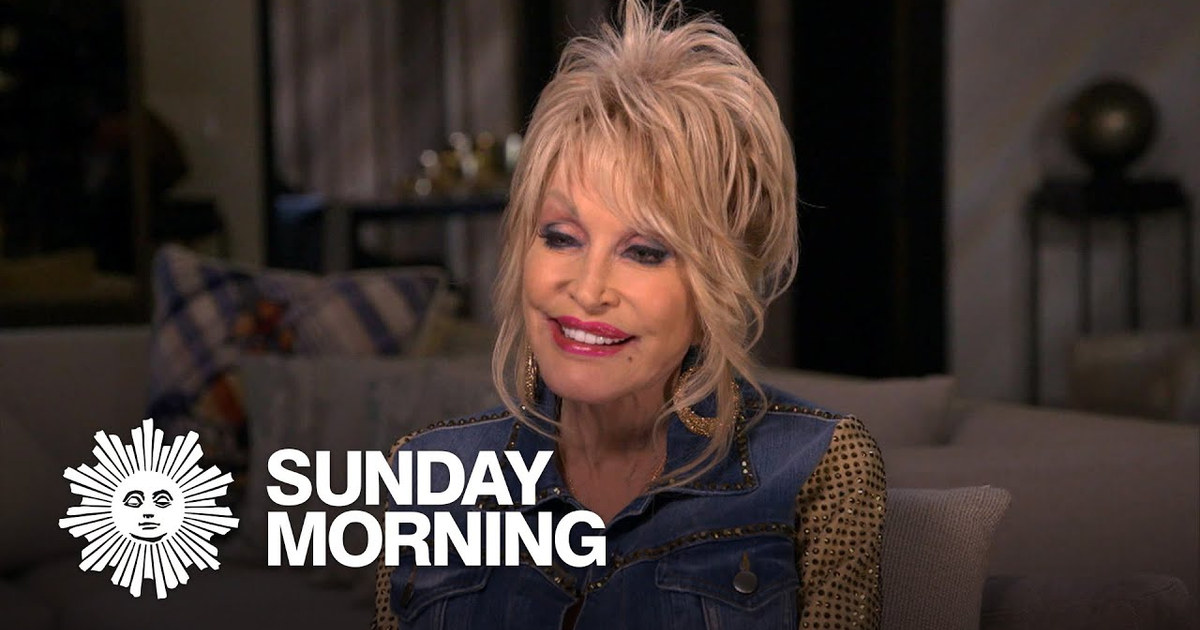
Part 1
The Coat of Many Colors: A Detail That Tells the Whole Story
First, look at this: a coat made of rags. Not a rhinestone gown, not a platinum record, not a theme park. A patchwork coat sewn by a mother’s hands in the Great Smoky Mountains. That coat is the key to Dolly Parton. It’s the subject of her favorite self-written song, “Coat of Many Colors,” and it’s the single detail that unlocks everything else about the most decorated female country artist in history.
Dolly wrote the song as a child in rural Tennessee. She was the fourth of twelve children. Her mother made her a coat from scraps of fabric, and the other kids laughed at her. But Dolly felt rich. Why? Because her mother told her the biblical story of Joseph and his coat of many colors. In that moment, a pile of rags became a treasure. That’s the whole Dolly Parton philosophy in one image: the world sees scraps, she sees a story.
How does a poor kid from the Great Smoky Mountains turn a patchwork coat into a global brand? The answer is in the song. Dolly has said she counts her blessings more than her money. The coat is a metaphor for her art—made from humble materials but priceless. Every song she writes, every performance she gives, is stitched together from the fabric of her life. And she has stitched together a lot: over 3,000 songs. That’s not a typo. Three thousand. She’s sold more than 100 million albums. She’s won a shelf full of Grammys. And she’s still working.
But the coat isn’t just a song. It’s a mission statement. Dolly’s entire career is a coat of many colors. Country, pop, Hollywood, Broadway, philanthropy—each patch is a different shade. She’s the glitzy big-haired queen of country glamour, but she’s also the little girl who felt rich in a coat made of rags. That duality is her superpower. She can crack a joke about her hair (“I wouldn’t know, I’m never there”) and then turn around and write a song that makes you cry. She can be artificial and totally real at the same time. As she sings in “Backwoods Barbie”: “Don’t be fooled by thinking that the goods are not all there… I believe that I’m totally real.”
So before we tour the rest of the archive—the hits, the movies, the persona—start here. Start with the coat. Because if you understand why a patchwork coat made a little girl feel like a queen, you understand why Dolly Parton never retired, why she still works 24/7, why she calls songwriting her “God zone.” She’s not chasing money. She’s chasing that feeling. The feeling of creating something from nothing. The feeling of being rich when you have nothing. The feeling of turning rags into art.
And that’s just the first stop on the tour. Next, we’ll look at how she turned heartbreak into an empire with “Jolene” and “I Will Always Love You.” But first, go back and listen to “Coat of Many Colors.” Listen to the words. Listen to the pride in her voice. That’s the sound of a legend being born.
From 'Jolene' to 'I Will Always Love You': The Art of Turning Pain into Power
Stop two on our tour. Last time we lingered over a coat stitched from rags and love. Now we step into the room where Dolly Parton turns heartache into hits. Two songs, written within a year of each other, tell the whole story: 'Jolene' in 1973 and 'I Will Always Love You' in 1974. Both came from real life. Both became classics. And both prove that Dolly's greatest instrument isn't her voice—it's her honesty.
First, look at this: a redheaded bank teller. That's where 'Jolene' begins. Dolly has said the name came from a fan she met after a performance on 'The Porter Wagoner Show'—a little girl with green eyes who introduced herself as Jolene. Dolly loved the sound of it. But the song's fire came from a different redhead: a bank teller who flirted with Dolly's husband, Carl Dean. Dolly didn't confront her. She wrote a song instead. The result is one of the most covered, most haunting country singles ever recorded.
But here's what makes 'Jolene' more than a jealousy anthem. It's a plea. Dolly begs Jolene not to take her man, but she does it with vulnerability, not venom. She admits she can't compete: 'I'm begging of you please don't take my man.' That's the craft. She turns a private fear into a universal feeling. And she does it in under three minutes. The song hit No. 1 on the country charts in 1974. It's been covered by everyone from The White Stripes to Miley Cyrus, but Dolly's original still cuts deepest.
Now, the second song. 'I Will Always Love You' was also born from pain—but not romantic pain. It was a goodbye to Porter Wagoner. Dolly joined 'The Porter Wagoner Show' in 1967, and it gave her national exposure. For seven years, they were a duo. But by 1974, Dolly wanted to go solo. The split was bitter. Porter sued her. Yet Dolly wrote him a song of gratitude and farewell. She sang it to him in his office. He called it the best song she'd ever written. It went to No. 1 on the country charts twice—once in 1974 and again in 1982, when she re-recorded it for the film 'The Best Little Whorehouse in Texas'.


