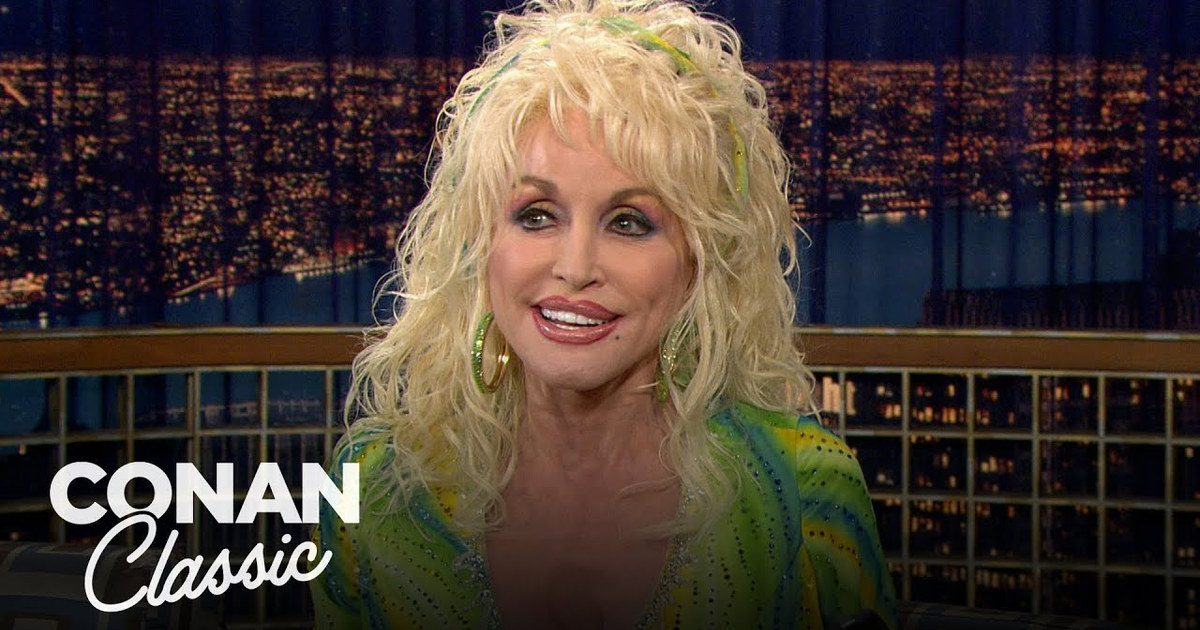
There are two ways to look at a legend like Dolly Parton. If you’re a genre enthusiast, you see the rhinestone-studded icon, the voice that defined country music, and the woman who turned '9 to 5' into a cultural manifesto. If you’re a craft-focused viewer, you see something else entirely: a master of narrative architecture, a woman who has engineered her public persona with the precision of a high-level programmer debugging a complex system.
Whether you’re here for the genre-defining hits or the sheer craft of her career longevity, there is a fascinating intersection where the two meet. It’s the space where Dolly manages to be both a global superstar and the girl from the Smoky Mountains who still keeps a gun in her purse just in case.
In a recent conversation, Dolly peeled back the layers of her early New York City experiences, revealing a side of her history that feels like a script straight out of a gritty 70s thriller. It’s a reminder that before the glitz, there was the grind.
[[AD]]
The NYC Origin Story: A Lesson in Conflict Resolution
Dolly’s first trip to New York in the late 60s wasn’t a glamorous press tour. It was a classic 'fish out of water' scenario. She and her lifelong friend Judy Ogle checked into a hotel, only to find their luggage unceremoniously dumped in the hallway by management who had made some rather incorrect assumptions about their profession.
Lost in the city, the pair found themselves on 42nd Street, dealing with an unwanted pursuer. The way Dolly recounts the incident—pulling a gun from her purse and threatening to turn the man from a 'rooster to a hen'—is pure, unadulterated narrative gold. It’s the kind of sharp, decisive action that later found its way into the screenplay for '9 to 5'.
For the craft-focused, this is a masterclass in source material. Dolly doesn't just live her life; she archives it, refines it, and repurposes it. That specific line of dialogue didn't just appear in a vacuum; it was a direct extraction from a real-world, high-stakes moment.
[[AD]]
The Architecture of Humility
How does someone maintain a sense of self when the world is constantly trying to project a caricature onto them? Dolly’s answer is a lesson in grounding. She credits her family, specifically her father, for keeping her ego in check. When she bragged about a bronze statue erected in her honor, her father reminded her that while she might be an idol to her fans, she was merely another target for the local pigeons.
It’s a perfect metaphor for the entertainment industry. You can build the monument, but you have to live in the environment. Dolly understands that the 'statue' is a product, a piece of engineering designed for the public, while the 'person' is the one who has to navigate the messy, unpredictable reality of daily life.
The Tabloid Feedback Loop
Then there is the tabloid obsession. For decades, the press has fixated on her physical appearance, specifically her bust size. They’ve written stories claiming she’s bedridden, unable to move due to her own anatomy. It’s a bizarre, persistent glitch in the media narrative.
[[AD]]
Dolly handles this with the same dry, precise wit she applies to everything else. She acknowledges the absurdity, laughs off the 'freak stories,' and moves on. She doesn't fight the narrative; she just reframes it. She knows that the tabloid machine needs fuel, and she’s smart enough to provide just enough to keep the engine running without letting it burn down the house.
[[VIDEO]]
The Takeaway: Craft Meets Genre
Whether you’re analyzing her as a songwriter, an actress, or a cultural phenomenon, Dolly Parton remains the ultimate case study in intentionality. She is the rare artist who understands that the 'genre'—the sequins, the hair, the jokes—is just the user interface. The 'craft' is the steel-trap mind and the unwavering grit underneath.
Next time, we’ll be diving into the technical breakdown of the '9 to 5' production design and how it set the standard for workplace comedies for the next forty years. Stay tuned.


