Part 3
She's said she wishes she had written it. But the fact that she didn't — and still made it the definitive version — is the whole point. The song became a tool. Dolly used it to reframe how men saw her. She didn't fight the blonde stereotype head-on. She didn't write an angry protest song. She exposed the stereotype with a wink and a steel guitar, and in doing so, she took control of the image that everyone else thought they owned.
[[AD]]
That's the larger argument of this whole piece. Dolly Parton's self-invention wasn't about rejecting what people saw. It was about directing it. 'Dumb Blonde' was the first time she got to be the cinematographer of her own image — and she lit herself like a star.
What to Watch For: Dolly's Self-Directed Image and the Business of Being Seen
Picture the scene: a young Dolly Parton sits in a Tennessee church, her grandfather at the pulpit, thundering about hellfire and calling her Jezebel. Most kids would crumble. Dolly? She looked him dead in the eye and asked, “I want to go to heaven, but do I have to look like hell when I get there?” That line—equal parts sass and self-assurance—is the first clue that Dolly’s image was never an accident. It was a calculated exposure, and she controlled it from day one.
In cinematography, we talk about the exposure triangle: aperture, shutter speed, and ISO. Nail all three and you get a perfect image. Miss one and you’re either blown out or lost in the shadows. Dolly understood this instinctively. Her look—the big hair, the bold makeup, the rhinestones—was her aperture, wide open to let in maximum attention. Her timing—arriving in Nashville at 18, recording “Dumb Blonde” at 19—was her shutter speed, capturing the cultural moment with razor precision. And her ISO? That was her inner sensitivity, the sharp awareness of how men viewed her and how to handle them without ever losing her own light.
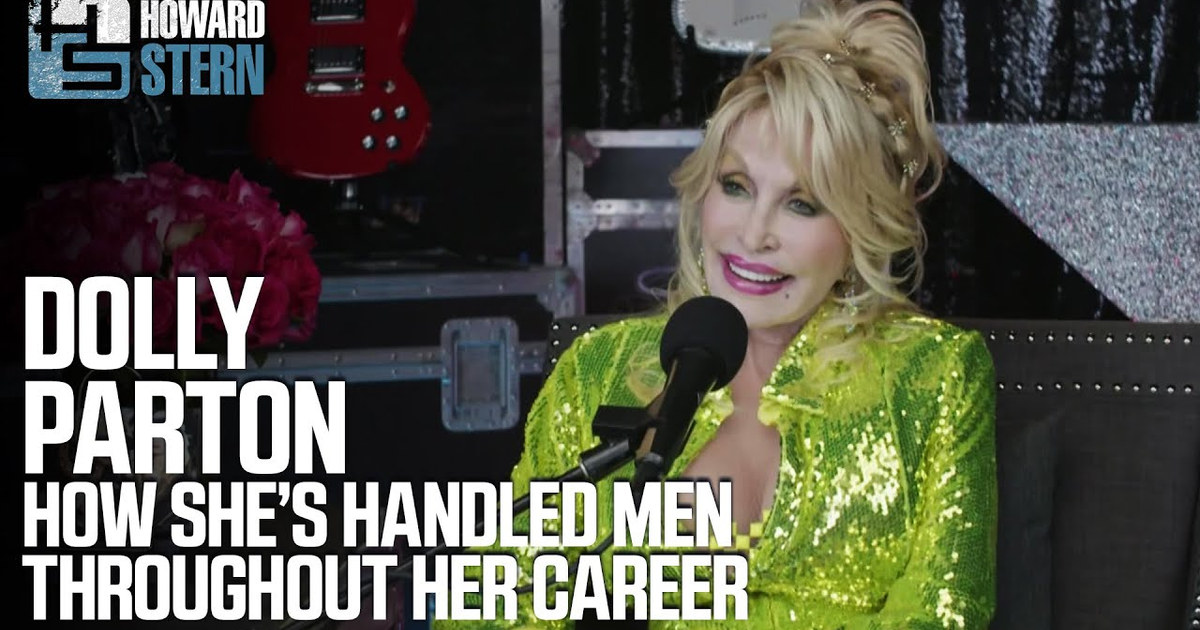
The backlash was real. Her family disapproved. Men in the business propositioned her, assuming she was a rube—a naive 19-year-old from the sticks they could manipulate. But Dolly never took it wrong. “I love men,” she has said, and she knew how to handle them. She had six brothers, a dad, and uncles; she understood the language. When a guy suggested dinner and drinks in exchange for a record deal, she didn’t flinch. She never slept with anyone to get ahead. If she slept with someone, it was because she wanted to. That’s the balance of the exposure triangle: knowing when to open up and when to stop down.
Ad
What’s remarkable is how consistent Dolly has been. She says, “Daddy couldn’t whip it out of me, Mama couldn’t talk it out of me, Grandpa couldn’t preach it out of me.” That’s not stubbornness; that’s a locked-in vision. Think of a cinematographer who creates a LUT—a lookup table—for a franchise and sticks to it across every sequel. Dolly’s look is her LUT. From the 1960s country music scene to Monument Records to the Grand Ole Opry stage, she never changed her palette. And that consistency became a brand that transcended music, leading to film and TV. She didn’t just sing; she became a visual icon.
Video
So what do you watch for? Dolly’s ability to be both the subject and the director of her own image. She never let anyone else light her. In an era when men controlled the business, she owned her frame. That’s the lesson for any creative: know your frame, own your exposure, and never apologize for your key light. Dolly Parton didn’t just make it in Nashville; she made Nashville see her on her terms. And that’s a wrap—until next time, when we look at how Dolly took this self-directed image and turned it into a global empire, from “Jolene” to “9 to 5” and beyond.


