Part 1
The Beat You'd Keep
Every interview is a cut list. Coverage, coverage, coverage. Then one beat you'd keep if the building caught fire.
In Barbara Walters' No Frills sit-down with Dolly Parton, that beat shows up early. No setup. No music cue. Four words.
"Would you mind standing up?"
[[AD]]
Watch Dolly's face. She doesn't flinch. She doesn't fake surprise. She hedges.
"Well, this is not — you know, I'm not all that curvy in this outfit."
Walters volleys. "Well, it's not bad."
Dolly goes right back at it. "I'm not all that curvy."
[[AD]]
That's the whole woman in eleven seconds of tape. Walters asks for the body. Dolly hands over the body — and takes custody of the question at the same time. Both things. Same breath.
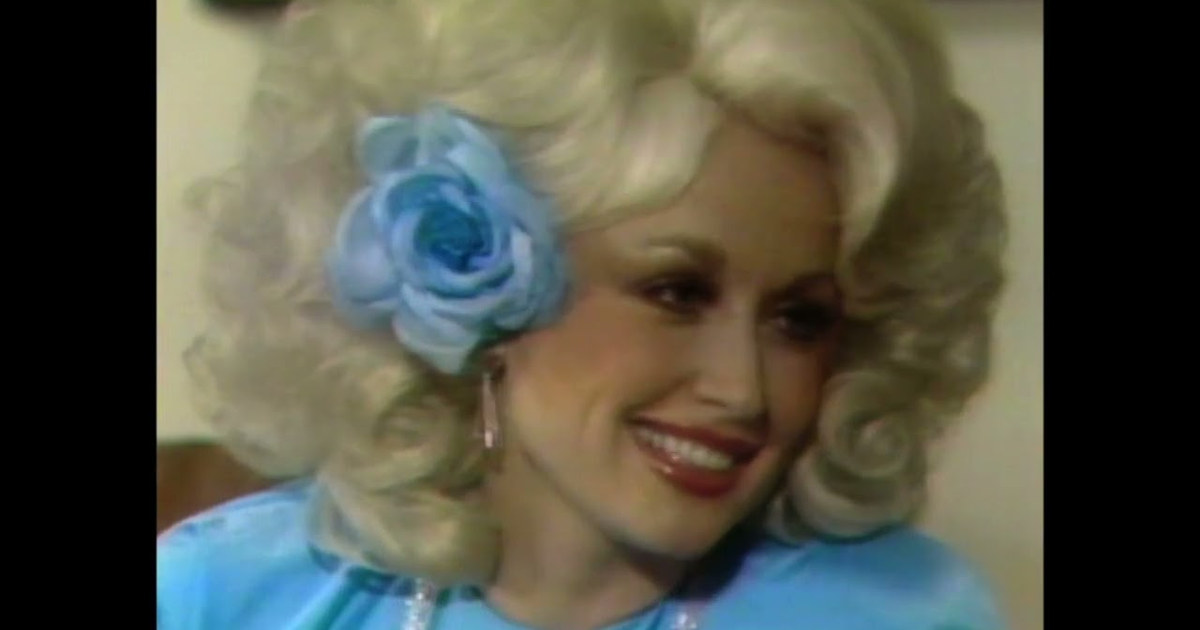
Everything else in this interview lives downstream of that moment. The log cabin. The hillbilly question. The wig. The husband nobody has ever seen. The plan to be a universal superstar.
The stand-up is the trailer. The rest is the movie. Let's cut the movie.
Log Cabin. Little Pigeon River. Twelve Kids.
Start where Walters starts. The beginning.
Dolly was born in a little log cabin on the banks of the Little Pigeon River. Three other children in the house at the time. Twelve total, eventually. Eight of them younger than her.
[[AD]]
Walters goes for the loaded word fast. "Dolly, where I come from, would I have called you a hillbilly?"
Dolly doesn't blink. "If you had have, it would have been something very natural. But I would have probably kicked your shins or something."
Then she does the move she makes all interview long. She takes the word, holds it up to the light, and re-labels it on her own terms.
Yes, those were the people, she says. The Li'l Abner people. The Daisy Mae people. The kind the culture borrowed from and then laughed at.
[[AD]]
"But we were very proud people. People with a lot of class. It was country class, but it was a great deal of class."
She keeps going. Most of her people weren't educated, she says. They were intelligent. "Good common sense. Horse sense, we called it."
That's the ground under the stand-up. A woman who has spent a lifetime being asked to be looked at — and just as long deciding what the looking means.
"I Felt That I Never Belonged"
Walters pulls an old quote out of the drawer. Dolly once said she never felt like she belonged. That she was always different.
Dolly doesn't walk it back. She explains it. She wanted more than to be a farmer's daughter — proud as she is to be one. She wanted pretty things. She wanted money to buy them. She wanted, in her own words, to be a star.
Not a subtle want. A clean one. The want is the logline.
Then Walters asks the question the room is already thinking. Did young Dolly look like this? The hair, the shape, the whole package.
[[AD]]
"I've always been pretty well blessed," Dolly says. "As a child, I grew up fast."
And then it comes. Her assistant asked her the thing, she says — and she's blaming the assistant, because she wouldn't have had the nerve otherwise.
"Is it all you?"
"Well, I can't show you here on television."
[[AD]]
That's the first answer. Then she gives the real one. People ask her constantly. Some swear yes. Some swear no. Her stock reply: if she hadn't had it on her own, she's exactly the kind of person who'd have gone and gotten it.
Notice what she never does. She never denies the construction. She never apologizes for it either.
"I Would Never Stoop So Low as to Be Fashionable"
Here's the line that should be printed on the back of every Dolly Parton record: "I've often made this statement that I would never stoop so low as to be fashionable. That's the easiest thing in the world to do."
Read it the way a trailer editor reads a logline. She isn't decorating herself. She's engineering an entrance.
The plan, in her words: get their attention first. Let them get past the shock of "the ridiculous way I looked." Then they'd find the parts worth appreciating.
[[AD]]
"I'm very real where it counts," she says. "And that's inside."
She calls show business "a money-making joke" and says she's always liked telling jokes. Then the punchline lands hardest of all. People thought the joke was on her. It's been on the public. She knows exactly what she's doing — and she can change it any time.
She makes more jokes about herself than anyone else does. That isn't damage control. That's armor, built on purpose.
Which brings you right back to the stand-up. Same move. She doesn't defend the outfit. She edits it. "I'm not all that curvy in this outfit." She got to the joke before Walters could.
[[AD]]
Then she stands. Walters takes the measurement question and Dolly refuses to give numbers. Just her weight. 120.
Walters offers the exit door. You're beautiful. You don't have to wear the blonde wigs. You don't have to wear the extreme clothes.
Dolly's answer is one word of ownership: "It's certainly a choice."


