Part 2
So here's the rhetorical question that hangs over this entire stop on the tour: When Dolly says "country class," what exactly is she defending? Is it her family? Her neighbors? Her own younger self, the girl with the patchwork coat and the big dreams? The answer is all of the above — and something bigger. She's defending the idea that dignity is not distributed by geography or income. She's defending the right of rural people to define themselves. And she's doing it not with anger, but with wit. That's why it still lands today. Because the same stereotypes still float around. The same jokes still get made. And Dolly's response — a smile, a story, a shin-kick — still works.
The broader Appalachian representation conversation has been going on for decades — from "Deliverance" to "Justified" to countless documentaries and news segments that parachute into the mountains looking for poverty and despair. But Dolly Parton didn't wait for the culture to catch up. She walked into the room, corrected the record, and made you laugh while she did it. That's not just class. That's country class.
And now go back and watch the opening again. Watch the way she leans in when she says "I would have probably kicked your shins." Watch the glint in her eye. She's not offended. She's in control. She's been in control the whole time. And that's the first thing you need to know about Dolly Parton before we move on to the next stop on our tour: the wig, the body, and the business of being unmissable.
[[AD]]
Stop 2: The Body, the Wig, and the Business of Being Unmissable
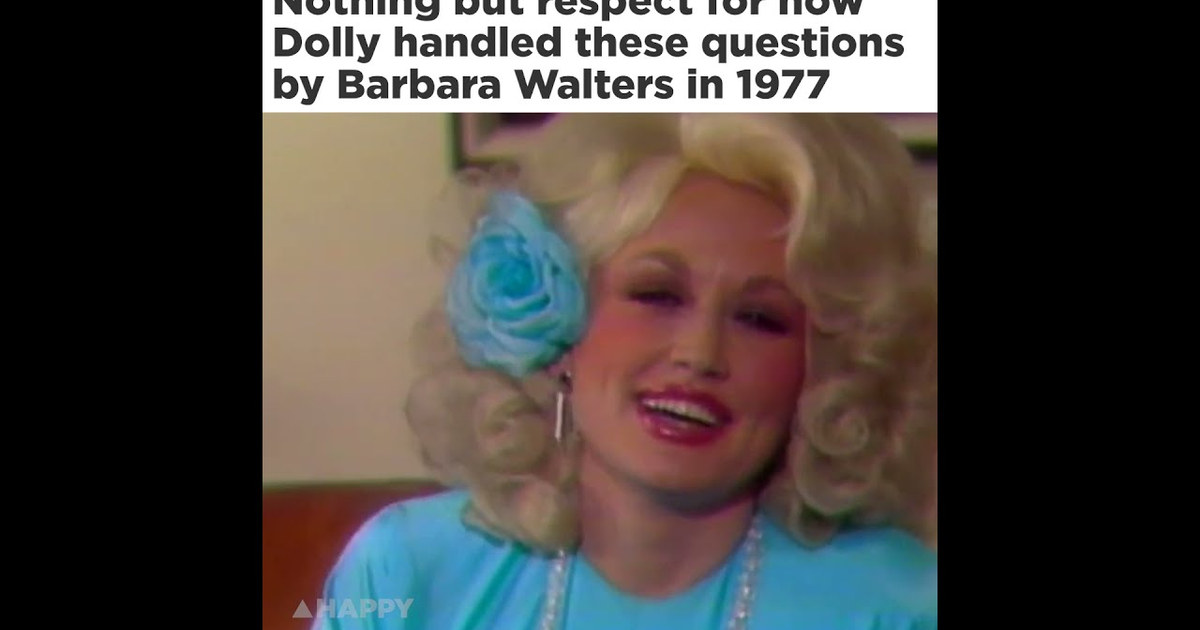
First, look at this: an interviewer, visibly nervous, asks Dolly Parton the question everyone’s thinking but few have the nerve to say out loud. Is her figure… all hers? Dolly doesn’t flinch. She laughs and delivers a line that belongs in a comedy hall of fame: “If I hadn’t have had it on my own, I’m just the kind of person that would have had me so made.” It’s disarming, self-deprecating, and completely in control. In one breath, she owns the rumor, the joke, and the narrative. That’s not an accident. That’s a masterclass in image management.
You might think the wig, the rhinestones, the impossible waistline — they’re just showbiz excess. But Dolly has always known exactly what she’s doing. She once said, “I would never stoop so low as to be fashionable.” On the surface, it sounds like a throwaway quip. It’s not. It’s a strategy. Fashion changes. Trends fade. But a look that is entirely your own? That’s forever. And Dolly built a brand so distinct that you can recognize her silhouette from a mile away — and she did it on purpose.
[[VIDEO]]
Let’s trace the evolution. When Dolly first appeared on The Porter Wagoner Show in 1967, she was a young singer with a big voice and a modest, country-girl look. But by the early 1970s, she was already experimenting with blonde wigs and flashier outfits. By the 1980s — the era of 9 to 5 (1980, 109 minutes) and The Best Little Whorehouse in Texas (1982, 114 minutes) — the Dolly look was fully formed: towering blonde hair, tight sequined dresses, and a presence that filled the screen. She wasn’t just a country singer anymore; she was a visual icon. And she knew that the extreme look was a hook. As she put it, once people got past “the shock of the ridiculous way I looked,” they’d see “there was parts of me to be appreciated.”
That’s the thing about Dolly’s appearance: it’s a filter, not a mask. The wig and the rhinestones are so loud that they drown out the noise of everyday judgment. They force you to either dismiss her or dig deeper. And if you dig deeper, you find the songwriter behind “Jolene” and “I Will Always Love You,” the businesswoman behind Dollywood, the philanthropist behind the Imagination Library. The look is a test. Most people fail it at first. But Dolly doesn’t mind. She’s playing the long game.
She once said, “Show business is a money-making joke, and I just always like telling jokes.” That’s not cynicism. That’s ownership. She understands that the whole enterprise is a bit absurd — the lights, the costumes, the interviews — and she’s decided to be the one telling the joke, not the one being told on. When asked if she ever feels like the joke, she doesn’t hesitate: “The people have thought the joke was on me, but it’s actually been on the public. I know exactly what I’m doing and I can change it at any time.” Read that again. She’s not defensive. She’s not hurt. She’s stating a fact. She is the one holding the pen.
And she’s not alone in using an exaggerated persona as armor. Liberace, with his candelabras and fur capes, was a piano virtuoso hiding in plain sight. Elton John, with his feathered boas and giant glasses, used flamboyance to protect his privacy. Lady Gaga, with her meat dresses and poker faces, turned pop stardom into performance art. But Dolly’s twist is uniquely Appalachian-feminine. She took the “hillbilly” girl from Sevierville, Tennessee, and turned her into a bombshell — but she never lost the country class she talked about. Her look isn’t just camp; it’s a declaration of self-made identity. She’s a woman who grew up poor, became a superstar, and decided that if the world was going to stare, she’d give them something to stare at.


