Part 4
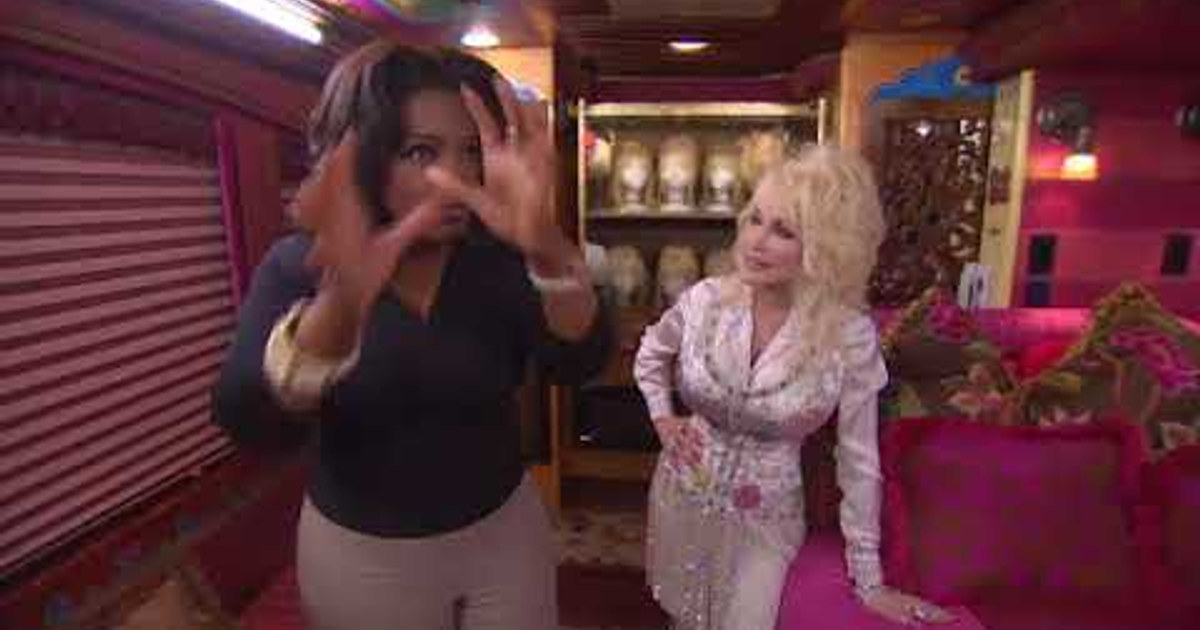
For the genre viewer, the clip delivers exactly what the form promises. Access. Warmth. The bath-tub disbelief beat — “You cannot sit in that tub,” followed by “I do all the time.” A tomato handed over “on your way out.” The bus is a character, and the character has a fridge full of quiche and pork rinds. The form did its job.
For the craft viewer, it’s a masterclass in small-space blocking, in working with available light instead of against it, and in treating hospitality as narrative structure rather than garnish. The camera doesn’t fight the bus. It moves with it. The host doesn’t fight the star. She mirrors her. That’s not luck. That’s engineering with a soul.
Widen the lens briefly to the Dolly canon, so this clip stops floating. The touring-bus-as-character idea sits alongside her screen and streaming work — 9 to 5 (1980), directed by Colin Higgins, 109 minutes, where she turned a workplace comedy into a feminist landmark; Steel Magnolias (1989), directed by Herbert Ross, 117 minutes; Straight Talk (1992), directed by Barnet Kellman, 91 minutes; and Joyful Noise (2012), directed by Todd Graff, 118 minutes. Then the Netflix era: Dumplin’ (2018), directed by Anne Fletcher, 110 minutes, where she wrote and performed the soundtrack and proved she could still run a streaming show; Dolly Parton’s Christmas on the Square (2020), directed by Debbie Allen, 98 minutes; and the documentary Dolly Parton: Here I Am (2019), directed by Francis Whately, 90 minutes, streaming on Netflix. The bus is not an outlier. It’s a recurring set.
Here’s a practical takeaway for anyone shooting in tight interiors. Measure the light before you place the camera. Get control of the HVAC and the fridge. Shoot the pass twice on purpose. Let the person who lives in the space direct the space. The owner is the best location scout you will ever hire. That’s not a metaphor. It’s a checklist.
Note the staying power of the format itself. From MTV Cribs to Architectural Digest’s Open Door, these segments endure because they answer a question fans actually have: what does a working life look like when it is parked at the curb? The bus is the answer. It’s a compromise that has been optimized until it looks like a choice.
So the genre viewer gets the wigs, the warmth, and the tomato. The craft viewer gets the wiring, the blocking, and the interview engineering. Both walk away satisfied because both were watching the same system. A bus is a compromise that has been optimized until it looks like a choice. Next time, a film that builds an entire world inside one room and never once apologizes for the ceiling height.


