Part 2
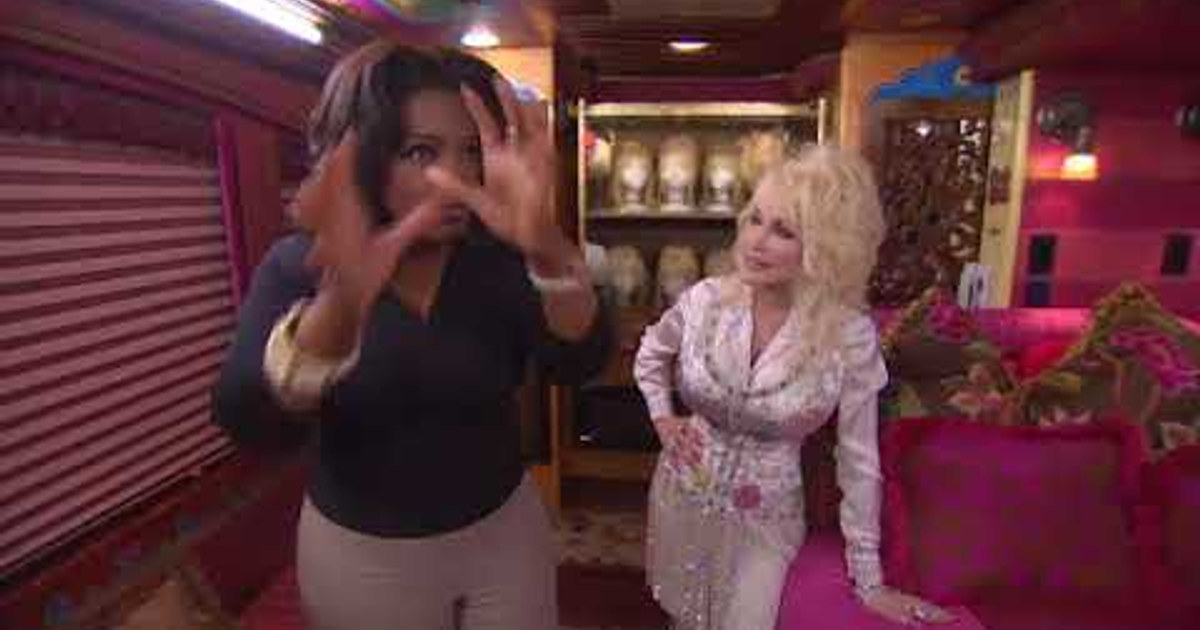
So let’s set up the pivot: next we read the coach as a rig, not a location. We’ll look at how the blocking works in a moving room, how the lighting shifts as the bus rocks, and how the sound is captured when you’re basically inside a giant tin can. We’ll treat the bus like a piece of software—one with a user interface, a data flow, and a few clever hacks. And we’ll do it without picking a superior viewer. The genre viewer is the reason the clip exists; the craft viewer is the reason it survives a second watch. Both notes need each other to make a chord.
Because here’s the thing: Dolly Parton isn’t just showing us her bus. She’s showing us how to be a star who never checks into hotels. She’s showing us that a 40-foot space can be a home, a studio, a chapel, and a stage. And she’s showing us that the wigs and the wiring are the same story. You just have to know which viewer you are—and then watch it again as the other one.
Inside the Tube: Blocking, Light, and Sound in a Moving Room
Shift registers completely: stop watching a celebrity and start reading a rig. A tour coach is a long, narrow, low-ceiling metal box with glass on both flanks, which makes it close to worst-case for exposure and worse-case for sound. If you came for the genre — the wigs, the quiche, the down-home charm — you're in the right place. If you came for the craft — the blocking, the light, the sound — you're also in the right place. The same clip serves both, and that's not an accident. It's engineering.
[[AD]]
Light first. Daylight rakes in from one side, interior practicals fight it from the other, and the windows read either blown out or muddy. There are exactly three legitimate choices. One: flag and cut the window, turning the glass into a soft source and letting the interior sit in a controlled pool of light. Two: expose for the glass, which means the interior falls to shadow and you're grading the whole thing in post. Three: lean into the blown-out window as a motif — the outside world as an unreachable white rectangle, a constant reminder that this box is moving. All three are defensible. None are free. Roger Deakins, in No Country for Old Men (2007, 122 minutes), builds motel interiors that feel lit by whatever was in the room — a lamp, a window, a hallway spill. He doesn't fight the practicals; he lets them be ugly and real. Bradford Young, in Arrival (2016, 116 minutes), lets backlight and haze do the work, refusing the urge to fill every shadow. His interiors feel like memory. Emmanuel Lubezki, in Birdman (2014, 119 minutes) and The Revenant (2015, 156 minutes), pushes natural light to the point where artificial fill would be a betrayal. The Revenant was shot in natural light only, which meant waiting for the right cloud. The bus segment inherits that problem. The coach has glass on both flanks. The sun doesn't care about your schedule. You either block it, embrace it, or run from it. There's no fourth option.
Sound second. HVAC drone, road noise, a refrigerator somewhere, and a mic situation that almost certainly means lavaliers rather than a boom, because a boom cannot live in a corridor with two people in it. This kind of verite segment has no ADR escape hatch. You can't loop the dialogue later without it sounding like a podcast recorded in a closet. You have to get it on the day, in the box, with the drone. Compare Locke (2013, directed by Steven Knight, starring Tom Hardy, 85 minutes). That film is a masterclass in claustrophobic sound design — a man in a car, on a phone, for the entire runtime. The engine hum, the road, the Bluetooth crackle, the occasional silence. It's not a gimmick; it's the point. The bus is a similar acoustic environment. The difference is that Locke had a script and a controlled rig. The bus has Dolly Parton and a camera operator trying not to knock over a lamp. The sound is live, and the live sound is part of the texture. You can't fake a bus. You can only mic it and hope.
Blocking third, and this is the fun part. The host's own body is the camera dolly in scene after scene. Two people passing in a narrow aisle is a choreography problem with exactly one solution, and the clip solves it by repeatedly sitting down — on the bed, on the tiny chair — turning a two-shot into clean singles on the fly. Watch the geometry: the host enters, Dolly leads, and every time they need to reset, someone sits. The bed becomes a staging area. The tiny chair becomes a mark. It's not a limitation; it's a blocking language. You could storyboard it, but you'd end up with the same moves. The space dictates the shots.
[[VIDEO]]
Read the geography out loud: entry, corridor with three bunks and room for a couple of drivers, then the rear room with its own small bathroom and shower. That is a walkthrough with a rising scale of intimacy, which is what a tour segment actually is under the hood. You start in the public zone — the entry, the bunks — and you end in the private zone — the bedroom, the bathroom, the shower. The camera follows the same path a guest would. The cuts get closer. The lens gets tighter. By the time you're looking at the shower, you're in someone's most personal space. That's not an accident. That's a spatial narrative. The bus is a linear space, so the story is linear. Entry, corridor, rear. Three acts. Setup, confrontation, resolution. Or in this case: hello, here are my wigs, here is my shower.


