Part 4
In 2020, she released A Holly Dolly Christmas. A holiday album in the middle of a pandemic, when nobody was touring, when the world was locked down and scared. She invited people into her Christmas. Into her home. Into her warmth. The album hit number one on the Billboard Top Holiday Albums chart and number seventeen on the Billboard 200. It wasn't a cash grab. It was a hand extended through a screen. Come sit by the fire with me. I'll sing.
[[AD]]
That's the pattern. Dolly doesn't perform at you. She invites you in. And once you're in, you don't want to leave.
The bus is the purest expression of that. In an era of private jets and entourages, of artists who arrive in black SUVs with tinted windows and disappear into backstage labyrinths, Dolly rides a bus. She always has. It's a throwback to the country music touring tradition of the 1950s and 1960s, when Patsy Cline rode from gig to gig in a cramped sedan, when Johnny Cash and June Carter traveled with a bus full of musicians and babies and coffee thermoses. That tradition wasn't about luxury. It was about family. It was about the road as a shared life.
Dolly kept that. She didn't trade it for a jet. She made the bus bigger, sure. She made it a double wide on wheels. But she kept the intimacy. The bunks. The little bathroom. The fresh tomatoes. The prayer altar. She kept the thing that makes a legend human.
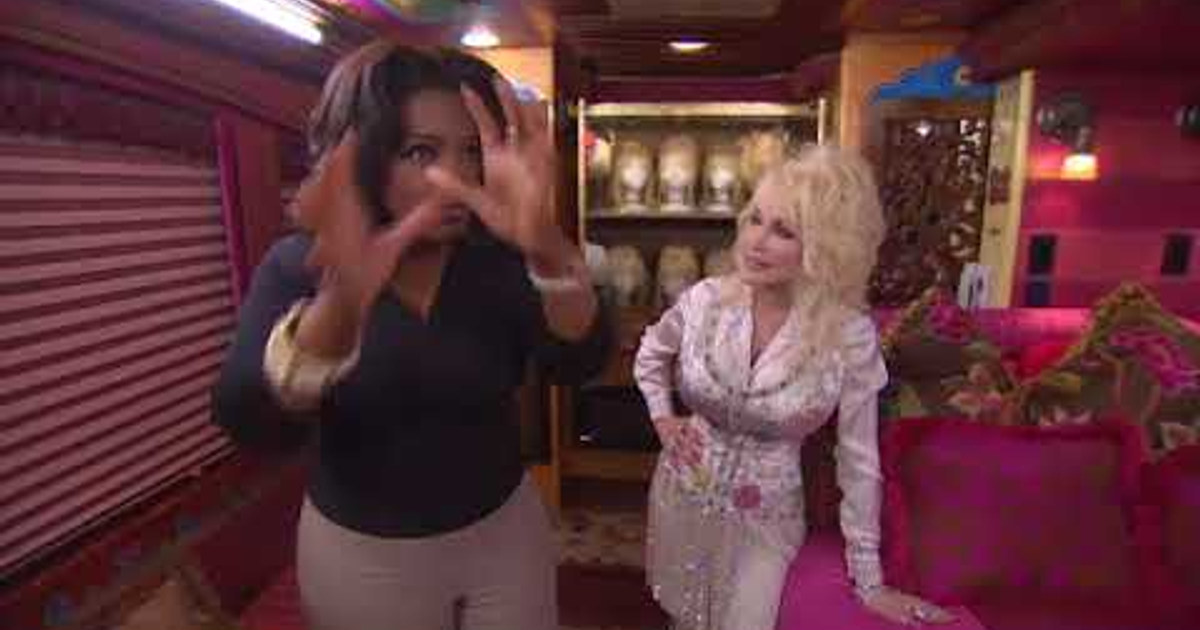
That's what the clip captures. Whether it aired on The Oprah Winfrey Show, which filmed at Harpo Studios in Chicago from 1986 to 2011, or on a similar daytime program, the effect is the same. You see Dolly in her own space. You see the tiny chair. You see the cross she uses as a bookmark. You see the quiche with pork rind crust. You see the ice cream she keeps on hand for when she falls off her low-carb diet. You see the prayer altar. And you realize: she's not hiding anything. She's not curating a myth. She's just showing you her life.
That's the brand. Accessibility. Not the fake kind, where a celebrity lets you see the edge of the mansion but not the inside. The real kind. Dolly lets you see the prayer altar. She lets you see the wigs. She lets you see the little tub she sits in because she's so little. She lets you see the tomatoes. And in doing so, she makes herself not just a star but a neighbor. A friend. Someone you could take a trip with.
That's rare. Most legends build walls. Dolly built a bus and left the door open.
The bus itself is a masterclass in intentional design. It's not small. It's precisely sized. Every inch is accounted for. The bunks for the drivers. The bathroom with the tiny shower. The cosmetic area with the tiny chair. The kitchen with the low-carb quiche and the pork rinds and the ice cream. The prayer altar that folds away. The doors that close off sections for privacy. The colors. The warmth. The cross. The tomatoes. It's a world built to fit one person, and it fits her perfectly.
That's the genius. Dolly didn't try to live in a world built for someone else. She built her own. And then she invited us in.
When she says, 'I'd love to take you on a trip sometime,' she means it. Not literally, maybe. But in the way that matters. She means: come along. Come see what I see. Come sit in the little chair. Come eat a tomato. Come pray at the altar. Come be part of this tiny, glittering world.
The invitation is the point. It's always been the point. From The Porter Wagoner Show to 'Jolene' to A Holly Dolly Christmas to a bus parked outside Harpo Studios at four in the morning. Dolly invites. We accept. And we stay.
The bus is not small. It is precisely sized. And Dolly's genius is making a world that fits her—and inviting us in.
Next time, we'll look at the business empire that grew from that same instinct. Dollywood. The Imagination Library. The intentional design of a life that spans decades. The bus is just the beginning.


