Part 2
How do you even begin to choose songs from a catalog of over 3,000? Dolly said she focused on her main ones. "I did like a 30-minute segment," she explained. "But we had other artists featured — not just on my songs, but their songs, as well." So it's not just a Dolly concert. It's a celebration of the Opry itself, with other artists paying tribute and doing their own hits. That's smart. It keeps the night from feeling like a one-woman show, even though Dolly could absolutely carry it.
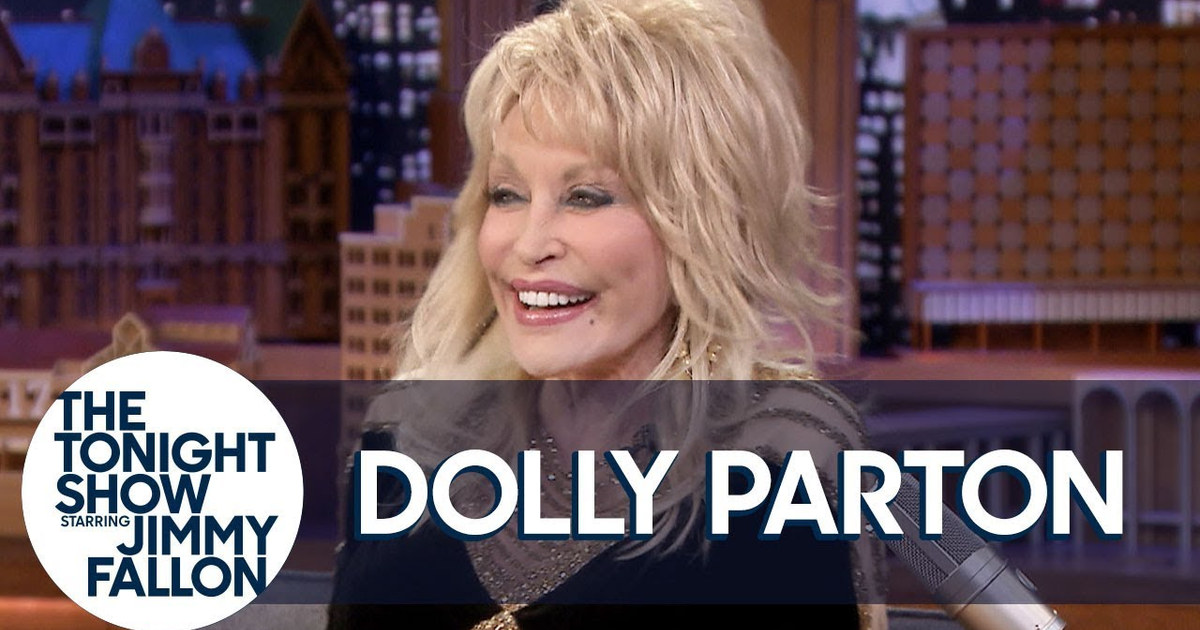
Of course, she opened with "9 to 5." You don't have a 50-year celebration and not play the song that became an anthem for working women everywhere. Fallon asked if she did the hits, and she confirmed: "Yeah, actually, I started out with '9 to 5.'" Then they sang a little together on the show, and Dolly revealed a detail I'd never heard before. When she wrote "9 to 5," she used her acrylic nails to mimic the sound of a typewriter. "I used my acrylic nails on the set when I was writing it," she said. "They make noise, and it sounded like a typewriter to me." She even played them on the record — and the album credits say "Nails by Dolly." That's the kind of trivia that makes you love her even more.
And what does she close with? "I Will Always Love You." Of course. "That's the way I close all my shows and have for many, many years," she said. Fallon called it "the greatest love song in the world." Dolly humbly corrected him: "It's one of them." But here's the thing — that song wasn't originally about romantic love at all. It was about leaving Porter Wagoner, her mentor and duet partner, to pursue her own career. She worked with him for years on his TV show, and when she wanted to leave, he didn't want her to go. "We fought a lot, anyway, 'cause I was stubborn, and he was stubborn," she said. "It was one of those love/hate relationships." She went home heartbroken and wrote the song that would become one of the most covered songs in history. Whitney Houston's version in The Bodyguard (1992) is legendary, but Dolly's original is the beating heart.
That story — the real story behind "I Will Always Love You" — is the kind of thing that makes this special more than just a concert. It's a reminder that Dolly Parton is not just a performer. She's a songwriter's songwriter. She's been writing hits for over half a century, and she's still here, still working, still flirting with Jimmy Fallon.
So if you're new to Dolly — maybe you know her from "Jolene" or the 1980 movie "9 to 5" with Jane Fonda and Lily Tomlin, or maybe you've seen her in "Steel Magnolias" (1989) — this special is a perfect entry point. It's on NBC, and it's streaming now. And if you're a longtime fan, you'll find new layers in the stories she tells. She's not just revisiting the past; she's showing you how it all connects.
And that's just the first five minutes.
50 Years at the Grand Ole Opry: The Stories Behind the Songs
So picture this: Dolly Parton, standing on the stage of the Ryman Auditorium — the Mother Church of Country Music — singing Hank Williams Sr.'s "I'm So Lonesome I Could Cry" completely a cappella. No band. No backing track. Just that voice bouncing off those old wooden pews. If that doesn't give you chills, check your pulse.
That moment is the beating heart of her new NBC special, "Dolly Parton: 50 Years at the Grand Ole Opry." And yeah, it's a celebration. But it's also a history lesson, a victory lap, and a masterclass in how to honor your roots without getting stuck in them.
Let's break down how she pulled it off — and dig into the stories behind the two songs that bookend the whole thing.
A Half-Century at the Opry: "I'm Not Even 50 Years Old"
First, the milestone itself. Fifty years as a Grand Ole Opry member. Dolly's reaction when they told her? Pure Dolly: "I thought, 'I'm not even 50 years old.'" She's joking — she's been in the business since the 1960s — but the point stands. Half a century is a long time to hold a title, especially one she dreamed about as a kid in Sevierville, Tennessee.
She's said it a million times: being on the Opry was always the dream. Not fame. Not money. The Opry. That's the church, and she wanted a pew. So when the invitation came to celebrate 50 years, she didn't just phone it in. She built a whole special around it.
How the Special Works: Two Stages, One Story
Here's the format, because it's clever. The show bounces between the new Opry auditorium — the modern, massive Opry House — and the old Ryman Auditorium, where the Opry actually lived for decades. Dolly filmed a 30-minute segment at the new Opry, performing with a full band and sharing the stage with other artists who did their own songs, not just hers.
But the Ryman is where the magic happens. She went back there to do narration — stories about the old days, vintage footage, photos from when she was just starting out. It's like she's walking you through her own scrapbook, except the scrapbook is a legendary venue and the tour guide is Dolly Parton.


