Part 3
From Fried Clams to 'I Will Always Love You': The Stories Behind the Songs
The room is a hallway. Not a glamorous one. A Howard Johnson's Motor Lodge hallway, early '70s, the kind of carpet that's seen a thousand tour buses and a million bad decisions. Dolly Parton is standing in it, two doors down from the restaurant, and she can hear her band laughing. She can hear them ordering. She can hear the fryer hissing. She is on a liquid protein diet, which means she is drinking something that tastes like ground-up horse hooves three times a day, and she is not eating fried clams. She is, in her own words, feeling sorry for herself. And then she starts to sing: 'Two doors down, they're laughing and drinking and having a party...'
That's how 'Two Doors Down' was born. Not in a Nashville writing room. Not from a hook handed down by a publisher. From a woman standing in a motel corridor, jealous of shellfish. It's the kind of origin story that sounds like a joke until you realize it's the whole point: Dolly Parton writes from the specific, the petty, the human. She turns a diet relapse into a Top 10 country hit. She turns self-pity into a chorus you can't get out of your head.
The Howard Johnson's Motor Lodge wasn't just any stop. In the early days of her touring career, it was the beacon. The band couldn't wait to pull in, even if they weren't staying over, just to eat those fried clams. The restaurant was downstairs. Dolly was upstairs, or down the hall, close enough to smell it, close enough to hear the clinking glasses. She'd been every size in the world, she says. She'd tried every diet. The liquid protein was just the latest indignity. And in that moment of deprivation, the song arrived. 'Two doors down, they're not aware that I'm around,' she sang. 'But here I am just crying my heart out, feeling sorry, having a party just two doors down.'
[[VIDEO]]
It's a perfect Dolly Parton song because it's funny and sad at the same time. You laugh at the fried clams. You feel the loneliness. That's the trick she's been pulling for six decades. She makes you laugh, then she slips a knife in. And she does it in three minutes.
But if 'Two Doors Down' shows you the humor, 'I Will Always Love You' shows you the wreckage. Dolly wrote that one herself. Every word. She's said it came from a place of real heartbreak, the kind you don't shake. And then, in 1992, Whitney Houston recorded it for The Bodyguard, a film directed by Mick Jackson, starring Kevin Costner and Whitney Houston, runtime 129 minutes. The movie was a phenomenon. The soundtrack was a bigger phenomenon. And Dolly's little song, already a country classic, became something else entirely.
Dolly remembers the first time she heard Whitney's version. She was driving. The radio was on. And then those opening notes, that a cappella, that voice. She had to pull over. She thought she'd wreck. She sat there on the side of the road and let it wash over her. 'I was just so overwhelmed,' she's said. 'I had to pull off the road because I thought I'd wreck.' It wasn't jealousy. It was awe. Her song, her baby, had been reborn in a way she never imagined. Whitney Houston took 'I Will Always Love You' and made it a global anthem. It spent 14 weeks at No. 1 on the Billboard Hot 100. It won Grammy Awards. It became bigger than the movie, bigger than the decade.
And Dolly didn't just sit back and collect royalties. She celebrated it. She praised Whitney every chance she got. She said Whitney's version was 'one of the greatest performances of all time.' She meant it. Because Dolly Parton is not a person who hoards her songs. She lets them go. She lets them grow. She lets them become other people's stories.
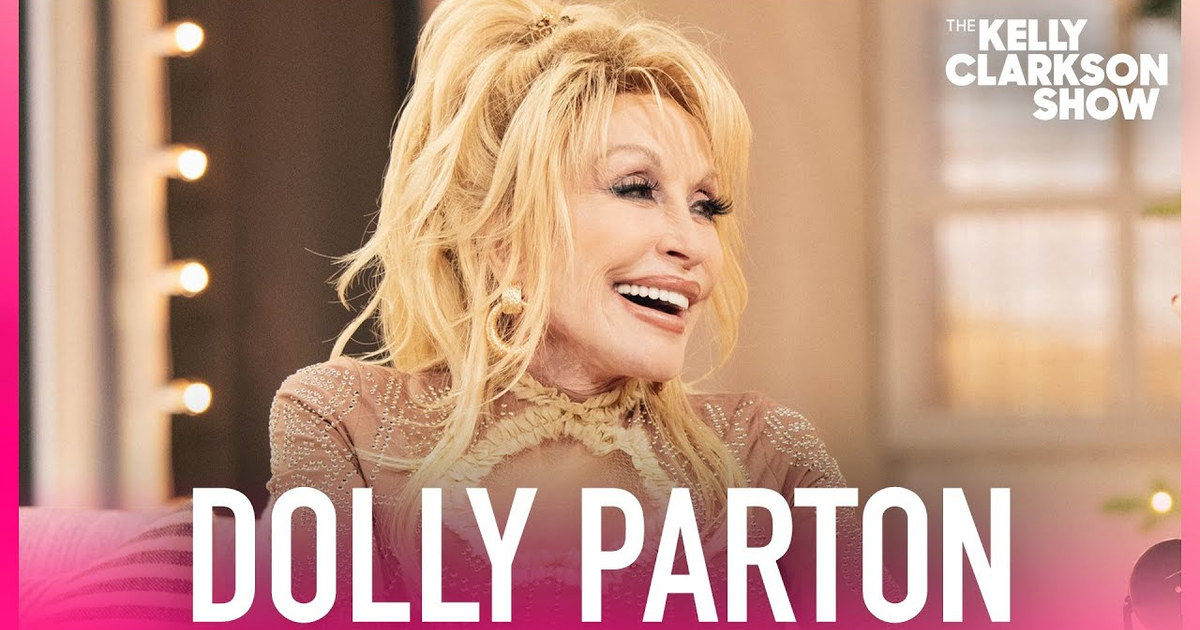
Cut to the Academy of Country Music Awards. Whitney Houston had died earlier that year, 2012, and the ACMs wanted to pay tribute. They tapped Kelly Clarkson. Kelly, who had grown up idolizing Whitney, who had the pipes to pull it off, who understood the weight of the moment. She stood on that stage and sang 'I Will Always Love You.' Not as a copy. As a tribute. And Dolly was in the audience.
Dolly's reaction was pure. You can find the clip. Her eyes fill. Her hand goes to her chest. She's watching a song she wrote in the '70s, a song that Whitney made immortal, being sung by a new generation's greatest voice, and she is feeling all of it. The grief for Whitney. The gratitude for Kelly. The strange, beautiful circle of it all.
Later, Dolly and Kelly would sing a snippet of 'I Will Always Love You' together. Just a few bars. Dolly's voice, still clear and true, weaving with Kelly's powerhouse. It's magic. Not because it's perfect, but because it's real. Two women from different generations, connected by a song, sharing a moment. You can hear the love in it. You can hear the history.
But not every classic in Dolly's holiday canon is hers. Take 'Hard Candy Christmas.' It's a staple of every Dolly Christmas playlist. It's on her holiday albums. It's in her TV specials. People assume she wrote it. She didn't. 'I did not write Hard Candy Christmas,' she says. 'Everybody thinks I did.' The song comes from The Best Little Whorehouse in Texas, the 1982 film directed by Colin Higgins, starring Dolly Parton and Burt Reynolds, based on the Broadway musical. Carol Hall wrote the music and lyrics. Dolly sang it in the movie, and it became hers in the public imagination.


