Part 4
So word goes out to Dolly. They need a love song. She sends them "I Will Always Love You." Then she forgets about it. Genuinely. She's got a theme park of a career to run. She's got a label, a business, a life. Somebody else's movie is somebody else's movie.
Then she's driving home. Radio on. No band. No strings. No warning. Just a voice, alone, a cappella. "And I..."
She has to pull the car over. Her heart is going to bust. It's Whitney Houston.
Here's the production note that makes that moment work. Producer David Foster built the record around that unaccompanied opening — Whitney alone, no instruments, no safety net, nothing to hide behind for those first seconds. Costner pushed for it. The whole arrangement is basically a promise: wait until the band comes in. Then the band comes in, and the song detonates.
The numbers after that are absurd. "I Will Always Love You" spent 14 weeks at No. 1 on the Billboard Hot 100 — a record at the time. The Bodyguard soundtrack sold north of 45 million copies worldwide, still the biggest-selling soundtrack album ever, and won Album of the Year at the 1994 Grammys. Whitney took Record of the Year that same night.
Dolly's take on it? She has said it many times since: hearing Whitney sing her words made her feel like she had finally arrived as a writer. Not as a singer. Not as a personality. As a writer. And yes, the checks. She owned the song. As the writer and the publisher, every single play ran through her.
Elvis wanted it. She said no. Whitney sang it. She said yes. One decision. Two icons. One song.
And the song didn't sit still while all that was happening. Dolly's own version topped the country chart in 1974 — and then did it again in 1982, when she re-recorded it for The Best Little Whorehouse in Texas, the Colin Higgins musical comedy she made with Burt Reynolds. Same song. Same woman. Same signature. Two No. 1s, eight years apart, because she never let go of the paper.
[[VIDEO]]
Now widen the frame. Every boss Dolly Parton ever had tried to cap her. Porter Wagoner wanted her locked to the show. Elvis's camp wanted the publishing. The record company wanted the look toned down — the hair, the makeup, the whole outrageous package — and she kept all of it. She said no to the haircut. She said no to the handshake deal. She kept maneuvering, kept countering, kept owning the thing she made.
That's the pattern. She never said no to everything. She said no to one specific thing: giving away the deed. The shows, the duets, the movies, the deals — she'd play ball. But the pen stayed in her hand.
Which brings us back to that first phone. Nashville, 1974. Elvis Presley's people on the line. A single condition attached to a dream. And a woman who cried all night — and then got up the next morning owning everything she'd written.
Eighteen years later she's pulled over on the shoulder of a road somewhere, listening to a voice with no instruments behind it, hearing the same song come back to her bigger than anything Elvis could have made it. Same words. Same woman. Same signature. That's not luck. That's a business plan with a chorus.
Because here's the thing about saying no to the King in 1974: it only pays off if you're still standing when the right voice shows up. She was.
So how does a girl from a one-room cabin in the Great Smoky Mountains end up out-negotiating every executive, manager, and legend who tried to put a ceiling on her? Turns out somebody saw it coming before Dolly did. A kindergartner in Tennessee, skipping rope, telling her PE teacher she was going to grow up to be Dolly Parton — and not blinking when the teacher laughed. Reese Witherspoon was right. In the next part: the real lesson hiding inside a six-decades-long career, and why the woman who sang "9 to 5" never once worked for anybody else after she learned to read a contract.
Reese Witherspoon Was Right: The Real Lesson of Dolly's Career
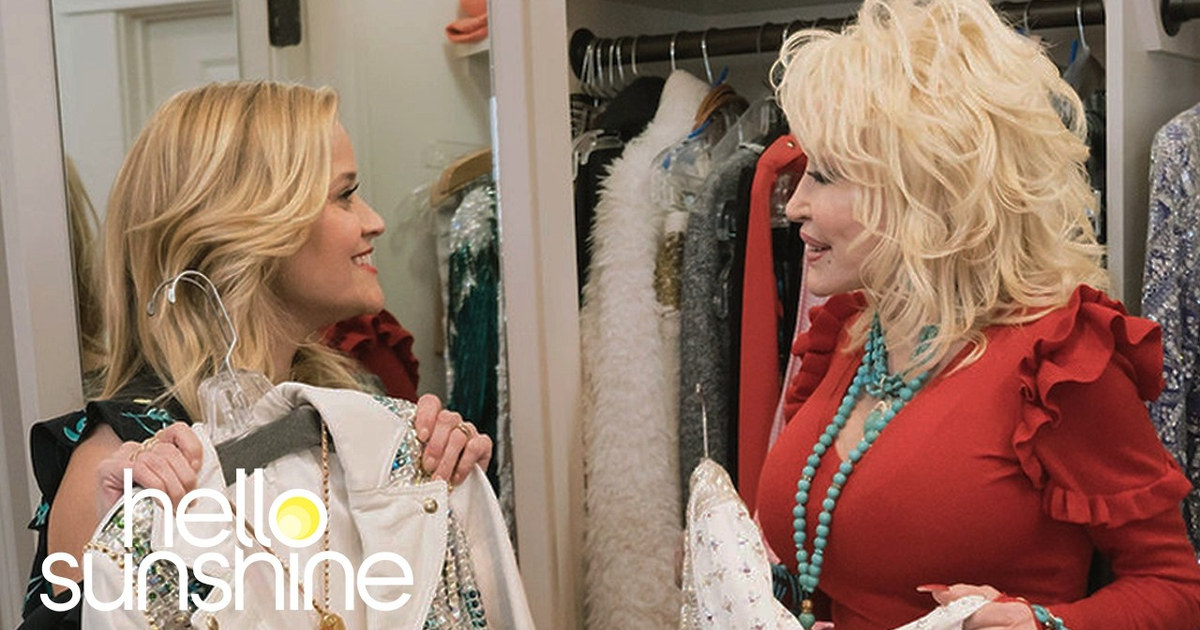
Open on the rope. Kindergarten. A jump rope slapping hot blacktop. A kid who — her own words — was always kind of a loner, singing to herself. Big dreams, no audience.
The PE teacher leans in. "Reese, what do you want to be when you grow up?"
"I'm going to be Dolly Parton."
No pause. No cute-kid shrug. The teacher checks the read — "You're going to be Dolly Parton?" — and the kid doubles down: "Mhm. I'm going to be famous like Miss Dolly Parton and she's from Tennessee and if she can do it, then I can do it."
Hold on that. That's the scene. Two lines of dialogue and a look. If you're cutting a trailer for sixty years of American ambition, that's your cold open. Because it isn't a bit. She says it flat. She's not auditioning the idea. She's reading it off a page she already wrote.
Cut to the payoff.
Dolly, hearing it back, sitting across from her: "Well, you certainly did it with or without me for sure."
Beat.
That's a joke, and it isn't. Reese did it. But she did it because a girl in the Great Smoky Mountains of East Tennessee did it first. That's the mechanism. That's the whole machine.


