Part 5
And the Super Bowl pet peeve: "When the Super Bowl is over, winner never says, 'Hey, I'm going to Dollywood!'" It's a brilliant piece of self-promotion disguised as a complaint. She's name-dropping the biggest sporting event in America and linking it to her brand. The winner of the Super Bowl should be celebrating at Dollywood—why aren't they? It's a joke, but it's also a flex.
This is what makes Dolly's humor so effective. She's not just telling jokes; she's reinforcing her empire. Every punchline is a brick in the wall of her public self. And she's the architect.
The Late Show context is crucial here. David Letterman's comedy was built on irony, detachment, and a healthy dose of cynicism. He was the guy who mocked celebrity culture while participating in it. Dolly Parton is the opposite: earnest, excessive, unapologetically sincere. When those two collide, you'd expect condescension. Instead, you get comedy. Why? Because Dolly is in on the joke. She knows exactly what she's doing. And Letterman, to his credit, knows she knows. He plays the straight man, feeding her setups, and she knocks them down with a wink.
Paul Shaffer and the CBS Orchestra add to the texture. Their playful stings and riffs punctuate each pet peeve, turning the list into a musical comedy routine. Shaffer, with his deadpan expressions and encyclopedic knowledge of pop music, is the perfect foil. He's been Letterman's sidekick since 1982, first on NBC's Late Night, then on CBS's Late Show. His presence signals that this is a showbiz tradition—vaudeville, variety, talk show—and Dolly is the latest in a long line of greats to grace that stage.
But let's not forget the number one pet peeve: "Nobody notices I've got a great ass too." It's the perfect closer. After all the jokes about accountants, fingernails, hair, the Dalai Lama, Garth Brooks, and the Super Bowl, she brings it back to her body. But not in a way that feels vain. She's acknowledging the elephant in the room: her figure. She's famous for her curves, but she's also famous for her jokes about them. By making her rear end the final punchline, she reclaims it. It's not an object; it's a part of her act. And she's the one pointing at it.
This is persona as craft. Dolly Parton has spent her career building a character—Dolly Parton—that is larger than life, yet deeply human. She's the country girl who made good, the blonde bombshell with a brain, the businesswoman who never forgets her roots. Every interview, every performance, every joke is a thread in that tapestry. The pet-peeve list is just one more stitch.
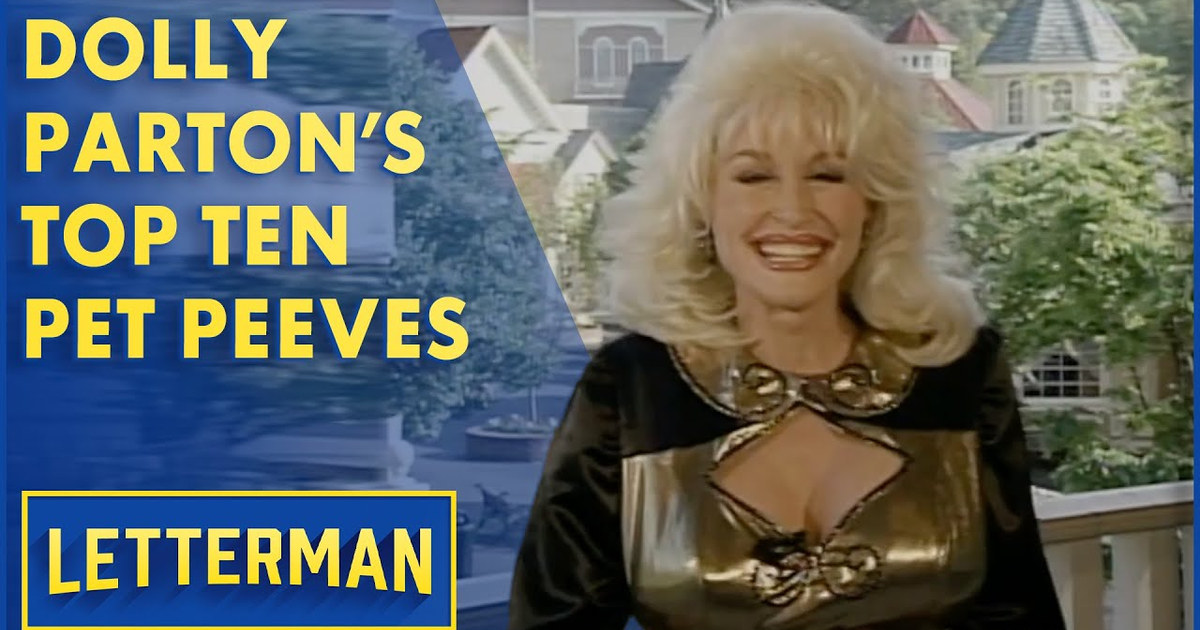
And now, let's return to the opening moment: Dolly live from Dollywood, reading number one. The audience is laughing, Letterman is grinning, Paul Shaffer is playing something cheeky. And Dolly, the biggest star in the room, is the one making herself the butt of the joke. But she's not diminished. She's in control. She's the one who wrote the list. She's the one who chose to share it. She's the one who gets the last laugh.
That's the takeaway. In a world where celebrities guard their images with teams of publicists, Dolly Parton shows us a different way. She owns her narrative by giving it away. She laughs at herself before anyone else can. And in doing so, she becomes untouchable. It's a lesson in persona as craft, and it's why she's been a star for over fifty years.
Next time, we'll look at another late-night legend who turned self-deprecation into an art form. But for now, let's just appreciate the genius of Dolly Parton—the woman who can make the Dalai Lama, Garth Brooks, and her own backside all part of the same brilliant joke.


