Part 3
[[VIDEO]]
Think about what that means. When you watch a posthumous biopic — say, Bohemian Rhapsody (2018, directed by Bryan Singer, 134 minutes) — you're watching Rami Malek's version of Freddie Mercury, filtered through a screenplay that Freddie never approved. When you watch a Dolly musical, you're watching Dolly's version of Dolly. The difference isn't small. It's the difference between a portrait and a self-portrait.
The Propaganda Problem — And Why It Doesn't Apply Here
Some will say a living artist's self-produced musical is just propaganda. A victory lap. A chance to sand off the rough edges and present a saint. It's a fair concern. Plenty of celebrity vanity projects have done exactly that. But Dolly isn't sanitizing. She's divulging.
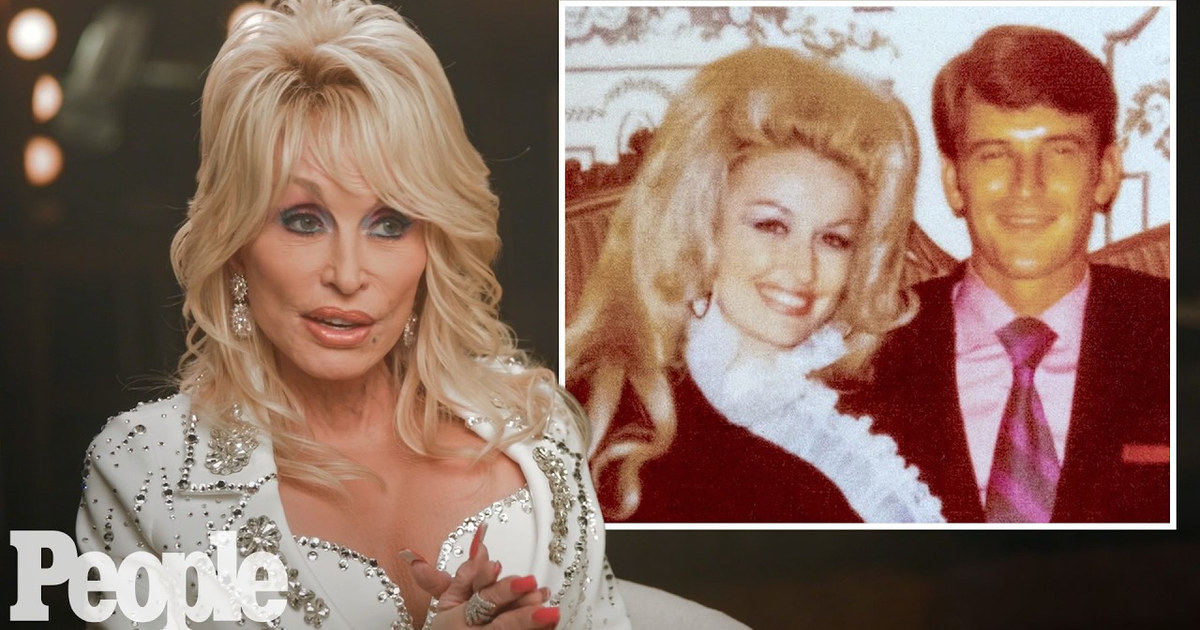
She talks about her teenage crush on Johnny Cash — how he was the first person who made her understand what charisma was, how she told June Carter Cash years later, 'I had him first. I loved him before you did.' That's not a polished PR moment. That's a woman telling you something real. She talks about the conflicts with Porter Wagoner — going head-to-head, refusing to be bullied. She talks about the grief over Carl Dean. She said people were surprised she was willing to share so much. That's not propaganda. That's vulnerability.
Porter Wagoner: Feud or Gratitude?
Take the Porter Wagoner years. A biopic would almost certainly frame this as a feud. Two strong personalities. A mentor and a protégé who clashed. The young star breaking free from the older man's control. It's a classic Hollywood arc — and it would be a lie.
Dolly's version is different. She says, 'I respected Porter and I appreciated the great opportunity, but I was not one to be pushed and shoved nor bullied without having my say.' She also says, 'I learned a whole lot from Porter and while I was with Porter and I will always be grateful to Porter.' And then there's the song. 'I Will Always Love You' — she wrote it for Porter when she was leaving. Not as a kiss-off. As a thank-you.
A biopic would need a screenwriter to invent a moment that captures that complexity. Dolly already wrote it. She lived it. She put it in a song. The musical doesn't have to guess at the emotional truth because Dolly is right there, telling you what it was.
'Try' — The Philosophy That Runs Through Everything
There's a song called 'Try' that captures Dolly's entire worldview. The chorus goes: 'Try to be the first one up the mountain / Try to be the first to touch the sky / And don't let somebody tell you you can't do it / And if they say that, prove to them it's a lie.'
That's not just a song. That's the through-line of her life. She left Porter when she felt God told her to move on. She went to RCA when people said they might dump her. She crossed over into pop. She became an actress — 9 to 5 (1980, directed by Colin Higgins, 109 minutes), Steel Magnolias (1989, directed by Herbert Ross, 117 minutes). She built a theme park. She funded a vaccine. She did all of it because she refused to be pigeonholed — or, as she puts it, 'pigeon forged.'
A biopic would need a screenwriter to invent a moment that captures this philosophy. Dolly already wrote it. 'Try' is the thesis statement of her life, and it's already in the musical. You don't need a dramatist to reverse-engineer it. You just need Dolly.
[[AD]]
Miley Cyrus and the Courage to Fail in Public
Dolly admires Miley Cyrus for trying new things — some of which work, some of which don't. That's the same spirit. The willingness to fail in public. To experiment. To risk looking foolish. A musical is a risk. A biopic is a safer bet. Dolly chose the risk.
That's not a small thing. Broadway is brutal. Shows close. Reviews sting. But Dolly has never been interested in the safe play. She said it herself: 'I've done so many other things. Why not do that? So, I did it.' That's the whole philosophy in one sentence. Not 'Why should I?' but 'Why not?'
The consensus says a biopic is the ultimate honor. I say a musical is the braver choice — and the more honest one. Because it's not a guess. It's a testimony. And Dolly Parton is still here to give it.
The Emotional Truth of the Stage — And the Strongest Case Against Me
The third pillar of the consensus is the one that sounds the most reasonable: a film is more emotionally powerful because it is more realistic. You can put the camera in Dolly's childhood home, cast an actress who looks exactly like a young Dolly, score the whole thing with the real recordings, and make people cry in their living rooms. That is the argument. And it is wrong — not because film is weak, but because it is the wrong tool for the specific kind of healing Dolly is after.
Dolly has been explicit about what the musical does for her. She has said that seeing Carl portrayed beautifully every night is almost like he is never gone. Think about that phrase. Not remembered. Not honored. Never gone. A biopic can preserve a memory. It cannot make a person present tense. The musical can, because it happens again tomorrow night. And the night after that. And the night after that.


