Part 1
The Two Audiences: Genre Fans and Craft Nerds
There are two kinds of people who will buy a ticket to a Dolly Parton musical. The first is the genre fan — the one who grew up on "Jolene," who can hum every bar of "9 to 5," who tears up when the first notes of "I Will Always Love You" hit. The second is the craft nerd — the one who leans forward when a songwriter explains why a bridge resolves the way it does, who wants to know how a story gets built from a single image, who treats a Broadway stage like a system architecture diagram with better lighting.
Here's the thing: Dolly Parton has spent six decades refusing to pick a side between those two audiences. She's a charismatic performer who can command the Grand Ole Opry with a wink, and she's a songwriter who wrote "I Will Always Love You" in a quiet moment of gratitude and goodbye. Her Broadway musical — whether it's the holiday warmth of 'Dolly Parton's Smoky Mountain Christmas Carol' or the upcoming 'Dolly Parton's Threads: My Songs in Symphony' — is built to satisfy both without ever making one feel like a tourist. That's not an accident. That's engineering.
Dolly herself has always understood the dual appeal. In her own words, she knew who she was from the start: "I am comfortable in my own skin no matter how far I've stretched it at times," she jokes. "I know who I am and I don't try to be nobody else. And if that ain't good enough for you, too bad." That self-possession is the root node of everything. For the genre fan, it's the charisma that made her a star. For the craft nerd, it's the clarity of voice that makes every song unmistakably hers.
AD_MARKER
Let's trace the signal path. Dolly started singing on the Caswalker Show in Knoxville when she was about ten. By her early teens, she was on the Grand Ole Opry. She remembers the moment she first felt the audience's energy: "They would bring me back to do an encore and I would look at my uncle and think they like me, didn't they?" That uncle was Bill Owens, her mother's brother, who played guitar and wrote songs with her. "I might could be a star," she told him. He replied, "I think you're going to be." For the genre fan, that's the origin story of a legend. For the craft nerd, it's the first feedback loop — the moment a performer learns to read a room and adjust.
Then there's Johnny Cash. Dolly was a teenager when she first saw him on the Opry, and she describes the feeling with the precision of a songwriter: "That was the first time I ever knew or understood what sex appeal was or that feeling that made you just feel all kinds of things all over your body." She calls it charisma — "that thing that people have." Cash introduced her on the Opry stage one magic night, thanks to Jimmy C. Newman giving up his spot (and maybe a little help from Uncle Bill). For the genre fan, that's a hall-of-fame crossover moment. For the craft nerd, it's a case study in stage presence — the intangible variable that no amount of rehearsal can fully manufacture.
AD_MARKER
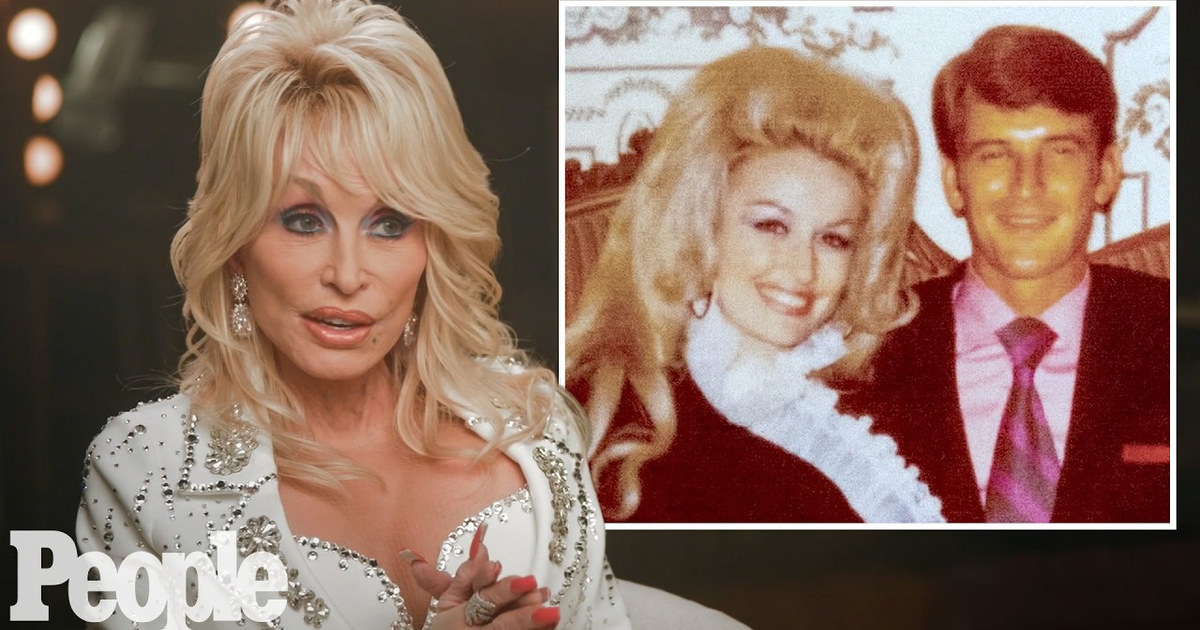
The Porter Wagoner years are where the two audiences really start to diverge. Genre fans know The Porter Wagoner Show as the platform that made Dolly a household name in country music. Craft nerds know it as the pressure cooker where she honed her songwriting. Dolly describes their relationship as a clash of equals: "He's bullheaded and I'm bullheaded... I was not one to be pushed and shoved nor bullied without having my say." She credits her upbringing — six brothers, uncles, a grandfather — with teaching her "the nature of men" so she was never intimidated. That's not just biography; it's the backstory of a songwriter who learned to hold her ground in a room full of executives.
And then there's "I Will Always Love You." Dolly wrote it for Porter when she was leaving the show. "I will always love Porter and the memories that we made," she says. For the genre fan, it's the ultimate goodbye song, later covered by Whitney Houston in The Bodyguard (1992) and cemented as a global standard. For the craft nerd, it's a masterclass in economy — a simple melody, a direct lyric, no wasted syllables. It's the kind of song that looks easy and is nearly impossible to write.
AD_MARKER
When Dolly left Porter, she didn't just change jobs — she rewired her entire career. She moved to RCA Records, where she feared she'd be dropped. Instead, they told her they saw "great potential." She found management with Sandy Gallin, who guided her toward pop and film. She took chances: some worked, some didn't. "I didn't want to be pigeonholed," she says. "Being from Pigeon Forge doesn't mean I have to be pigeonholed." That's a line that should be printed on a T-shirt. For the genre fan, it's the pivot that gave us 9 to 5 (1980) and The Best Little Whorehouse in Texas (1982). For the craft nerd, it's a lesson in refactoring — you can keep the core logic of your voice while changing the interface.


