Part 1
Two Audiences, One Dolly Parton
You can divide the people who clicked on this video into two camps. The first is the genre fan: the one who came for Dolly Parton’s country catalog, who knows every word to “Jolene” and “9 to 5,” who tears up at “I Will Always Love You,” and who measures a legend by the number of number one hits. The second is the craft fan: the one who came for the engineering of a 50-year career, who watches a Dr. Oz interview and a Nashville road trip like a case study in system design, who wants to know how an artist stays relevant, productive, and beloved for five decades without burning out or selling out. This piece is for both of you.
What we have here is not a concert film. It’s a Dr. Oz segment that turns into a road trip to Nashville, where Dolly surprises some of her youngest fans at a children’s hospital. It’s part talk show, part behind-the-scenes documentary, part confessional. And it’s the perfect lens for our thesis: Dolly Parton satisfies the genre fan and the craft fan at the same time because her career is a system with a soul.
Let’s get the stats out of the way, because the genre fan already knows them and the craft fan needs them as baseline metrics. Dolly Parton has 25 number one songs, 8 Grammy Awards, and 100 million records sold worldwide. She started performing at age five. She’s been a fixture on Monument Records since 1967, when she released her first album, Hello, I’m Dolly. That album turns 50 this year. And she’s not slowing down. Her new project is I Believe in You, her first children’s album. That’s the patch release we’re going to examine.
So think of this article as an engineering log. We’ll look at inputs—the raw materials of talent, faith, and lived experience. We’ll look at outputs—the songs, the awards, the cultural footprint. We’ll look at failure modes—the depression, the kidney stones, the moments when the system nearly crashed. And we’ll look at the patch release—a children’s album that somehow fixes bugs while adding features. The genre fan will get the hits and the heart. The craft fan will get the architecture. And Dolly, as always, will give both audiences exactly what they came for, without ever privileging one over the other.
The interview opens with Dolly walking into a room of cheering fans. Dr. Oz calls her “the queen of country,” and the audience loses it. He mentions the 25 number one songs, the 8 Grammys, the 100 million records. Then he asks where all this energy comes from. Dolly says, “I’ve just got a battery that I charge up every day.” That’s not just a cute line. That’s a design principle. She treats her body like a device that needs daily charging, and she channels that energy into “good projects.” The genre fan hears a humble superstar. The craft fan hears a power management strategy.
When asked what she does for joy, Dolly says she loves staying home, cooking, visiting with family, and playing with her nieces and nephews and the kids of her band members. “I’m a kid person,” she says. “It keeps me young, keeps me alive.” That’s the input that feeds the output. The children’s album isn’t a random pivot; it’s a natural extension of her daily life. The genre fan sees the warmth. The craft fan sees the feedback loop: joy in, creativity out.
But the conversation doesn’t stay in the shallow end. Dr. Oz asks about emotional challenges. Dolly admits she’s a “very sensitive person” and that she went through a hard time, including depression, during menopause. “Your hormones get out of whack,” she says. “Any number of things can get you down.” She leaned on her faith. She prayed every day. And then she tells a story that’s both tiny and enormous: during one of her lowest points, her little dog ran up to her, and she thought, “That’s my answer. I’m not going to do anything stupid. I got a lot to live for.”
That’s a failure mode. The system almost went down. But a small external signal—a puppy—rebooted it. The genre fan hears vulnerability and feels closer to their hero. The craft fan hears a lesson in resilience engineering: even the most robust systems need external checks, and sometimes the smallest input can prevent a catastrophic failure.
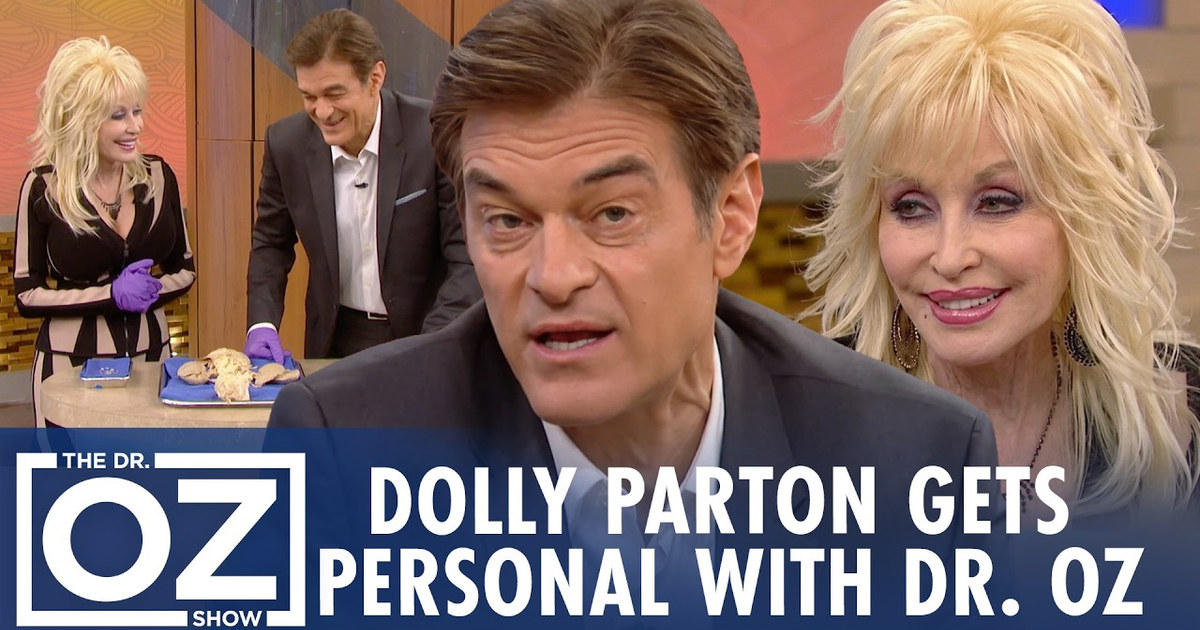
Then Dr. Oz brings out a surprise: a pair of kidneys. Real ones. He’s a doctor, so he’s allowed. Dolly, it turns out, has had kidney stones—multiple times, multiple surgeries. She brings up that she had them framed like art. She also has her wisdom tooth. “I got to see this collection,” Dr. Oz says. “No, no, you don’t want to see it,” Dolly replies. The audience laughs. But the point is serious: Dolly admits she doesn’t drink enough water, gets dehydrated, and that creates the stones. “I have a tendency to forget that I’ve got kidney stones till I got them again.”
That’s a bug. A recurring bug. And it’s the kind of bug that a system with a soul has to patch. The genre fan sees Dolly being funny and human about a painful condition. The craft fan sees a classic failure pattern: insufficient input (water) leads to system stress (stones) leads to downtime (surgery). The fix is simple, but it requires discipline. And discipline is something Dolly has in spades—she just applies it to her career more than her hydration.


