Part 4
Family involvement is another layer. Dolly's family has been part of Dollywood from the beginning. Her brother Randy has performed there. Her sister Stella has been involved. Nieces and nephews have worked in various capacities. This isn't a corporation hiring a celebrity face. This is a family business, and the family name is on the door. When Dolly says she didn't just put her name on something and walk away, she means it literally. Her name is on the sign, and her people are inside the gates.
The park opened on May 2, 1986, and it operates seasonally, typically from mid-March through early January. That seasonal rhythm is another Smoky Mountain touch. It mirrors the cycles of the region, the ebb and flow of tourism, the way the mountains themselves change with the seasons. In spring, the park blooms with dogwoods and azaleas. In summer, it's a cool escape from the heat of the valleys. In fall, the surrounding hills explode with color. In winter, it glows with millions of lights for the Smoky Mountain Christmas celebration. Dollywood doesn't fight the landscape. It flows with it.
And that's the thing to notice here. Dollywood isn't Disneyland. It's not trying to be. Disneyland is a fantasy kingdom in the middle of Anaheim. Dollywood is a celebration of a real place, with real history, real crafts, real music, real food. The park has a working gristmill. It has a blacksmith shop. It has artisans blowing glass and carving wood. It has a chapel where gospel music rings out. It has the Tennessee Tornado, a roller coaster that dives through the trees. It has the Lightning Rod, a wooden coaster that hits 73 miles per hour. These aren't generic rides. They're rooted in the land.
Dolly's upbringing in the Smokies shaped everything about her, from her music to her business sense to her loyalty to her home. She could have built a theme park anywhere. She chose Pigeon Forge, Tennessee, because that's where her heart is. And she chose to stay involved because that's who she is. The personal touch isn't a marketing strategy. It's a way of life. And it's why Dollywood feels different from the moment you walk through the gate.
So when you watch that interview clip and see Dolly holding up that corduroy hat, remember what's behind it. Fourteen years of planning. A lifetime of memories. A commitment to a community. And a woman who never forgot where she came from. That's the personal touch. That's Dollywood.
Stop 5: The Interview Itself – A Time Capsule of 1980s Dolly
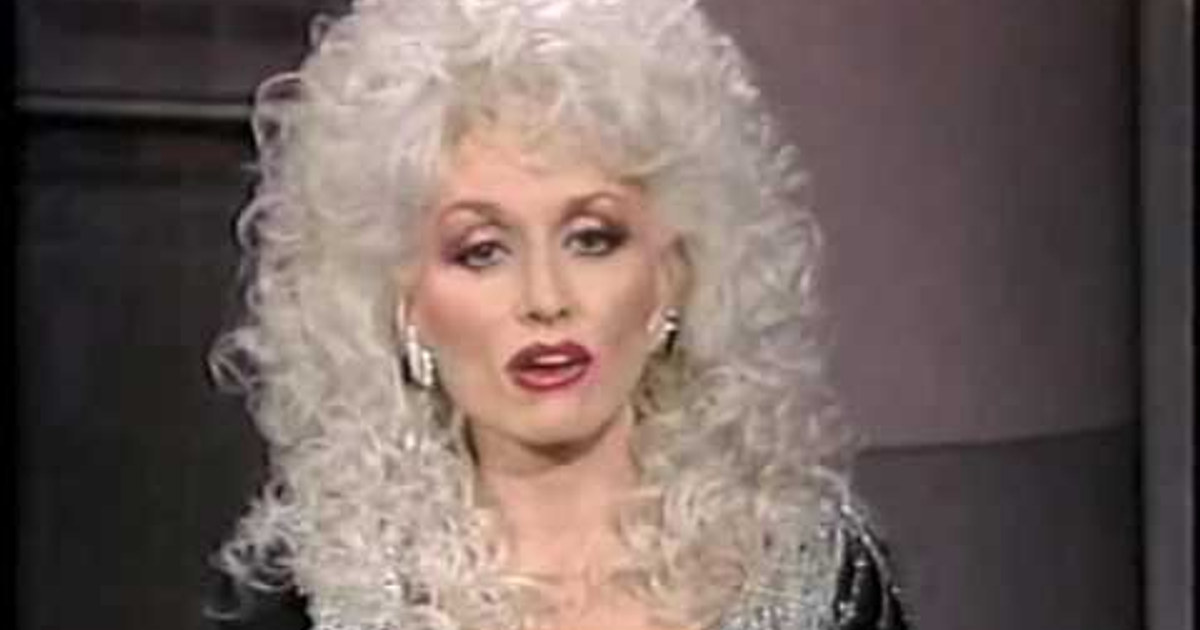
You’ve seen the monkey. You’ve heard the dream. You’ve crunched the numbers. Now step into the studio. The interview you’re watching isn’t just a chat—it’s a glittering artifact of mid-1980s Dolly Parton. The host introduces her with a breathless résumé: three Grammys, a member of the Nashville Songwriters Hall of Fame, a motion picture star, and the only celebrity with a theme park named after her. That last point lands like a mic drop. Even in an era of bigger-than-life stars, Dollywood was—and still is—a singular flex.
But before we get to the park, notice the small stuff. The host hands her a corduroy Dollywood hat. She puts it on, and they banter about how it’ll be nice for August. It’s a throwaway moment, but it tells you everything about her brand: down-home, practical, and proud. Then comes the perfume. The host leans in and says, “Boy, you smell great.” Dolly doesn’t miss a beat: “I put a quart of it on.” She reveals it’s a mixture of Mary Kay, Tova, and Chloe—three fragrances she blends herself. It’s a tiny detail, but it’s pure Dolly: custom, excessive, and utterly charming.
This is 1980s Dolly at her peak. By the time of this interview, she’d already won a Grammy for “Here You Come Again” (1978) and another for “9 to 5” (1981). She’d starred in the film 9 to 5 (1980) alongside Jane Fonda and Lily Tomlin, directed by Colin Higgins. She’d also headlined The Best Little Whorehouse in Texas (1982) with Burt Reynolds, directed by Colin Higgins again. And she was about to release the film Rhinestone (1984) with Sylvester Stallone. Her career was a juggernaut, and yet here she is, talking about a theme park in East Tennessee like it’s the most natural thing in the world.
The chemistry with the host is playful and easy. He’s clearly a fan, and she’s game for the banter. When he asks about Dollywood, she lights up. She explains it’s a theme park she started in East Tennessee, up where she lives. She says it’s been a dream of hers for many years, inspired by her childhood fascination with the county fair. “That was the big thing when we used to get to go to the fair,” she says. For 14 or 15 years, she tried to pull it together—to go back home to the Smoky Mountains where she was born and raised and take something back to her people. It’s a mission, not a business venture.
What’s striking is how she frames it: providing good jobs for everybody, giving back to the region that made her. This isn’t a celebrity vanity project. It’s personal. And it’s a unique achievement. No other star of her magnitude had ever put their name on a theme park. Disneyland had Walt, but Walt was a filmmaker and entrepreneur. Dolly was a singer-songwriter-actress who decided to build a destination. That’s a different kind of legacy.
The interview itself is a time capsule. The host’s style, the set, the applause—it’s all unmistakably 1980s. And Dolly is the center of gravity. She’s wearing a Dollywood hat, she’s talking about her perfume mixture, she’s dropping names like Mary Kay and Tova and Chloe. She’s promoting a theme park while also being one of the biggest stars in the world. It’s a balancing act only she could pull off.
So what do we take away from this stop on the tour? Dollywood is more than a park. It’s a personal mission. It’s a love letter to the Smoky Mountains. It’s a job creator, a tourist attraction, and a monument to a little girl who dreamed big. And this interview captures the moment when that dream was still fresh—when Dolly was explaining it to the world with a smile and a quart of perfume.
And now go back and watch the opening again. The ceramic monkey. The applause. The hat. The perfume. The dream. You’ll see it all differently. Because now you know the story behind the story. You know the fair, the numbers, the hands-on passion. You know that when Dolly Parton says “Dollywood,” she means it. And you’ll never hear “I put a quart of it on” the same way again.


