Part 3
Dolly mentioned on the show that the park pulled in around 1.5 million visitors in its first season. The transcript is a little fuzzy on whether she said 'last season' or 'first season' — talk shows in the '80s weren't exactly known for crisp audio — but the number itself is the headline. 1.5 million people. In rural East Tennessee. In a park that had just opened its gates. For context, that's roughly the entire population of Nashville at the time showing up in one summer.
And here's the part that really twists the knife: Dollywood didn't have a castle. It didn't have a monorail. It didn't have a Space Mountain or a Pirates of the Caribbean. What it had was Dolly Parton's name, her family's fingerprints on every corner, and a setting that felt like walking into a postcard of the Smoky Mountains. That was enough to beat almost everything else in the country.
The Disneyland comparison is the one everyone reaches for, so let's reach for it. Disneyland in 1986 was the gold standard. It had just survived a rough patch in the early '80s — the park was actually losing money before the 1984 overhaul that brought in Michael Eisner and Frank Wells — but by '86 it was roaring back. It was the park that invented the modern theme park. It had the Matterhorn, the Jungle Cruise, the Enchanted Tiki Room. It had brand recognition that spanned the globe. Dollywood wasn't Disneyland. It wasn't trying to be. But it was breathing down Disneyland's neck in attendance, and that's the part that made industry insiders do a double-take.
Think about what it takes to rank third. You have to beat out parks that have been operating for decades. You have to draw people from outside your region. You have to convince families to skip the Florida vacation and drive to the Smokies instead. Dollywood did all of that in a single season. The fastest-growing park in America wasn't in California or Florida. It was in a holler in Tennessee.
And the growth wasn't a fluke. Dolly was actively involved in a way that most celebrity-branded ventures never are. She dropped in unannounced to perform with her guitar — just showed up on a random Tuesday and started playing for whoever was there. Her family worked the park. Her relatives ran shops, greeted guests, kept the place running. This wasn't a licensing deal where a star's face goes on a billboard and a check clears. This was Dolly Parton treating Dollywood like it was her living room and everyone in the park was a guest in her home.
That personal touch is why the numbers held. People didn't just come for the rides. They came for the chance that Dolly might walk out on a stage in the middle of the afternoon and sing 'Jolene' with nothing but a guitar and that voice. You can't put a price on that. You can't build it into a spreadsheet. And you definitely can't replicate it at a park owned by a corporation in Burbank.
So when Dolly sat there and said Dollywood was third in the nation, she wasn't bragging. She was stating a fact that the industry was still trying to process. A park in rural Tennessee had cracked the top three. The fastest-growing park in America was named after a country singer. And the biggest theme park in the world — Disneyland — was suddenly looking over its shoulder at a place where the main attraction was a woman who grew up picking tobacco and singing on the front porch.
That's the numbers game. And Dolly won it before most people even knew she was playing.
Stop 4: The Personal Touch – Dolly's Hands-On Role and the Smoky Mountain Setting
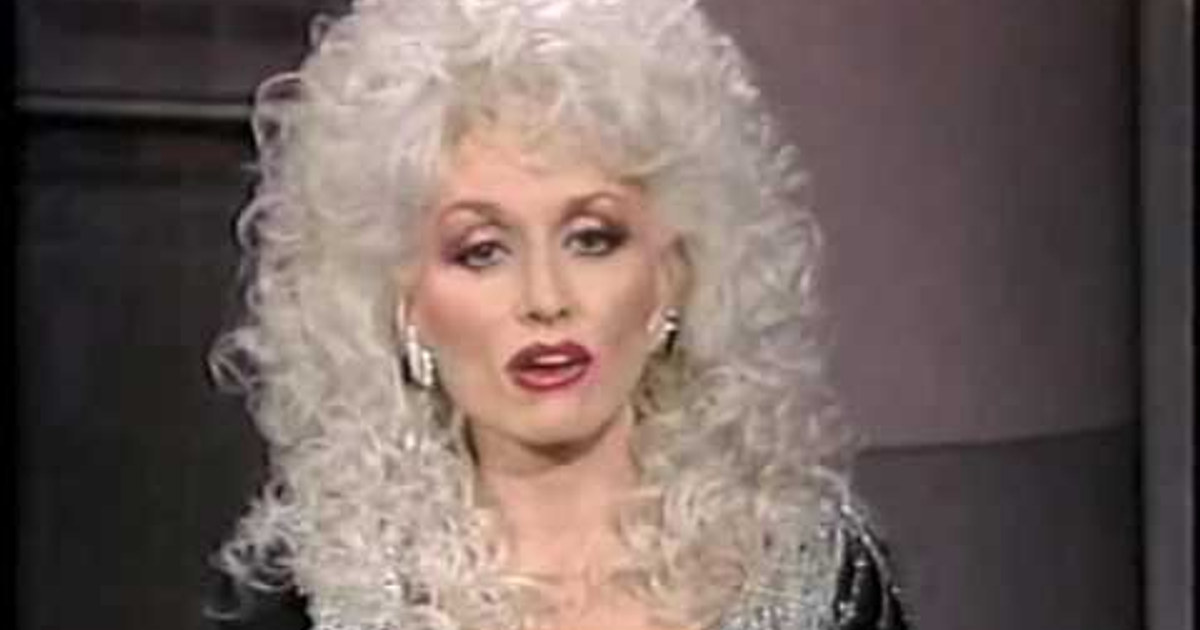
Now, look at the hat. It's a corduroy Dollywood hat, and Dolly Parton is holding it up on national television, telling Johnny Carson it'll be nice about August. But the hat isn't the point. The point is what she says next: 'I didn't just put my name on something and then walk away.' That's the line that separates Dollywood from every other celebrity-branded vanity project. She didn't license her name and cash a check. She built the thing, and she keeps showing up.
In the interview, Dolly explains that she's been trying to pull this together for 14 or 15 years. Fourteen years. That's not a marketing timeline. That's a mission. And she's not doing it from a boardroom in New York or Los Angeles. She's doing it from East Tennessee, up where she lives, five miles from the entrance to the Great Smoky Mountains National Park. That location isn't an accident. It's the whole point.
[[AD]]
Think about what that means. The Smokies are the most-visited national park in America, drawing millions of people every year to the Tennessee-North Carolina border. Dolly grew up in those hills, in a one-room cabin in Sevierville, the fourth of twelve children. She knows the beauty of that land because she walked it barefoot. And she knows the economic reality of that region because she lived it. When she talks about 'providing a lot of good jobs for everybody,' she's not reading a press release. She's talking about her neighbors. Her family. The people she grew up with.
That's why Dollywood isn't just a theme park. It's a job engine. It's a tourism magnet. It's a love letter to the Smoky Mountains written in roller coasters and cinnamon bread. And Dolly's hands-on role is the thing that keeps it authentic. She visits the park monthly. She shows up unannounced. She performs impromptu concerts on the stages. Can you imagine being a family on vacation, grabbing a funnel cake, and suddenly Dolly Parton walks out and starts singing 'Jolene'? That happens. Not every day, but it happens. Because she owns the place, and she treats it like home.


