Part 2
The scale, even in its first year, was not small. The property ran to roughly 700 acres, with about 100 of those developed initially. Nearby, there were already around 600 hotel and motel rooms to absorb the crowds. This is a region that knew how to host people — but it had never had a reason quite like this.
Now, the part that makes theme-park historians sit up. In the interview, Dolly runs through the admission prices: $13.50 for adults, $9.95 for children ages 4 to 12. And then she drops the claim that sounds almost too good to be true — that the ticket covers everything, including food. Read that again. A single gate price, all-in. In an era when Disney was already nickel-and-diming you from the parking lot to the popcorn cart, Dollywood was pitching itself as the fair that feeds you.
Was it literally true? The transcript gives us Dolly's word and not much else. But the intent matters. The pitch wasn't "come spend." It was "come in, stay a while, we've got you." That's a county-fair instinct dressed up in a 700-acre budget.
The 14-Year Build
Sit with the timeline for a second. "For many years, about the last 14, 15 years, I have tried to pull it all together." If the interview is 1987 and she's counting back 14 or 15 years, that puts the first stirrings of the idea around 1972 or 1973. Dolly Parton in 1972 was still a rising country artist, years away from the crossover pop domination of the late '70s and the movie stardom of 9 to 5 (1980, directed by Colin Higgins, 109 minutes) and The Best Little Whorehouse in Texas (1982, Colin Higgins again, 114 minutes). She was not yet the brand that could greenlight a theme park.
So she waited. She built the career first — the Grammy wins, the Nashville Songwriters Hall of Fame induction, the film roles — and then she cashed the chips in for a patch of East Tennessee hillside. That's the part people skip. The park isn't a celebrity side hustle that happened to work. It's a 14-year patience play.
And the stated goal, in her own words, is almost aggressively unglamorous: "providing a lot of good jobs for everybody." Not "creating a world-class entertainment destination." Jobs. For her people. In a region that needed them.
What the First Season Actually Looked Like
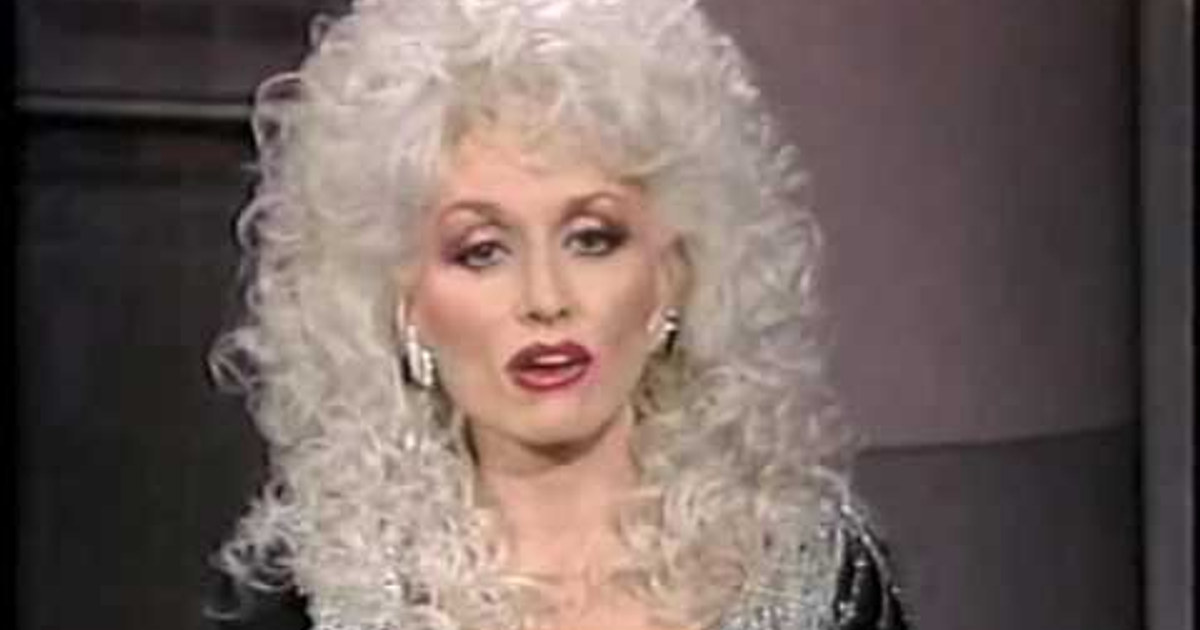
The transcript gives us a small but crucial detail about the calendar. Dolly says, "Last year was our first year and we open again on May the 2nd." If the interview is 1987 — and the context strongly suggests it is — then the first season was 1986, and the park reopened for its second season on May 2, 1987. That means everything we're hearing on this couch is a report from the frontier. The park had one summer under its belt. It was still proving the concept.
[[AD]]
Think about what that means for the numbers she's quoting. The $13.50 adult ticket, the $9.95 child ticket, the everything-included promise — these weren't legacy prices. They were year-two prices. The experiment was live.
And the experiment was rooted in a very specific memory. The county fair. The big thing. The one place a kid from the Smokies could go and feel like the world had opened up. Dollywood is that feeling, scaled up, paved, and given a season pass. Whether it fully delivered on the all-inclusive food promise is a question for the accountants. Whether it delivered on the emotional promise is a question you can answer by driving to Pigeon Forge and watching a family walk through the gate for the first time.
That's the stop on this tour. Not the acreage, not the ticket price — the kid at the fair. Everything else is logistics. The dream is the fair. The park is just where the fair lives now.
Stop 3: The Numbers Game – Attendance, Rankings, and the Disneyland Comparison
Now, here's where the tour gets loud. Because when you start stacking Dollywood's numbers against the giants, the story stops being charming and starts being historic. Dolly sat on that talk-show couch in the mid-1980s and said it plain: Dollywood was the third most visited theme park in the United States. Third. Not third in Tennessee. Not third in the South. Third in the whole country. And she added the kicker — it was the fastest growing park in America.
[[VIDEO]]
Let that land for a second. In 1986, the American theme park map was already crowded with legends. Walt Disney World had been open in Florida since 1971, sprawling across 27,000 acres. Disneyland had been running in Anaheim since 1955 — three decades of brand loyalty. Knott's Berry Farm, which started as a real berry farm in the 1920s and became a theme park in the 1940s, was pulling millions through its gates. Six Flags had parks scattered across the country. And here comes a park in Pigeon Forge, Tennessee — a town most Americans couldn't find on a map — and it's suddenly sitting in the top three.
That's not a marketing line. That's a seismic shift in how the industry worked. Theme parks were supposed to be coastal. They were supposed to be near major metros. They were supposed to have decades of infrastructure and a cartoon mouse as a mascot. Dollywood had none of that. It had a Tennessee girl with a guitar and a dream about the county fair.


