Part 5
Dumplin', Heartstrings, and the Songs That Keep Coming Back
The streaming era suits her better than anything since the parlor. Dumplin' (Netflix, 2018), directed by Anne Fletcher from Julie Murphy's novel, casts Danielle Macdonald as a teenager who enters a beauty pageant as an act of war and Jennifer Aniston as her mother, a former pageant queen quietly grieving in a house full of old trophies. Dolly executive-produces, appears, and hands over the catalog — but on her own terms, re-recording her own songs alongside writers and voices who came up after her. Sia. Mavis Staples. Miranda Lambert. Elle King. She also wrote a brand-new song for the film, "Girl in the Movies," and it earned a Golden Globe nomination. The old songs aren't sealed in amber. They're alive and being re-sung by younger mouths, which is the closest thing to immortality the music business actually offers.
Then she went further. Dolly Parton's Heartstrings (Netflix, 2019) is an anthology in which every episode dramatizes a single song. Eight of them. "Jolene" gets a face, a house and a town. "These Old Bones" gets its mountain. "Two Doors Down," "Cracker Jack," "The Grass Is Blue." A song is roughly three minutes of implication; the show is the implication given flesh. And the year after, Dolly Parton's Christmas on the Square (Netflix, 2020), directed by Debbie Allen, casts Christine Baranski as a woman selling a town out from under itself, with Treat Williams and Jenifer Lewis in the frame beside her, and Dolly as an angel with a grudge against greed.
Notice the pattern, because it isn't luck. She has never once been loyal to a medium. She's been loyal to the audience, and the audience keeps moving — tent show to Opry stage, network to cable to a streaming queue — so she moves too, exactly the way the genre she came up in has always moved. The platform is a chair. She just finds the one with the most people sitting in it.
Sandollar, and the Vampire
Now the fact that ties the whole thing together. In the eighties she co-founded a production company with her manager, Sandy Gallin. They called it Sandollar — sand for Sandy, dollar for Dolly. Sandollar produced Father of the Bride (1991), directed by Charles Shyer, with Steve Martin sweating through his daughter's wedding and Diane Keaton beside him, a comedy so warm it became a franchise. Sandollar also produced Buffy the Vampire Slayer — first the 1992 film, then the television series that ran from 1997 to 2003 and taught a generation of writers how a season should be built. A country singer from the foothills of the Smokies helped put a vampire slayer on television. Sit with that sentence for a minute. It's true, it's funny, and it isn't even the strangest line on her résumé.
The Song That Went Furthest
If you want a single piece of proof for everything above, take "I Will Always Love You." She wrote it in 1973. It went to number one on the country chart as a Dolly Parton record in 1974, and again as a Dolly Parton record in 1982. Then in 1992, Mick Jackson's The Bodyguard put it in Whitney Houston's throat, with Kevin Costner standing in a doorway, and it became one of the biggest-selling soundtrack singles in film history — fourteen weeks at the top of the Billboard Hot 100. She wrote a small song in a small room about letting somebody go, and it grew a body large enough to fill a movie, a decade and a global radio dial. That is the entire argument of this piece. She builds worlds she doesn't have to stand inside.
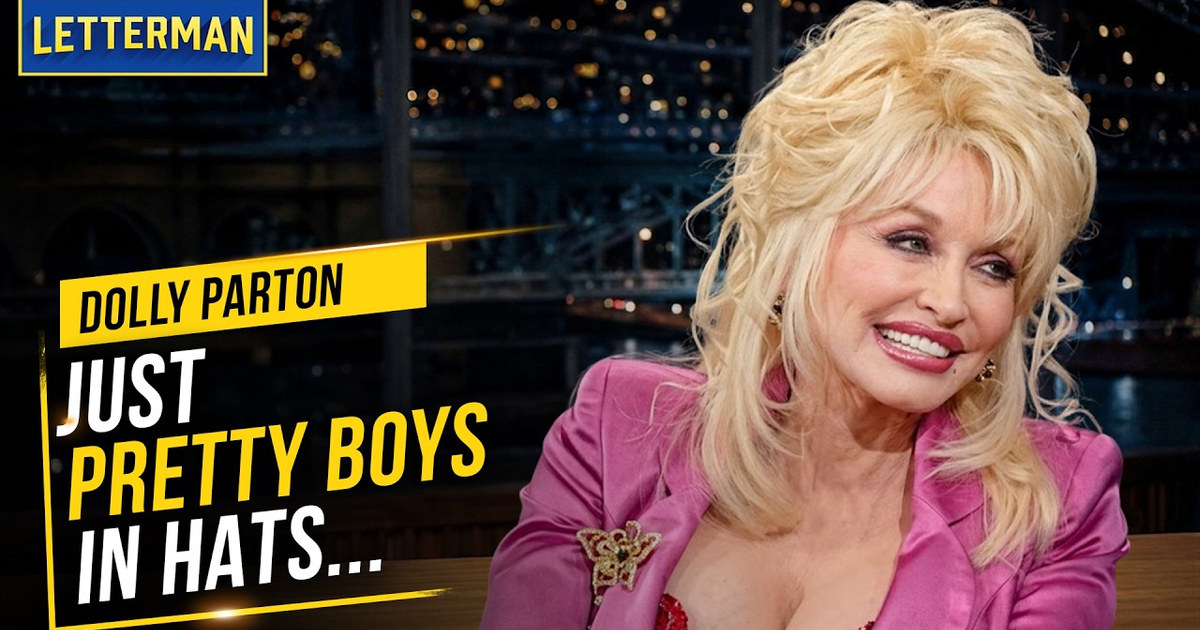
Which brings us back to the couch. A woman in a big wig is laughing while she's asked about the new ride at her own park — Daredevil Falls, the tallest and fastest water ride in the country, a 60-foot drop at 50 miles an hour — and she says, sweetly, that she won't get on it. She's scared of it. And she isn't going to leave her hair somewhere in one of the trees at Dollywood. Everyone laughs, because it's a hair joke, and it is a hair joke. But read the line again and it's something else. The woman who paid for the drop is choosing not to take it. She built the hill so somebody else could ride it.
The most personal theme park in America is a story about a girl from the foothills, and the girl won't get on the coaster. That's not a contradiction. That's authorship.
Part 2 goes back to the songs — "Jolene," "I Will Always Love You," and the songwriter behind the wig, the park and the studio slate.


