Part 2
Gatlinburg, Pigeon Forge, and the Mist That Named the Mountains
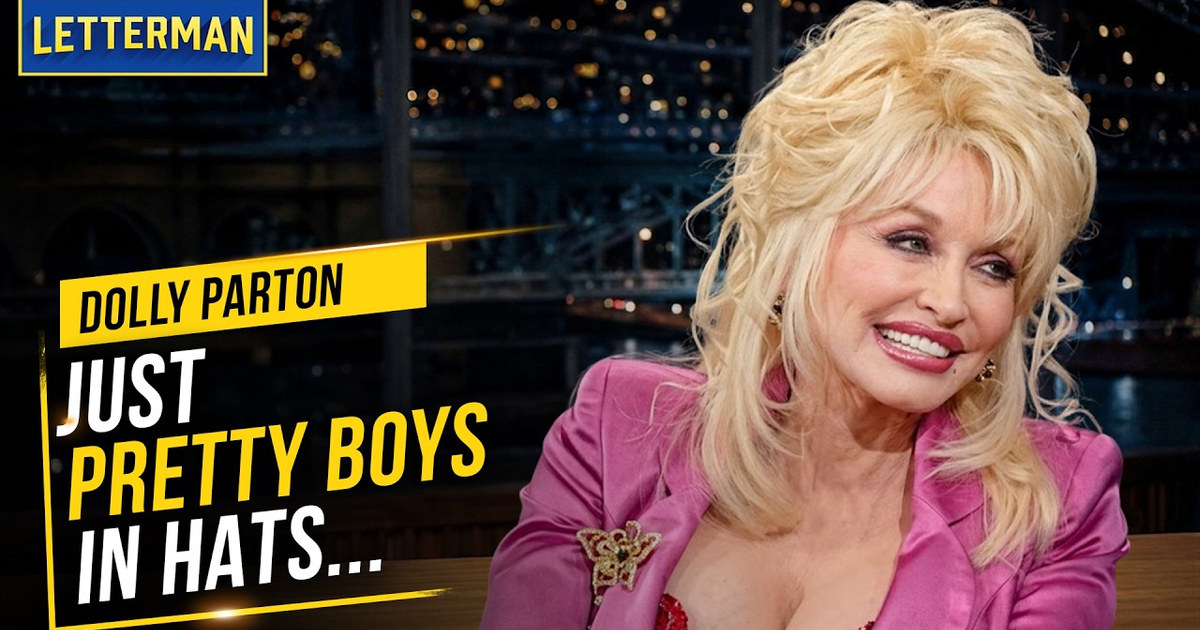
Then the geography, which is where the commercial quietly turns into a memory. Dollywood sits in Pigeon Forge, Tennessee — where Dolly Parton was born and raised. A short drive away is Gatlinburg, which she calls one of the most beautiful places in the world. And above both of them, hazy and blue, are the Smoky Mountains: the most-visited national park in the United States, pulling in around ten million visitors a year.
She says it like a fact she is still a little amazed by, and she has earned the amazement. She grew up in those foothills, in a little house at the base of them, close enough that the park was practically a neighbor.
The name is just weather. Mist, fog, clouds lying across the peaks and shrouding the ridgelines until the mountains look like they are smoking. That is the whole etymology — the view off a back porch in East Tennessee, boiled down to two words on a green highway sign.
The park itself covers a little over a hundred acres, and she owns roughly seven hundred more around it, holding the land open for expansion. You could fly this audience down there, the host suggests. She offers everyone a ticket — on one condition. They have to use it to fly down.
The Bears Do Not Read the Brochure
Then the bears arrive, because they always do. Her childhood house stood at the foothills, and the bears used to come down out of the park — down into the yards, down into the story. Not pets. Not attractions. She is emphatic about the rules: you do not feed them, you do not hunt them, you do not fool with them. The mistake people make, she says, is thinking the bear is part of the show. It is not. You give it distance.
[[AD]]
And then she lands the punchline, deadpan, mid-couch: people feed them, and then they eat the people.
Keep that one in your pocket, because it is the sharpest line of the night — and it is also the exact metaphor for everything underneath it. The wild thing wanders into the curated thing, and the customers try to treat it as an amenity. You can build a hundred-acre story about who you are and where you came from. You cannot control what walks in from the tree line.
An Autobiography With a Turnstile
Here is the thesis, then. A theme park is a story you can walk through — a movie you move around inside of, at your own pace, in your own order, on your own feet. And Dollywood is an autobiography with a turnstile attached: an authored text, built by a woman with a very specific point of view about who she is and where she came from.
Which means you can read it the way a film critic reads a director's cut. Not as product. As statement. What the author chose to include. What she left out. What she decided deserved a sawmill. What she put behind a gate at the top of a sixty-foot drop.
She has been doing this in other media for decades — starring in and writing the title song for 9 to 5 in 1980, then watching Whitney Houston turn I Will Always Love You into something even bigger than it already was in The Bodyguard in 1992. The park is the same instinct at architectural scale. It is not memorabilia in a glass case. It is a set built on real ground, in the actual hills, with the actual mist on it.
So go back to the couch. She is still laughing. The hand still drifts up toward the hair. The host is still doing his delighted disbelief, the audience is still applauding, and somewhere in those hills the water is still falling sixty feet at fifty miles an hour on a ride she has never once felt in her stomach.
That is the thing about a self-portrait. You cannot ride in it. You can only stand at the bottom and watch everyone else go down, one hand on your hair, hoping it holds — and maybe hoping, too, that the trees catch the piece of you that gets away. She built the whole ride. She just will not sit in it. And honestly, that might be the most honest ticket in the park.
Next, we walk past the roller coasters entirely and into Craftsman's Valley — the sawmill, the carriage shop, and the old-world songbook playing behind all that sequins.
[[VIDEO]]
Craftsman's Valley: The Old-World Songbook Behind the Sequins
There's a moment in the conversation where the ground shifts under your feet, and you barely notice it happening. One second you're talking about a sixty-foot drop and a log flume called Daredevil Falls, and the next the host asks Dolly Parton who she listened to growing up — and she doesn't reach for a mirror. She reaches for a map. Maynardville. Knoxville. The Opry. A radio in a house at the foothills of the Smoky Mountains, where the signal came in through the mist. It's the same county Dollywood sits in, and it's the same county where the whole sound she'd eventually carry around the world was first assembled out of spare parts.
She names her mother's side of the family first. Music lived there — the old kind, the kind that doesn't get written down so much as passed down. Then church singing. Then an uncle she credits as the one who helped her most, the man who took what the family had and pointed it somewhere. When the host pushes on the question of influences, she says something that should stop the tape: she never patterned herself after anybody. Read that twice. It sounds like humility. It's actually a thesis, and it's one you can test against everything that follows in her list.


