Part 4
Paradise Road, Two Little Dollys, and Eight Shows a Day
Dolly slides Paradise Road into the conversation like a second-unit pickup shot — fast, low-key, already in the can. “It's called Paradise Road, which is a musical, a Broadway-style musical of my life.” Then comes the detail that matters more than the pitch: the show has been structured so she can fit herself into it whenever she's at the park, and it “works nicely” without her. Read that twice. That is not a scheduling note. That is an engineering spec.
That one sentence is the whole argument of this piece, restated in showbiz terms. A theme park show is filmmaking with no final cut. You never lock picture. You shoot the same 90 minutes six to eight times a day, every day, in changing light, in front of a changing crowd, with a star who may or may not walk on.
Two young girls alternate as little Dolly. Not for cuteness — for survival. Eight shows a day will shred a kid's voice, knees, and concentration by Tuesday afternoon. So the rotation isn't a courtesy to the performers. It's the coverage system. In live entertainment, the understudy is the closest thing you have to a second camera, and here it's two second cameras doing the same scene in matching wardrobe.
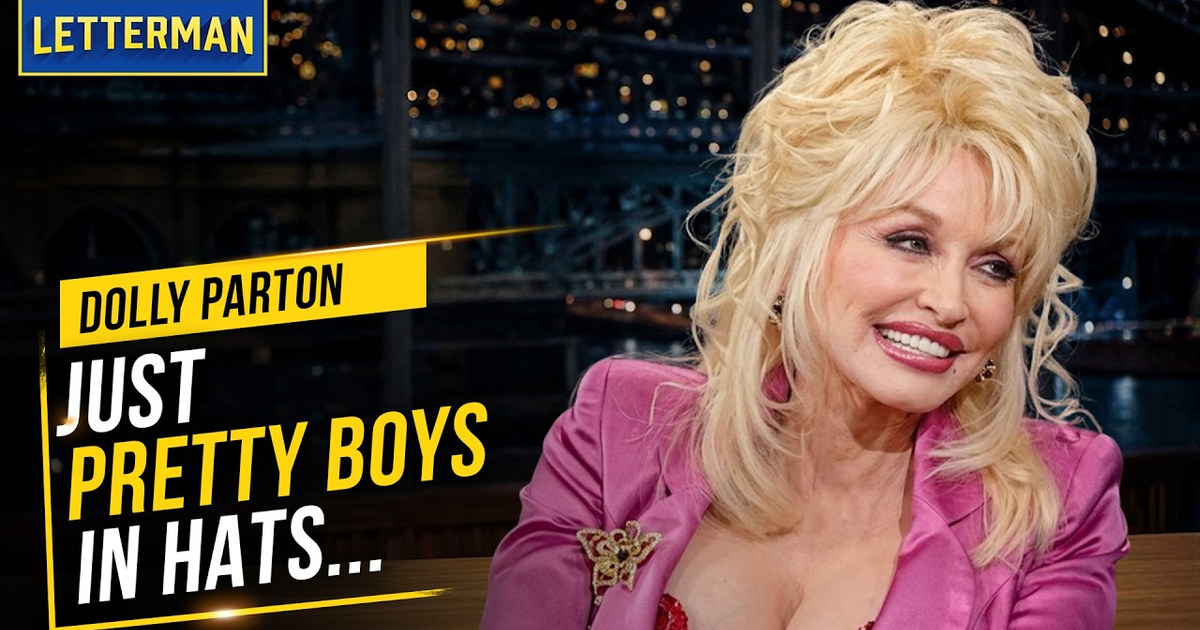
And the casting spec, straight from Dolly herself: “All you need is a good cheap wig and a push-up bra.” Cheapest VFX in the park. Also the one that never breaks.
[[AD]]
No Final Cut, Ever
Ask any second-unit DP what the job actually is and you get one word: coverage. You're not making the movie. You're making the pieces that let somebody else make the movie in the edit. A park musical is that job forever. You block it, you light it, you run it — then you run it again at 11:00, 12:30, 2:00, 3:30, 5:00, and 6:30. Six to eight shows a day, depending on the season. Then you do it all over again tomorrow.
Take 1 at 11:00 is the warm, well-rested crowd. Take 4 at 3:00 is the heat-stunned crowd. Take 7 at 6:30 is the sunset crowd, and the sun is now directly in your actors' eyes because it's doing what it does. Same blocking, same book, wildly different exposure. You can't re-shoot. You can't re-light.
There's no color grade coming to save anybody. No VFX pass to hide a bad rig. Your key light is the sun, and the sun does not take notes. The set is the negative, and you never get a new one. Which is exactly why the rotating little Dollys aren't a staffing workaround. They're coverage — two performances that have to match in style and intent while never matching in footprint, because no two kids move the same way.
The Jukebox Bio Lineage Is a Casting Department
Paradise Road isn't inventing a genre. It's joining one, and the family tree is exact. Annie on Broadway in 1977, with its rotation of orphans — same problem, same solution. You can't put the same kid under those lights eight times a week, so you build a bench, and you trust the bench. Every producer since has copied that page.
The Lion King (1997). Jersey Boys (2005). Million Dollar Quartet (2010). Beautiful: The Carole King Musical (2014). The Cher Show (2018). Tina (2019). MJ the Musical (2022). A Beautiful Noise (2022). Run your eyes down that list and one trick repeats: a catalog of hits, a life story, and a lead role that can be handed to the next person in the wings.
Jersey Boys has run long enough to cycle through multiple Frankie Vallis. That's not a downgrade — that's a franchise running its own re-cast, the same way a long-running film series swaps leads. The bio-musical is a casting department with a box office attached. Paradise Road is buying the same equipment.
The Theme-Park Branch of the Same Craft
Then there's the theme-park branch of the same craft, the branch that matters most here. Beauty and the Beast Live on Stage opened at Disney-MGM Studios in 1992. Festival of the Lion King opened at Disney's Animal Kingdom in 1998 — the same year as this Dollywood season. Same year, same idea: take a screen property, mount it live, loop it, staff it, and make it survive whatever the sky does. Compression is the whole game.
Paradise Road is stepping into that lineage with one advantage Disney's versions don't have: the original artist, alive, local, and — critically — structurally optional. She's not the show. She's the show's bonus feature.
Dolly's Been Re-Casting Herself on Screen Since 1980
The pipeline doesn't start at the park either. Dolly has spent decades handing her own life and image to other people's cameras. Coal Miner's Daughter (1980, dir. Michael Apted) proved the country-life-to-celluloid template in 125 minutes. 9 to 5 (1980, dir. Colin Higgins) is a 109-minute workplace comedy that turned her into a movie star. The Best Little Whorehouse in Texas (1982, Higgins again) ran 114 minutes of musical-comedy chaos. Steel Magnolias (1989, dir. Herbert Ross) dropped her into a 117-minute ensemble opposite Sally Field, Julia Roberts, Shirley MacLaine, Olympia Dukakis and Daryl Hannah — and she holds.
Then the modern run, on new platforms. Dolly Parton's Coat of Many Colors (NBC, 2015). Dolly Parton's Christmas of Many Colors (NBC, 2016). Dumplin' (Netflix, 2018), a brisk 110 minutes. Dolly Parton's Heartstrings (Netflix, 2019). Same instinct, different delivery system. Broadcast gives way to streaming and the re-cast keeps rolling, because the source material never stops being in demand.


