Part 3
You want a long lens — a 150-600mm — to compress the water into a solid wall. Or a wide 24mm to put the audience inside the boat. The lighting? A 20K on a condor to backlight the spray. A 4x4 bounce to fill the faces. Underwater lights on the track. That's the language. That's how you make water read as sculpture. And that's what the designers at Dollywood are doing every day, except they're doing it for real, with real people, and no cut.
Name the crew-level references. Dean Semler's work on Waterworld (1995) — a film that was basically a floating set with a million gallons of water and a lot of wind machines. John Seale on The Perfect Storm (2000) — he shot the hell out of a storm that was mostly tanks and rain bars. Underwater units like Peter Zuccarini's — he's the guy who makes water read as a character. The plunge at Dollywood is the same geometry at 1:1 scale with a paying audience instead of a camera. The boat is the camera. The splash is the take. And there's no cut.
[[VIDEO]]
In a film, you can cheat the drop. You can cut from the top of the fall to a close-up of a face to a wide shot of the splash. On a ride, you can't. The audience is inside the shot. The 60-foot drop is a one-er. That means the designers have to build the entire sequence as a single continuous take. The lift is the dolly in. The slow current is the tracking shot. The dark section is the fade to black. The plunge is the money shot. And the splash is the practical effect that sells it. That's why water rides are so expensive. You're not building a roller coaster; you're building a set that gets destroyed and reset every 90 seconds.
The Hair Problem Is a Continuity Problem
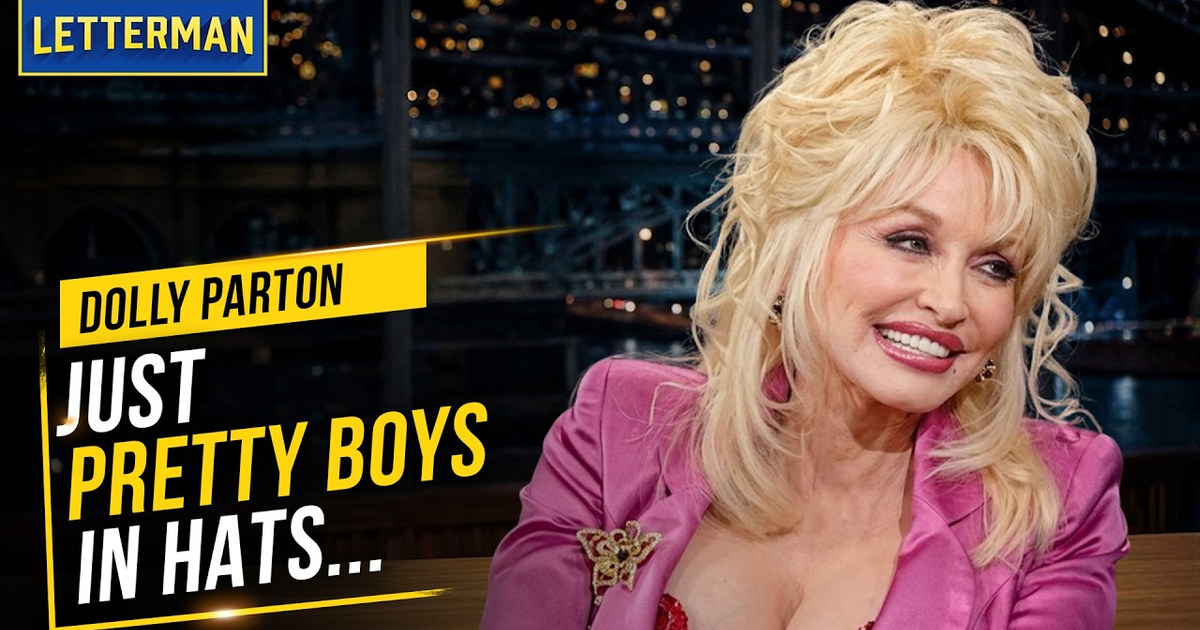
A wet gag means wardrobe, wigs and make-up reset on every pass. That's exactly why Dolly opts out of riding. She says: "I'm afraid I'm going to leave my hair somewhere in one of the trees in Dollywood." That's not a punchline. That's a production reality. On a film set, if an actor gets wet, you stop. You reset. You dry the costume, you re-wig, you re-do make-up. Esther Williams' MGM water ballets through the 1940s and 1950s — films like Bathing Beauty (1944), Neptune's Daughter (1949), Million Dollar Mermaid (1952) — required entire teams to keep her hair and make-up intact between takes. The flooding sets of The Poseidon Adventure (1972, DP Harold E. Stine) were a nightmare of wet resets. Titanic (1997, DP Russell Carpenter) — every soaked take burned hours of reset. The actors were wet, cold, and covered in tank water. That's the cost of a water gag. Dolly knows it. She's not being squeamish. She's being a professional.
Then note her joke that a cheap wig and a push-up bra are the whole costume department. "All you need is a good cheap wig and a push-up bra." That's the kind of self-aware shorthand a costume supervisor would actually respect. It acknowledges that the star's look is a construction. And if you're going to get soaked, that construction is the first thing to go. So she stays dry. The ride runs. The hair survives.
The Certification Gag Is Real
The host asks: "Has this thing been certified?" Dolly: "Well, I suppose so." That's the joke. But it's also the truth. Amusement hardware lives under state inspection regimes, engineering sign-off and insurance paperwork. That's the same layer that governs a stunt coordinator's risk assessment before a 60-foot drop gets a green light. On a film set, before a stunt like that, you have a safety meeting. You have a rigging check. You have a medic on standby. You have a fall plan. On a ride, you have the same binder. The state inspector signs off. The engineers stamp the drawings. The insurance company underwrites the risk. The joke lands because designers and stunt people both live inside the same binder. And the binder doesn't care about your hair.
Dolly's "I suppose so" is the sound of someone who knows the paperwork exists but doesn't need to read it. She's the star. She doesn't ride. She just cuts the ribbon. The binder has the drop height, the speed, the brake run, the block zones, the evacuation plan. It's the same binder that a stunt coordinator carries on a film. The difference is that on a ride, the audience is the stunt performer. They don't get a rehearsal. They get one take. That's why certification matters.
The Paradox
Dollywood's biggest new thrill is the one thing its namesake won't shoot. That's the strongest evidence for the thesis. The star is the theme. The ride is the set piece. They're built by different departments. Dolly sells the dream. The designers build the drop. She stands at the top of the lift and waves. The boat goes down without her. That's not a contradiction. That's production design. The star is the reason you buy the ticket. The ride is the reason you come back. And the hair stays perfect.
So when you watch a ride like Daredevil Falls, watch the geometry. Watch the lift as a dolly in. Watch the dark section as a fade. Watch the splash as a practical effect that no CGI can match. Watch the reset. That's the second-unit director's cut. That's the shot they never get to leave. And that's why a theme park isn't an amusement park. It's a set. The star is the theme. The ride is the set piece. And the drop is the money shot.


