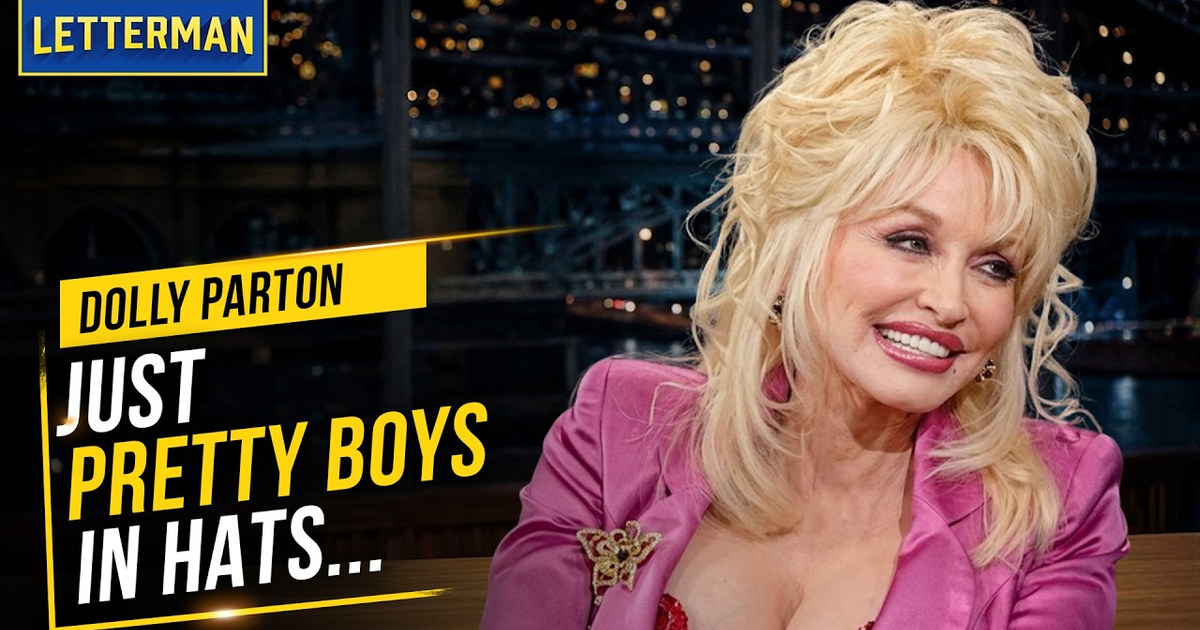
Part 2
Dollywood just opens at sunrise and lets the atmosphere do the work. That's a natural-light show running every day of the year.
Now the geography, like a shot list. Gatlinburg is the gateway town. Pigeon Forge is where Dolly was born and raised, and it's the park's address. Dollywood sits on about 100 developed acres and, by her own count, is "surrounded by about 700 acres."
That ratio is the whole argument. Dollywood is a backlot with a standing set that never gets struck, holding acreage in reserve for the next build. The empty land isn't empty. It's the next set.
Even the wildlife is a continuity note. Bears wander down from the national park boundary, and Dolly states the rule flatly: don't feed them, don't kill them, don't hunt them, and give them distance. The mistake, she says, is that people treat them like an attraction. In production terms: don't put your cast in the middle of live elements you can't control.
Then the host cracks the money joke — "You could fly this audience to Dollywood, couldn't you?" — and Dolly counter-offers instantly: she'll give everybody in the audience a ticket to Dollywood if they'll use their tickets to fly themselves down. It plays as a gag. It's also a distribution decision. She isn't buying their travel. She's converting a studio audience into park attendance one seat at a time, and the park is the destination.
[[AD]]
So here's what to watch for when you walk in. Look at the light before you look at the ride. Look at the sawmill, the mist on the ridge, the period clothes on the performer, the hundred acres inside the seven hundred — a set that's been continuously dressed since 1986.
And then look at the ride, because the hardware did get bolted on this season. It's called Daredevil Falls, and Dolly bills it as the largest, fastest, highest waterfall ride in the country.
She says it drops 60 feet, straight down, at 50 miles an hour. She also says she has never been on it — she's scared of rides, and she's afraid she'll leave a wig somewhere in the trees at Dollywood. That's the next piece of this story.
The 60-Foot Drop: Reading Daredevil Falls Like a Stunt Rig
The conversation pivots to the season's new hardware the way a second-unit meeting pivots to the rig that's going to carry the day. Dolly calls it the largest, fastest, highest waterfall ride in the country. It's named Daredevil Falls. A 60-foot drop, straight down, at 50 miles an hour. The host asks if it's been certified. She supposes so. He asks if she's ridden it. She hasn't. "I'm afraid I'm going to leave my hair somewhere in one of the trees in Dollywood." That's not a throwaway line. That's a continuity note from the star.
Here's the argument: a water ride is a stunt sequence with a permanent call sheet. The drop is the money shot. Everything before it — the lift, the slow current, the dark section — is coverage built to sell the release. Every designer on the project is really a second-unit director who never gets to leave. They build the set, they light it, they rehearse the action, and then they hand it over to a paying audience that rides the same rail eight shows a day. If you've ever stood on a wet deck at 6 a.m. with a rain tower hissing and a stunt coordinator checking a harness, you know the feeling. Dollywood's Daredevil Falls is that feeling with a season pass.
Think about how a stunt rig works. You have a release mechanism, a fall, a catch. You have a safety line. You have a mark. On Daredevil Falls, the lift hill is the release. The 60-foot drop is the fall. The splashdown is the catch. The water is the catch bag. The entire ride is a stunt sequence that runs on a loop. The designers aren't building a roller coaster. They're building a rig that resets itself. That's why the drop is straight down. That's why it's 50 miles an hour. That's the geometry of a money shot.
The Lineage: From Pirates to Ripsaw Falls
Water rides have a family tree, and it's a film family tree. Disney's Pirates of the Caribbean opened in 1967 as an attraction. It eventually became a film franchise. Splash Mountain at Disneyland opened in 1989, descended from Song of the South (1946). Escape from Pompeii at Busch Gardens Williamsburg opened in 1995. Jurassic Park River Adventure at Universal Studios Hollywood opened in 1996. Dudley Do-Right's Ripsaw Falls at Islands of Adventure opened in 1999. Daredevil Falls is a 1998 build. It sits right in the middle of that design family.
What could a 1998 build do with splash geometry? It could use a chute-style flume, a lift hill, a dark section, and a final plunge. It couldn't do the computer-controlled boats and precision splash of later decades. The splash was a physical event: water displacement, a trough, a wave that hits the boat and the audience. That's practical effects. That's a stunt. The designers weren't programmers. They were riggers, carpenters, and water engineers. They built a set that gets destroyed and reset every 90 seconds. That's the lineage. That's the craft.
Shooting Water: The Second-Unit Playbook
If I were shooting the splash, I'd want a Phantom-style high-speed rig at 120fps. That's how you make the sheet of water read as sculpture. You narrow the shutter to around 45 degrees to sharpen individual droplets. You put rain towers on the sides, splash bags in the trough, dump tanks under the boat. You wet down the set between takes. You reset. You do it again. That's the second-unit playbook. It's the same playbook they use on a ride, except the audience is the camera.


