Part 1
A Theme Park Isn't an Amusement Park: Dollywood's 13th Season as Production Design
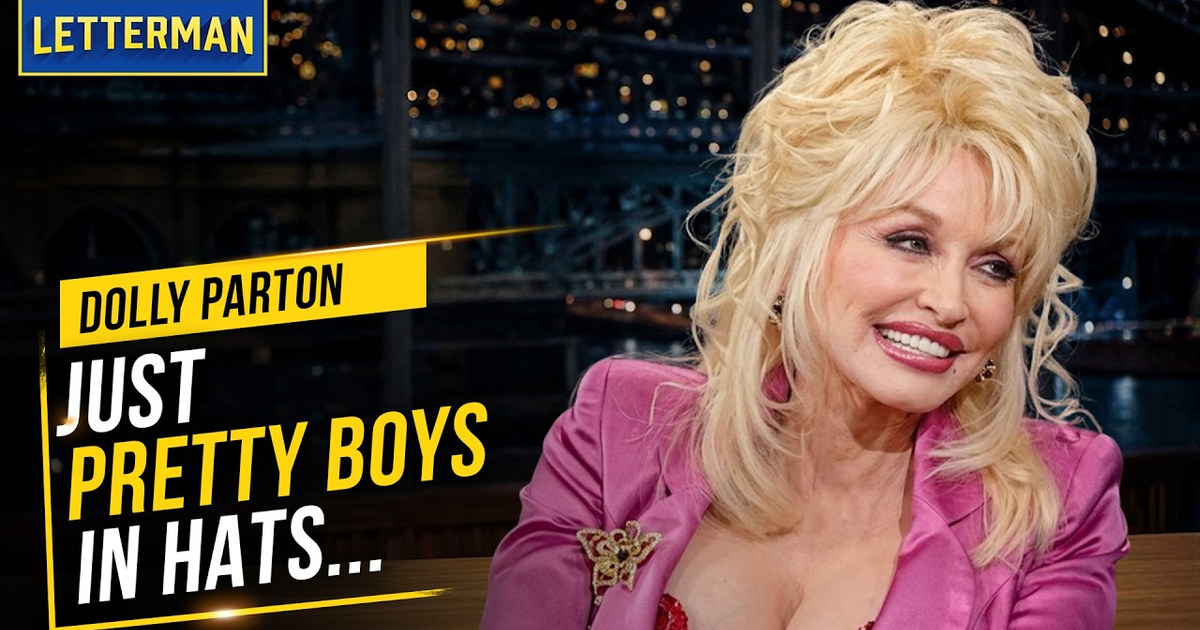
Dolly Parton doesn't let it slide. Mid-sentence, mid-couch, mid-laugh, the host starts talking about Dollywood opening its 13th big season, and she cuts him off to correct the noun: "Well, it's a theme park. It's not an amusement park." Then she defines the term, and the definition is the whole movie: "It's kind of like a culture center. We kind of preserve the Smoky Mountain heritage."
That's a location scout moment. You're three pages into a script, the lead says one line, and you suddenly know the movie is not about the rides. Dolly just handed us the logline, the look and the continuity bible in about eleven words.
So here's the thesis, and I'll defend it for the rest of this piece: Dollywood's 13th season is the clearest evidence that a theme park is cinematography you can walk through — the theme is the light, the set dressing and the continuity, and everything else is just hardware bolted to it.
Design Precedes Machinery, Every Time
Watch how she inventories the place. Shows. Great food. "A lot of wonderful things." And then, almost as a footnote, "in addition to all the wonderful rides, which we do have" — followed immediately by the new one, "which is an amusement ride this year." She files the hardware in a separate category from the production. She doesn't say they built a new ride. She says it's an amusement ride, like a different department submitted it.
That is a DP talking about a practical effect. The set comes first; the rig gets bolted to the set.
And that ordering isn't a marketing line — it's the actual lineage of the American theme park, and you can trace it building by building. Walter Knott was selling berries in Buena Park, California, in the 1920s. By the 1940s he'd assembled Knott's Berry Farm, a ghost town built out of buildings he bought and relocated, plus a narrow-gauge railroad. Sets first. Rides second. He built a place that had a look, then charged admission to walk through it.
Disneyland opened July 17, 1955, and Walt's first instinct wasn't a coaster — it was Main Street, U.S.A., a backlot you could patrol on foot.
Silver Dollar City opened in Branson, Missouri, in 1960 as an 1880s-style crafts village: working shops, live demos, period dress. Again, the dressing came first.
Dollywood's own origin follows the blueprint. It opened in May 1986 in Pigeon Forge, Tennessee, as Silver Dollar City Tennessee, then took the Dollywood name. If this is season 13, the calendar says 1998 — a park old enough to have a house style and young enough to still be re-dressing it. That's a series that locked its look by season three and now spends season thirteen art-directing the frame instead of hunting for it.
Craftsman's Valley Is a Standing Set — and It Still Works
Then she walks the host through Craftsman's Valley, and it comes out like a prop list read aloud. An active sawmill. "We sell lumber from, you know—" The host cuts in: "Really. So people go there and buy firewood?" "If you want to." A carriage shop where they make carriages, and "people order from all over the world." Performers in period clothes.
Her summary of the build: "It's really like what the Smoky Mountains was 100 years ago."
That isn't decoration. That's a functioning set with a live prop department. A sawmill that actually sells its own lumber is a set that pays for its own dressing. A carriage shop taking international orders is a practical build with a working interior — meaning you can shoot it from any angle a guest can stand, and it never has to be struck.
Features do the same thing. They just have to strike it when they're done. Coal Miner's Daughter (1980, dir. Michael Apted, DP Ralf D. Bode, 125 minutes) put Sissy Spacek in real Appalachian poverty instead of a backlot version of it. Bode's naturalism only works because the locations are true. Spacek won the Oscar for it.
Songcatcher (2000, dir. Maggie Greenwald) went to the mountains for the same reason — Appalachian ballad tradition shot where the tradition lives, with real musicians in frame.
Nell (1994, DP Dante Spinotti, 112 minutes) put Jodie Foster in real Blue Ridge locations, and Spinotti's light on real water and real foliage is the entire texture of that film. You cannot fake that with a scrim.
Cold Mountain (2003, dir. Anthony Minghella, DP John Seale, 154 minutes) proves the flip side: the production largely rebuilt the Blue Ridge in the Carpathians, because building it was cheaper than finding it. Gorgeous work. But it's a build — and builds get struck. Craftsman's Valley doesn't.
The Light Is Free — and It Comes With the Acreage
Dolly confirms the naming on the record: "They call them the Smoky Mountains because there's mist, there's fog, there's clouds that shroud the mountains." Then the number that makes the case — about 10 million visitors a year up in the Smokies, the most-visited national park in the United States.
That haze is a free softbox. It's a 10-million-visitors-a-year atmospheric unit that never needs a generator, never needs a flag and never gets called for a reshoot. The diffusion is the location.
Filmmakers chase the same look artificially. On O Brother, Where Art Thou? (2000, 107 minutes), Roger Deakins and the Coen brothers pushed a green-gold humidity through the digital grade — one of the first features to lean hard on a digital intermediate — because the sky on the day wouldn't give them the myth they wanted. They built the haze in post.


