Part 1
The Dolly Parton Experience: A Museum That Talks Back
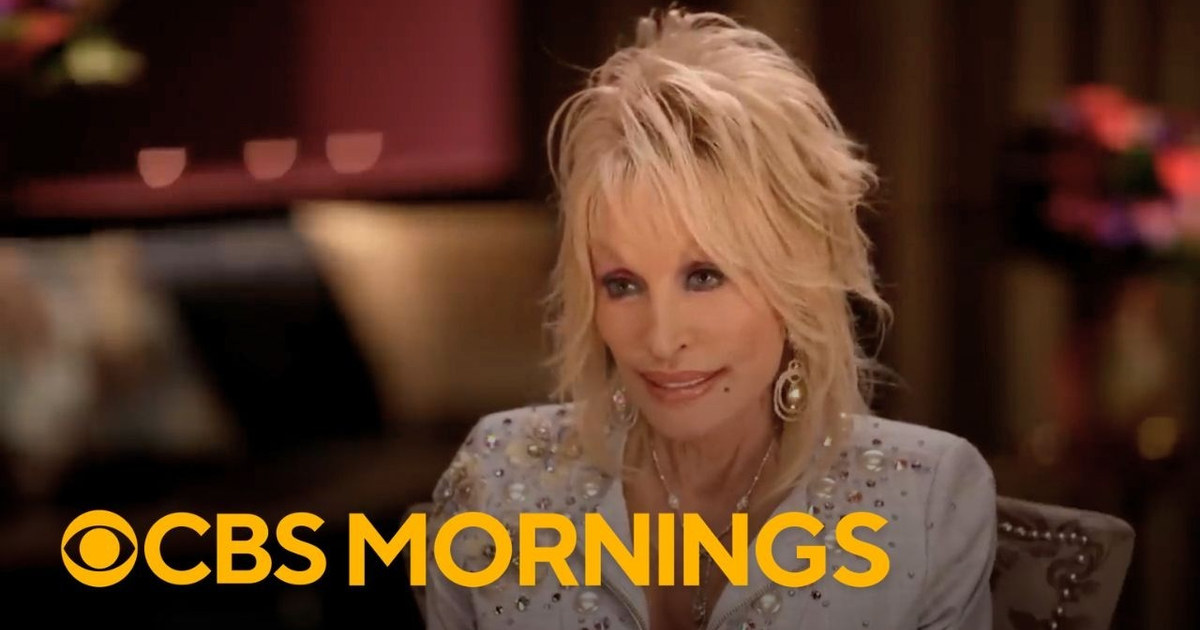
“Well, we did a pretty good job of it.” That’s Dolly Parton, sitting in a room that probably smells like rhinestones and Tennessee pine, talking about the impossible: cramming a 60-year career into one attraction. She says it with a grin, like she just finished a puzzle that had a million pieces and only half the box. And honestly? She’s not wrong.
If you’ve ever driven through Pigeon Forge, Tennessee — past the go-karts, the pancake houses, the giant upside-down buildings — you know Dollywood isn’t just a theme park. It’s a kingdom. And right in the middle of it, the old museum that used to hold her artifacts? Gone. Replaced by something bigger, louder, and way more alive: the Dolly Parton Experience.
I need you to picture this. You walk in, and it’s not dusty glass cases with a sequined dress and a plaque. It’s screens, sound, movement. It’s her childhood cabin, her first guitar, her family, her hair — yes, the hair gets its own moment — and it all unfolds like a story you can step into. Dolly’s team from Nashville and the Dollywood crew built it together, and you can feel that handshake in every room.
Why did she change it? Simple. “Everything is so digital,” she says. “It was an easier way and a much more exciting way.” She’s not wrong. People don’t want to stare at a static dress anymore. They want to hear her voice, see her face, feel the timeline move. And Dolly, being Dolly, knew that before the rest of us did.
So no, it’s not just a museum. It’s a multimedia journey. And it covers everything: childhood, career, family, clothes, hair, stories, collaborators. “It tells my story from my childhood all the way through my career, all the people that I’ve worked with,” she says. “We go through everything from my family and the clothes, the hair, the stories, and it just really covers everything.”
There are “a lot of chapters,” as she puts it. And she’s the first to admit it. “I’ve been at this a long time,” she says, then laughs. “I got a long way to go.” That’s Dolly in a nutshell: a living legend who still talks like she’s just getting started. The Experience captures that energy — the feeling that her story isn’t a closed book, it’s a series that keeps dropping new episodes.
But here’s the thing that hit me while watching her talk about it: this isn’t just a tourist attraction. It’s a statement. Dolly could have kept the old museum. She could have let her legacy sit still. Instead, she rebuilt it for a generation that scrolls, swipes, and streams. She met us where we are. And she did it with the same warmth and wit that made us love her in the first place.
So if you’re planning a trip to Dollywood, or if you’re just curious about the woman behind “Jolene” and “9 to 5,” the Dolly Parton Experience is worth the detour. It’s not a walk through the past. It’s a conversation with the present — and Dolly’s doing most of the talking.
And trust me, you’ll want to listen.
From Cass Walker to Nashville: The Making of a Songwriter
Picture a ten-year-old girl standing backstage at a local TV studio in Knoxville, Tennessee, in 1956. Her hands are shaking. Her stomach is doing somersaults. Any second now, the red light will blink on, and she’ll have to walk out there and sing for a man named Cass Walker — and for whoever else happens to be watching. Most kids would bolt. She didn’t.
That girl was Dolly Parton. And according to Dolly herself, the second the spotlight hit her face, the nerves vanished. “It’s do or die kind of, so to speak,” she says now, laughing. “Once I’m on stage, I’m there.”
If you’ve ever wondered how a kid from a one-room cabin in the Smoky Mountains with eleven siblings ended up writing “Jolene,” “I Will Always Love You,” and “9 to 5,” this is the chapter where the blueprint gets drawn. Not in a boardroom. Not in a record label office. In a living room, with an uncle who believed in her, a mama who showed her off, and a little girl who realized early that attention felt like oxygen.
Let’s rewind to the beginning — or at least to the part that matters most.
Uncle Bill: The First Believer
Dolly didn’t come from money. She came from music. “The music was in our blood,” she says, and she means it literally. Her family has been tracing its musical roots for a documentary, and what they’ve found is a lineage of singers, pickers, and dreamers. But it was her Uncle Bill who spotted something different in little Dolly — not just talent, but seriousness.
She was seven, eight, nine years old when she started learning guitar. Most kids that age treat an instrument like a toy. Dolly treated it like a job. Uncle Bill noticed. He was a musician himself, and he had his own dreams of stardom that never quite materialized. Instead of being bitter, he poured that ambition into his niece. They wrote songs together. He taught her chords. He told her she had something.
“He was that person that really helped me the most in those early days,” Dolly says. And when she was ten, he took her to audition for The Cass Walker Show — a local Knoxville TV program that gave young performers a shot. That audition changed everything.


