Part 3
But here's the biggest counter-argument to my thesis: maybe Dolly is just being nice. Maybe she's just being polite. And maybe impersonation really is about looks for the vast majority of fans. That's what I'll tackle in the final section. Stay tuned.
The Consensus Says Dolly Is Just Being Polite — I Say She's Revealing a Truth About Fandom
Let’s start with the strongest counter-argument, because it’s a good one. Dolly Parton is famously gracious. She’s the kind of star who thanks everyone, hugs everyone, and never has a bad word to say. So when she sits on The Graham Norton Show and praises a Dolly impersonator named Mary, the consensus says: of course she’s nice. She’d never criticize an impersonator on TV. Her praise is meaningless. Impersonation is still mostly visual, and Dolly is just playing along.
I get it. Politeness is real. But I think that read misses what’s actually happening in that clip. Dolly isn’t just being polite. She’s articulating a philosophy of performance.
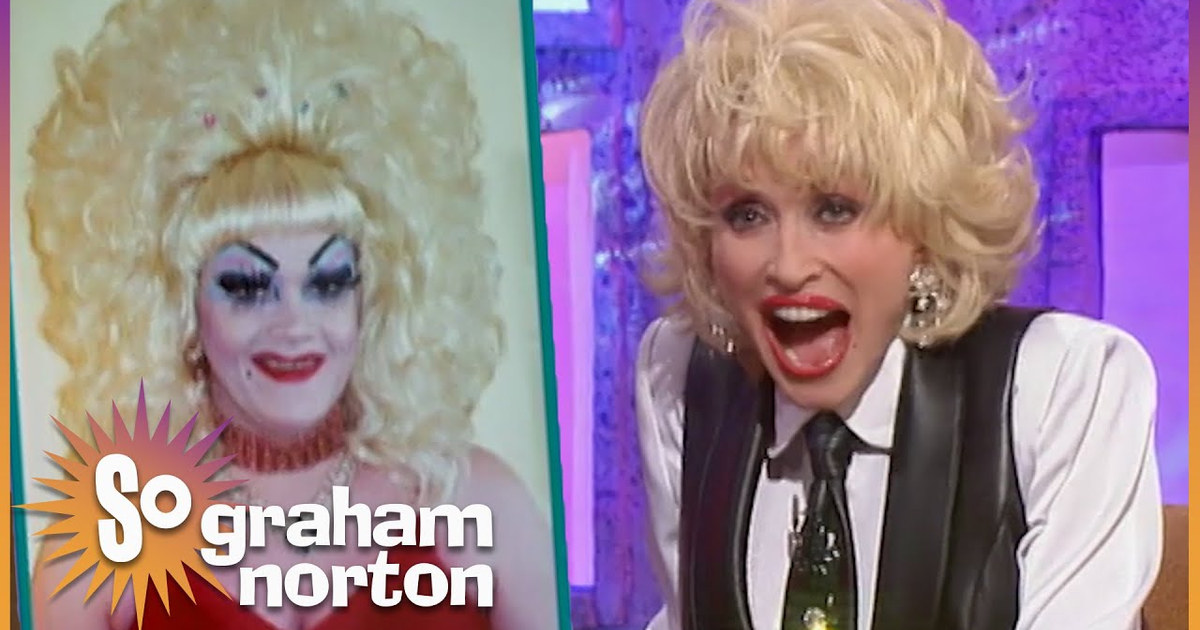
Listen to her specific words. When Graham Norton says lots of people dress up as her, she says, “I think it’s fun.” She calls it “a great compliment.” Then she drops the line that should end this debate: “If I hadn’t been a girl, I’d have been a drag queen for sure. I was a really good one.” That’s not empty niceness. That’s self-aware. That’s detailed. That’s a woman who understands that putting on a character is not an insult — it’s an art form. She’s not just being nice; she’s telling us how she sees the whole business of performance.
And then there’s the “guess which is the real Dolly” gallery. Graham pulls up a website where fans send in photos of themselves because they think they look like Dolly. Dolly points at the screen and says, “That’s no, that’s a man.” No malice. No offense. She’s amused. She’s not ranking them as good or bad. She’s enjoying the spectrum. That’s the key. She doesn’t see impersonation as a binary — real or fake, good or bad. She sees it as a range, and she’s delighted by all of it.
The consensus says Dolly is just playing along. I say she’s revealing a truth about fandom: impersonation isn’t a failure to be the original. It’s an active participation in the original’s legacy.
[[AD]]
Think about the phone call segment. Graham surprises Mary, a Dolly impersonator, with a call from the real Dolly Parton. Mary does the voice. Dolly listens and says, “Kind of, yeah.” Then Graham tricks Mary into thinking she’s talking to another impersonator, and Mary says her accent is better. Then the reveal: it’s actually Dolly. Mary is stunned. Dolly doesn’t get offended. She laughs. She asks Mary about her favorite tracks. Mary says “Jolene,” “9 to 5,” and “Islands in the Stream.” Dolly says “Islands in the Stream” is the best, but for that you need a Kenny. So they call Mark, a Kenny Rogers impersonator of 22 years. And then Mary and Mark sing “Islands in the Stream” over the phone with Dolly listening.
That whole sequence is not politeness. That’s Dolly Parton treating impersonation as a legitimate part of her own story. She’s not just tolerating it. She’s orchestrating it. She’s giving it a stage.
Now, the consensus will say: fine, but that’s just a fun TV moment. It doesn’t change the fact that impersonation is mostly visual. And you know what? For many fans, that’s true. A Dolly impersonator at a birthday party needs the wig and the outfit. The visual is the product. But that’s a commercial transaction, not an artistic one. The consensus confuses the two. Dolly isn’t talking about commercial transactions. She’s talking about performance as a form of love.
The Graham Norton Show clip went viral on YouTube and TikTok because of this segment. The comment sections often say “Dolly is a treasure.” They’re right. But they miss that she’s also a sharp critic of the consensus. She’s not just being nice. She’s telling us that impersonation is a spectrum, not a binary. She’s telling us that drag queens and tribute acts and fans in wigs are all part of the same impulse: to put on a show.
And that’s the truth about fandom that the consensus misses. Fandom isn’t passive. It’s not just watching. It’s doing. It’s dressing up. It’s learning the accent. It’s singing “Islands in the Stream” over the phone with a stranger while the real Dolly listens. That’s not sad. That’s not weird. That’s participation.
So here’s the strongest counter-argument, and I’ll concede it: yes, for many fans, the visual is what matters. A Dolly impersonator at a birthday party needs the wig and the outfit. If you hired a Dolly for your party and a man showed up, you’d be annoyed. Dolly herself jokes about that in the clip: “Imagine if you hired a Dolly Parton impersonator and that showed up. You would be so annoyed. Good money please.” She gets it. The commercial expectation is real.
But that’s a commercial transaction, not an artistic one. The consensus confuses the two. When Dolly says “I think it’s fun” and “a great compliment,” she’s not talking about party bookings. She’s talking about the impulse to perform. And that impulse is not about being a perfect copy. It’s about being part of the show.
So no, Dolly Parton is not just being polite. She’s revealing a truth about fandom: impersonators aren’t failed copies. They’re active participants in her legacy. The consensus says they’re weird or sad. I say they’re doing what Dolly herself would do — putting on a show.
Next time, we’ll look at other celebrity impersonators who broke the consensus, from Elvis to Cher, and ask why some tribute acts become stars in their own right.


