Part 2
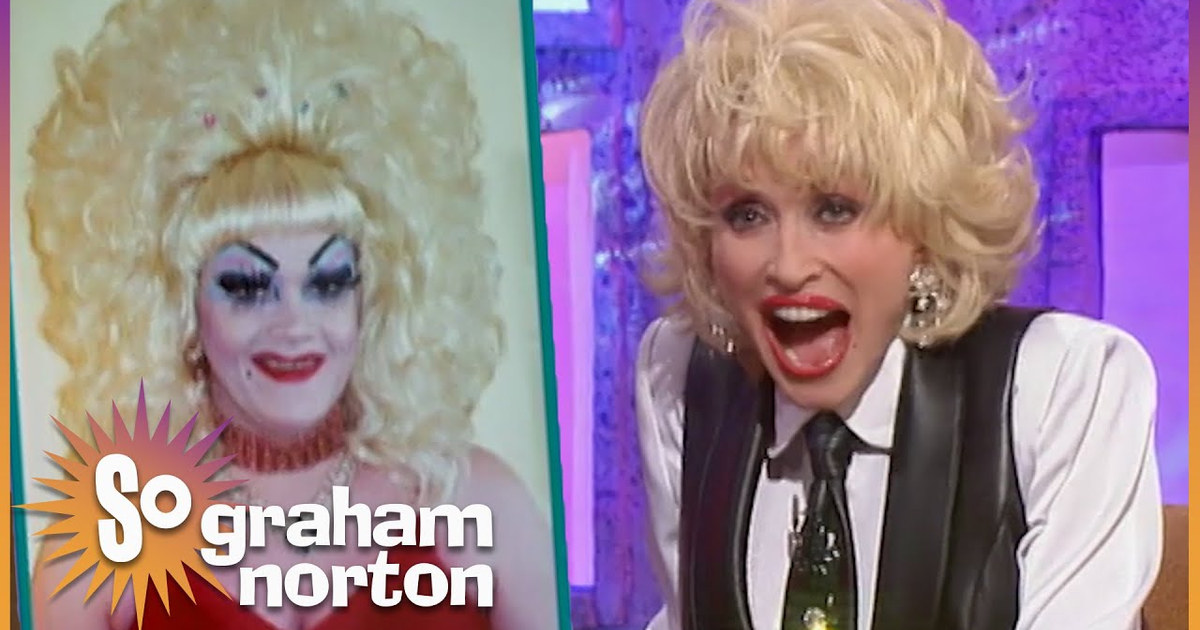
The transcript shows Dolly laughing at the fake Dollies. She's amused by the ones who get it wrong. She's delighted by the ones who get it right. But she's most impressed when someone nails the voice. That's the moment she leans in. That's the moment she says, 'She's quite good.' Not because of the dress. Because of the sound. Because the voice is what makes Dolly, Dolly. The accent. The laugh. The way she says 'Jolene' and '9 to 5' and 'Islands in the Stream.' Those are the things you can't fake. Those are the things that last. And that's why the consensus is wrong. Impersonation isn't about looking like someone. It's about sounding like them. It's about capturing their essence, their energy, their soul. The wig is just the beginning. The voice is the destination.
But here's where it gets really interesting. Because if the voice is the true test of an impersonator, what happens when two impersonators try to perform together? Mary and Mark — the Dolly and the Kenny — they're about to attempt 'Islands in the Stream' over the phone. Two voices, two impersonations, one classic duet. And that's where the consensus really falls apart. Because impersonation isn't just about the individual. It's about the chemistry. The interplay. The way two voices blend together. And when you're faking it, that's the hardest thing to fake. So stick around. Because the next section is where things get really good. And really revealing. Because Mary and Mark are about to show us why the consensus on Dolly impersonators isn't just wrong. It's backwards.
The Consensus Says Impersonation Is About the Individual — I Say It's About the Duet
The consensus is that impersonation is a solo act. You pick one star, you copy their look, their voice, their mannerisms, and you perform them. That's the standard take. And it's wrong. The best impersonators don't just copy a person — they copy a relationship. They impersonate chemistry. And the Graham Norton clip with Dolly Parton proves it.
Think about the classic duets. 'Islands in the Stream' was written by the Bee Gees and became a No. 1 hit in 1983 for Dolly Parton and Kenny Rogers. It's not a Dolly song. It's not a Kenny song. It's a Dolly-and-Kenny song. You can't do it alone. The song requires two voices, two personalities, two performers bouncing off each other. The consensus ignores that relational nature. It treats impersonation as a solo sport. But the greatest hits in music history are often duets — and impersonators who ignore that are missing the point.
In the clip, Mary (a Dolly impersonator) and Mark (a Kenny impersonator) are patched together over the phone. They've never rehearsed. They've never met. They have to sync timing, key, and call-and-response on the fly. Mary says, 'I'm not a singer but I'll try.' Mark has been doing the song for 22 years. They count off 'one, two, three, four' and launch into the chorus. The result is messy but magic. Why? Because they're not just impersonating two voices. They're impersonating a relationship. They're capturing the push-pull, the harmony, the give-and-take that made the original so iconic. That's a skill the consensus completely overlooks.
Mary and Mark understand something that most impersonators don't: you can't just be Dolly. You have to be Dolly with Kenny. You have to listen, adjust, and respond. That's what makes the performance work. The consensus says impersonation is about the individual. I say it's about the duet. And the Graham Norton clip is the proof.
[[AD]]
Dolly's own reaction seals it. She listens to Mary and Mark and applauds. She doesn't critique their pitch or their timing. She celebrates their willingness to play. That's the generosity of a true performer. And it exposes the consensus as cynical. The consensus often mocks impersonators as sad or delusional. But Dolly treats them as tributes. She says it's 'a great compliment' that people dress as her. That's the opposite of the cynical take.
The 'Kenny phone' and 'Dolly phone' bits are framed as a game, but Dolly treats them as a tribute. She's not laughing at Mary and Mark. She's laughing with them. She's enjoying the performance. That's the mark of a true star — someone who can appreciate the love behind the imitation, even if it's not perfect. The consensus says impersonators are in it for money or fame. The transcript even jokes about hiring one and being 'so annoyed' if they showed up. But the best ones, like Mary and Mark, do it for love. They're not trying to fool anyone. They're trying to celebrate someone they admire.
Now, I'll concede that some impersonators are in it for the wrong reasons. There are plenty of Dolly lookalikes who are just in it for the paycheck. But the best ones — the ones who really get it — understand that impersonation is about connection. It's about capturing a relationship, not just a person. Mary and Mark prove that. They've never met, but they found a groove. They made each other better. That's what a duet is. That's what impersonation should be.
[[VIDEO]]
The consensus says impersonation is a solo act. I say it's a duet. And the Graham Norton clip is the evidence. Dolly and Kenny made magic together. Mary and Mark captured that magic over the phone. That's not just copying. That's performing. That's art.


