Part 1
The Consensus: Dolly Impersonators Are Just Wigs and Sequins — I Say That's Wrong
The consensus is clear: Dolly Parton impersonators succeed by copying the look. Big hair, rhinestones, exaggerated makeup — that's the whole game. It's a surface-level drag act, and the best you can hope for is a convincing wig and a padded bra. I think that's wrong. Dead wrong. And I'm not just being contrarian for the sake of it. The real craft of a Dolly impersonator isn't in the wardrobe. It's in the voice — the vocal mimicry, the emotional authenticity, the way you can close your eyes and swear you're hearing the real thing. The look is just the wrapping paper. The voice is the gift.
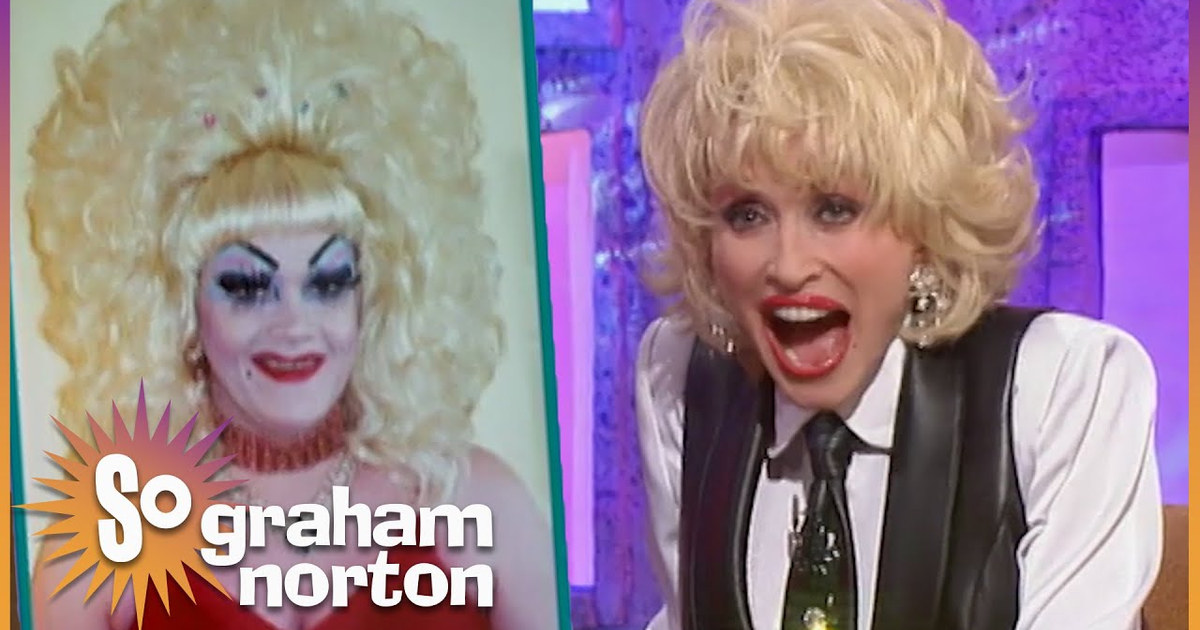
Don't take my word for it. Take Dolly's. In a now-classic clip from The Graham Norton Show — the UK chat show that's been running on BBC One and later ITV since 2007 — Dolly herself sat down to review a gallery of impersonators. The segment is a masterclass in why the consensus is backwards. Graham pulls up a website where fans submit photos of themselves dressed as Dolly. Some are 'quite good,' Dolly says. Others get a blunt 'that's a man.' She laughs. She's charmed. But here's the thing: she's not judging them on their sequins. She's judging them on whether they capture her essence. And when she says, 'If I hadn't been a girl, I'd have been a drag queen for sure — I was a really good one,' she's not mocking impersonation. She's honoring it. She sees it as an art of transformation, not mockery. That's a crucial distinction. Drag and impersonation are about becoming someone else, not just wearing their clothes. Dolly knows that better than anyone.
But the consensus persists because looks are easy to see. You can spot a bad Dolly wig from across the room. You can't spot a bad Dolly voice until she opens her mouth. So we default to the visual. We assume the costume is the craft. And that's where the real impersonators get overlooked. Because the ones who nail the voice — the accent, the laugh, the bubbly personality — they're the ones who actually fool you. Not for a second, but for a whole conversation. That's the test. And it's a test that almost no impersonator passes. Except one. Her name is Mary.
In the same Graham Norton segment, the show sets up a phone call with Mary, a Dolly impersonator who's been performing for years. Graham introduces himself, then hands the phone to Dolly — but Mary doesn't know it's Dolly. She thinks she's talking to another impersonator. And that's when the magic happens. Dolly speaks. Just a few words. 'Hi Mary, I do a lot of Dolly Parton impersonations and they say I have the accent down really well. What do you think? Do you think I sound like her?' Mary pauses. 'Well, kind of. Yeah.' Then she adds, 'But I think my accent's better.' The studio audience laughs. Graham grins. And then he drops the bomb: 'We're playing cruel tricks on you. That is Dolly Parton talking to you.' Mary is stunned. 'We've been duped!' she says. 'No, truly, Mary, it is Dolly,' Graham insists. And Mary, still not quite believing it, says, 'Well, it's either the Dolly Parton we've been duped...' She can't finish the sentence. Because she knows. She knows that voice. She's been copying it for years. And she just told the real Dolly that her accent was better.
That moment is the whole argument in miniature. Mary is a professional impersonator. She's studied Dolly's look. She's studied Dolly's mannerisms. She's probably got the wigs, the outfits, the makeup. But when she hears the voice — the actual voice, the East Tennessee accent, the bubbly personality, the distinctive laugh — she doesn't recognize it as Dolly. She thinks it's another impersonator. Why? Because she assumes that anyone who sounds that good must be faking it. She's been duped by her own expertise. She knows the voice so well that she can't believe it's real. That's not a failure of Mary's impersonation. That's a failure of the consensus. The consensus says the look is what matters. But Mary's entire career is built on the voice. And when she hears the real thing, she can't tell the difference. That's the power of vocal mimicry. It's the ultimate identifier. You can fake the hair. You can fake the rhinestones. You can't fake the voice. Not for long, anyway.
Now, I'll concede that looks matter for live performance. If you're on stage at a Dolly Parton tribute show, you need the wig. You need the outfit. You need the whole package. The audience paid to see Dolly, and if you show up in jeans and a t-shirt, they're going to be disappointed. But here's what the consensus gets wrong: it treats the look as the main event and the voice as a bonus. In reality, it's the opposite. The look gets you in the door. The voice keeps you there. And the impersonators who last — the ones who build decades-long careers — they're the ones who understand that. Take Mark, the Kenny Rogers impersonator. He's been doing it for 22 years. Twenty-two years. That's longer than most marriages. And when Graham Norton calls him up on 'Kenny Phone,' Mark doesn't need a beard. He doesn't need a suit. He doesn't need a cowboy hat. He just needs his voice. And within seconds, you know it's Kenny. The gravelly baritone. The easy charm. The way he says 'I've been doing that song for 22 years so I guess I can do it one more time.' That's not a costume. That's a craft. And it's a craft that takes decades to perfect. You can buy a wig in an afternoon. You can't buy a voice.


