Part 2
Mary says, “Oh my god.” Then she says, “Mary, Mary, now off Dolly’s tracks.” She’s not making sense. She’s not supposed to. That’s the payoff. The impersonator meets the original. The copy meets the source. And the source is kind. Dolly asks about Mary’s favorite tracks. Mary says Jolene. Nine to Five. Islands in the Stream. “That’s the best,” Mary says. “But for that you need a Kenny.”
Norton has a Kenny. Of course he does. “I do have the number for a Kenny impersonator who we could phone now. On Kenny phone.” Mary says yes. She’s still shaking. Norton dials. Mark answers. “Hello, Mark speaking.” Norton explains. Mark says he’s been doing Kenny for 22 years. He’s happy to do it one more time.
Then Norton patches them through. Mary and Mark. Two impersonators. One phone line. No Dolly. No Kenny. Just the echoes. Mark counts off. “One, two, three, four.” They sing Islands in the Stream. Mary says, “I’m not a singer but I’ll try.” She tries. The audience applauds. Dolly watches. Dolly listens. Dolly smiles.
That’s the bit. That’s the whole bit. A phone, a Dolly, and a Kenny on standby. But it’s not just a prank. It’s a portrait of fame. The star, the shadow, the fan, the fake. All on one call. All in one cut. Norton didn’t just book Dolly Parton. He booked the entire ecosystem around her. And then he let it sing.
Next: why this cut works. The rhythm. The misdirection. The way Norton holds the frame. And what it says about the strange, loving business of being someone else for a living.
The Cut: Why This Bit Lands and What It Says About Fame
Cut to the phone. A landline. A prop. Norton holds it like a detonator. The bit isn't the call. The bit is the edit. Setup. Twist. Escalation. Payoff. Four beats. Tight.
[[VIDEO]]
Setup: Norton and Dolly. She's game. She's always game. He tells her there's an impersonator on standby. She doesn't know. That's the first cut. The audience knows. Mary doesn't. Dramatic irony, 101.
Twist: Mary picks up. She thinks it's a normal booking. She talks shop. "People hire me more for looks and voice." She's professional. She's proud. She has no idea Dolly Parton is sitting three feet from the receiver. The cut lands because Mary is sincere. No wink. No nudge. Just a woman who does Dolly for a living, talking to a man she thinks is Graham Norton.
Escalation: Dolly speaks. "Hi Mary. I do a lot of Dolly Parton impersonations and they say I have the accent down really well. What do you think? Do you think I sound like her?" The line is a blade. Mary, still clueless, says, "Well, kind of yeah." Kind of. Yeah. Two words. The whole bit hinges on them. Dolly doesn't flinch. She doubles down. "Do you think you do a better impersonation of Dolly than I do?" Mary: "I think that my accent's better." Boom. That's the cut. The impersonator critiquing the original. The student grading the master. And Dolly lets her. That's generosity. That's timing. That's the beat before the punchline.
Resolution: Norton breaks. "We're playing cruel tricks on you. That is Dolly Parton talking to you." Silence. Then: "Are you sure? It is Dolly? Well, it's either the Dolly Parton we've been duped." She's still not sure. That's the payoff. Not the reveal. The doubt. Mary can't believe it because the voice is too good. Too real. The impersonator has impersonated so well that the real thing sounds fake. That's the joke. That's the cut.
Compare. Candid Camera, 1948. Allen Funt. Hidden camera. Real people. The prank as sociology. Punk'd, MTV, 2003–2007. Ashton Kutcher. Celebrities. The prank as status flex. The Graham Norton Show red chair. Ordinary people. A lever. The prank as game show. This bit is different. It's not cruel. It's not a gotcha. It's a hall of mirrors. Two performers. One voice. One legend. The cut doesn't humiliate Mary. It crowns her. She's good enough to fool herself.
The impersonator's craft. Mary's accent. Dolly's feedback: "kind of yeah." That's not a knock. That's a note. A director's note. Dolly knows the difference between mimicry and embodiment. The accent is the easy part. The bubbly personality is the hard part. Mary has both. Dolly knows it. That's why she plays along. That's why she asks for tips. She's not mocking. She's acknowledging. The hierarchy of impersonation: looks vs. voice. Looks get you the gig. Voice gets you the legend. Mary has both. But the voice is the key. The voice is the cut.
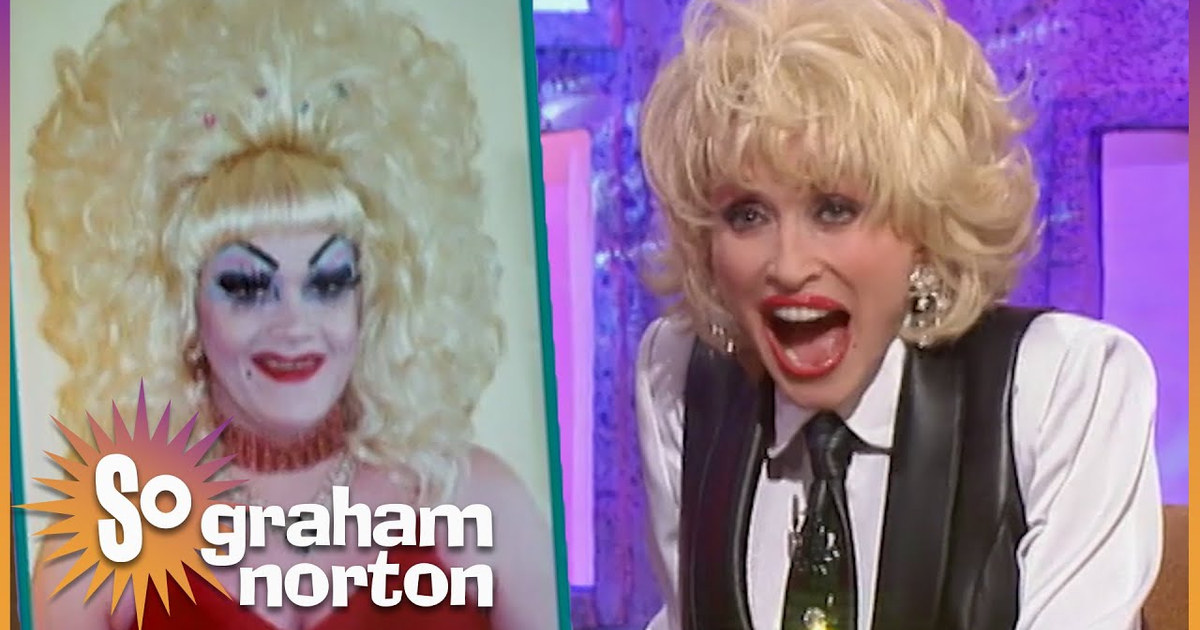
Dolly's own drag queen comment. "If I hadn't been a girl, I'd have been a drag queen for sure. I was a really good one." That's not a throwaway. That's a nod. A nod to queer performance history. To the art of celebrity illusion. To RuPaul's Drag Race, Logo/VH1, 2009–. To the queens who study the walk, the talk, the tuck. Dolly knows. She's been impersonated by the best. She's watched the illusionists. She's honored. The compliment of imitation. She gets it. She's not threatened. She's flattered. That's the brand.
Bring in Kenny. Mark the impersonator. Twenty-two years of "Islands in the Stream." Twenty-two years. That's not a hobby. That's a career. Norton calls him. Mark picks up. "I've been doing that song for 22 years so I guess I can do it one more time." Deadpan. Perfect. The absurdity: a Dolly and a Kenny singing the chorus over the phone. To each other. For Dolly. The half-chorus request. "We don't need much of it. Just a little half of course." The count-off. "One, two, three, four." The applause. The song's origin: Kenny Rogers and Dolly Parton, 1983. Written by the Bee Gees. A country-pop crossover. A duet. A standard. And here it is, forty years later, sung by two strangers on a landline. That's the cut. That's the rhythm.


