Part 1
The Bit: A Phone, a Dolly, and a Kenny on Standby
The phone rings. That’s the whole bit. One ring. One receiver. One Dolly Parton sitting three feet from Graham Norton on The Graham Norton Show. Cut to black? No. Cut to Mary.
Mary doesn’t know Dolly is in the room. The audience does. That’s the cut. That’s the edit. That’s the whole engine of this thing. Norton doesn’t just interview Dolly Parton. He builds a trap. A kind one. A warm one. But a trap.
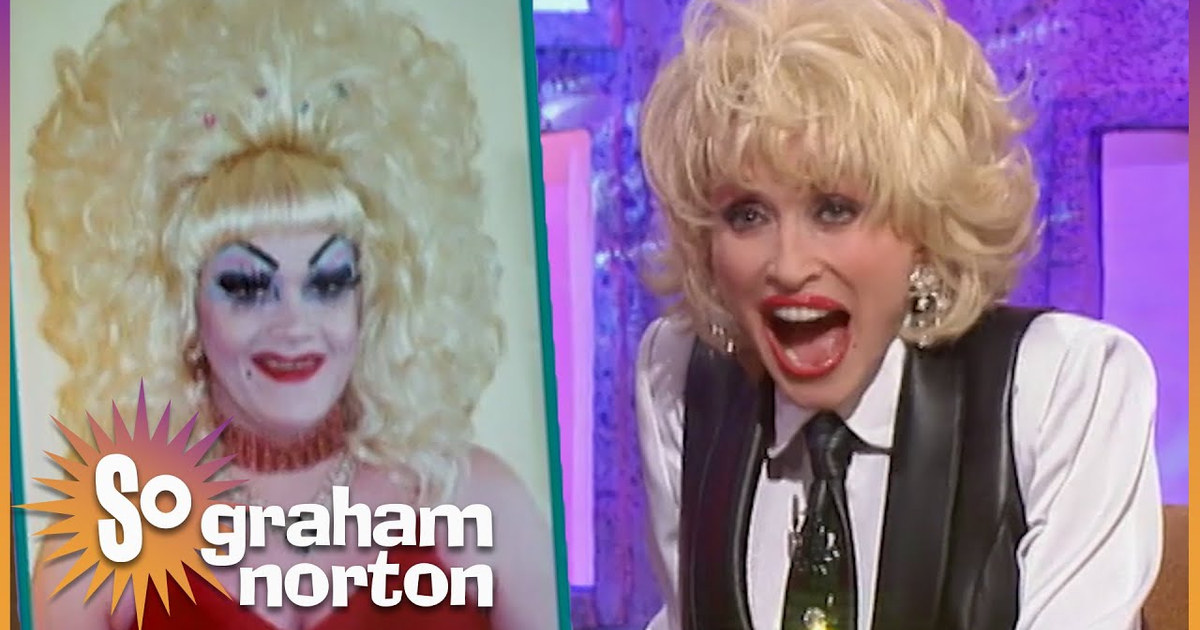
The setup: Dolly and Norton are talking impersonators. Dolly says, “Lots of people dress up as you, don’t they?” She laughs. “Boys and girls.” She calls it “a great compliment.” Then she drops the line that could be the whole article: “If I hadn’t been a girl, I’d have been a drag queen for sure.”
That’s not a throwaway. That’s a thesis. Dolly understands the bit before Norton even dials. She knows the impersonator economy because she built it. Every Dolly lookalike, every Kenny Rogers wannabe, every “guess which is the real Dolly” gallery — they’re all part of the same loop. The star creates the shadow. The shadow flatters the star. And then Norton picks up the phone.
The mechanics matter. Norton’s timing is surgical. He doesn’t rush. He lets Dolly hug him first. “I have to hug,” she says. He jokes about “easy access dialing.” He fumbles with the phone. That fumble is the setup. The pause. The punchline is coming, but Norton knows you can’t just throw the punch. You have to let the audience see the fist.
This is 2010s BBC One. Norton’s red chair, his sofa, his “I’ll tell you a story” rhythm. He’s not Letterman. He’s not Fallon. He’s a host who lets celebrities be weird. He lets Dolly be Dolly. And Dolly is the best guest because she’s always in on the joke. She’s not the butt. She’s the co-director.
Cut to the impersonator economy. Dolly says there’s a website — a gallery of people who send in pictures of themselves because they think they look like her. “Guess which is the real Dolly,” she says. The audience laughs. She points at one. “That’s no, that’s a man.” She’s delighted. She’s not offended. She’s curating.
Then Norton mentions Kenny Rogers. “There’s an impersonator of both of you.” Because of course there is. Dolly and Kenny. Islands in the Stream. 1983. Written by the Bee Gees. A duet so massive it became a karaoke standard, a wedding staple, a punchline, and a love letter all at once. If you’re going to impersonate Dolly, you need a Kenny. And if you’re going to prank a Dolly impersonator, you need a Kenny on standby.
Norton has one. Mark. Twenty-two years doing Kenny Rogers. “I’ve been doing that song for 22 years,” Mark says later. “So I guess I can do it one more time.” That’s not just a line. That’s a résumé. That’s a life. Twenty-two years of Islands in the Stream. Twenty-two years of “Islands in the stream, that is what we are.” Twenty-two years of being the guy who isn’t Kenny but sounds enough like him to get hired.
This is the weirdness. This is the compliment. Dolly says it herself. “If I hadn’t been a girl, I’d have been a drag queen for sure.” She says she was a really good one. She’s not joking. Drag is impersonation with love. Impersonation is drag without the stage. Dolly knows the difference. She also knows there isn’t one.
Now the call. Norton dials. “It’s not doggy phone,” he says. “It’s Dolly phone.” The audience laughs. Dolly waits. The phone rings. Mary answers. “Hello?”
Mary’s voice is bright. Normal. She doesn’t know. That’s the tension. Norton says, “It’s Graham Norton here. I believe you knew I’d be calling.” Mary says yes. She’s game. She’s been booked for this kind of thing before. She does Dolly for looks and voice. She’s ready.
Norton asks what makes a good Dolly. Mary says, “The bubbly personality and the accent.” She’s giving tips. She’s the expert. She’s about to be destroyed in the best possible way.
Norton says, “I’m with someone who to me sounds extraordinarily like Dolly Parton.” He asks Mary to listen. Then he hands the phone to Dolly. Dolly says, “Hi Mary.”
Hold that frame. Dolly Parton saying “Hi Mary” to a woman who impersonates her. The audience knows. Mary doesn’t. Not yet. Dolly keeps going. “I do a lot of Dolly Parton impersonations,” Dolly says. “They say I have the accent down really well. What do you think? Do you think I sound like her?”
Mary says, “Kind of, yeah.” Then she gets competitive. “But do you think that you do a better impersonation of Dolly than I do? I think that my accent’s better.”
That’s the beat. That’s the cut. Mary just told Dolly Parton she has a better Dolly accent than Dolly Parton. The audience loses it. Norton waits one more second. Then he says, “We’re not absolutely Mary. We’re playing cruel tricks on you. Because in fact that is Dolly Parton talking to you now.”
Silence. Then: “Hi Mary.” Dolly again. “Are you sure it is?” Mary asks. “Well, it’s either the Dolly Parton we’ve been duped.” She’s laughing. She’s spinning. She’s trying to find the floor. Dolly says, “No, truly Mary. It is Dolly Parton.”
[[AD]]


