Part 3
Dolly shakes hands. But she also kicks shins. Metaphorically. When someone tries to put her down, she doesn’t crumble. She doesn’t cry. She kicks. And then she laughs. That’s the rhythm. That’s the beat.
You can see that rhythm in her Netflix anthology, Dolly Parton’s Heartstrings. 2019. Eight episodes. Each one based on a song. Each one about love, loss, and resilience. Each one soaked in country class. She introduces each episode. She doesn’t need to act. She just needs to be. And that’s enough.
That’s the power of the brand. Not the logo. The woman. She’s the same person whether she’s on a stage at the Grand Ole Opry or a soundstage in Hollywood. She doesn’t code-switch. She doesn’t put on airs. She puts on a wig. But the soul stays the same.
[[AD]]
And that’s why the shin-kicking line works. It’s not just a joke. It’s a warning. It’s a boundary. It’s a woman saying: I know what you think of me. I know the cartoon you’re picturing. But I’m not a cartoon. I’m a person. And I will kick you.
Then she softens. She explains. She educates. She doesn’t stay angry. She stays proud. That’s the country class. The ability to be both. To be tough and tender. To be funny and fierce. To be a hillbilly and a lady. To be Dolly.
Cut back to the interview. The host asks if he’s thinking of her kind of people. She says, “You probably are.” No hesitation. No apology. That’s the moment. That’s the frame. That’s the whole movie in one shot.
She doesn’t need you to call her classy. She already knows.
Replay the Opening: Why This One Exchange Still Lands
Final cut. Fade to black. But the laugh stays with you.
We opened on a shin-kick. A threat. A giggle. And a definition. Now we rewind the tape and watch it again—because that one exchange is a masterclass in self-definition, and it’s built like a three-act trailer.
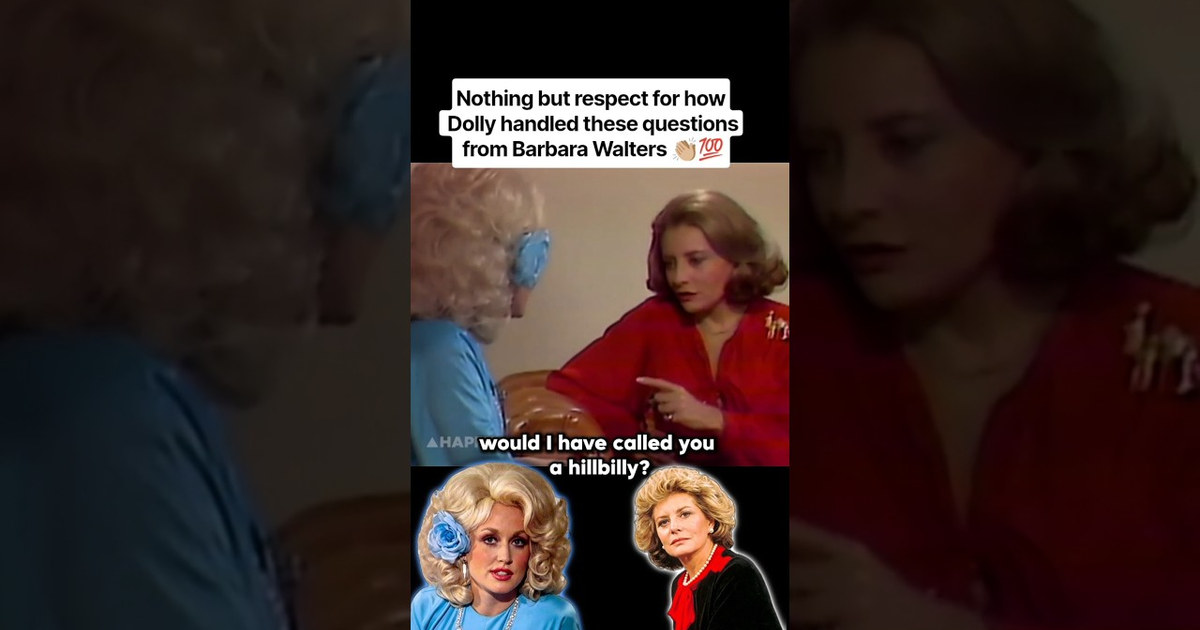
Act 1: The question. “Dolly, where I come from, would I have called you a hillbilly?” It’s a setup. A label. A line drawn in the dirt. The interviewer isn’t being cruel—he’s being honest about where he comes from. But he’s also handing her a stereotype on a plate.
Act 2: The threat. “If you had of, it would have been something very natural, but I would have probably kicked your shins or something.” Boom. The cut lands. It’s playful. It’s physical. It’s a joke—but it’s also a boundary. She doesn’t reject the label. She just makes it clear: you don’t get to use it against me.
Act 3: The laugh. The room breaks. The tension dissolves. And then—the deeper cut.
“But when I think of hillbillies, am I thinking of your kind of people?” he asks. “You probably are,” she says. “The people that grew up where I was were the ones that you would consider the Lil Abner people, Daisy Mae and that sort of thing, but we were very proud people, people with a lot of class. It was country class, but it was a great deal of class.”
There it is. The whole interview in one breath. She doesn’t run from the word. She doesn’t correct him. She takes the frame and re-frames it. “Country class.” Two words that flip the script. Two words that say: your definition doesn’t define me.
As a trailer editor, I’d cut that moment with a hard beat—maybe a freeze frame on her face, a slight push-in, and a music drop. Because it’s not just a punchline. It’s a thesis statement.
Dolly Parton has been doing this since 1967, when she first teamed with Porter Wagoner on The Porter Wagoner Show. She’s been redefining the narrative ever since. In 1980, she starred in 9 to 5—a film that turned secretaries into revenge heroes and made “working 9 to 5” a feminist anthem. Runtime: 109 minutes. Directed by Colin Higgins. She played Doralee Rhodes, a secretary who gets even with her sexist boss. The film was a hit. It proved she could carry a movie. But more importantly, it proved she could take a stereotype—the busty blonde—and make her the smartest person in the room.
Then came 1989’s Steel Magnolias. Runtime: 117 minutes. Directed by Herbert Ross. She played Truvy Jones, a small-town Louisiana beautician who runs a salon out of her home. The film is a tearjerker, but Dolly’s performance is grounded, warm, and wise. She’s the glue. She’s the one who says, “Laughter through tears is my favorite emotion.” That’s country class.
And in 1992, she starred in Straight Talk. Runtime: 91 minutes. Directed by Barnet Kellman. She plays a radio talk-show host who gives advice to callers. It’s a romantic comedy, but it’s also a story about a woman who reinvents herself. She moves to the big city, changes her name, and becomes a voice for others. Sound familiar?
Dolly doesn’t just play characters. She plays the long game. She takes the “hillbilly” label and turns it into a badge of honor. She wears it like a rhinestone. She makes it shine.
And she’s still doing it. In 2019, she released the Netflix anthology series Dolly Parton’s Heartstrings. Eight episodes. Each one based on a song. Each one a story about love, loss, and resilience. She executive produced it. She introduced each episode. She sang the theme. She’s 73 years old and still working. Still creating. Still kicking shins—metaphorically speaking.


