Part 1
The Line That Cuts: 'I'd Have Kicked Your Shins'
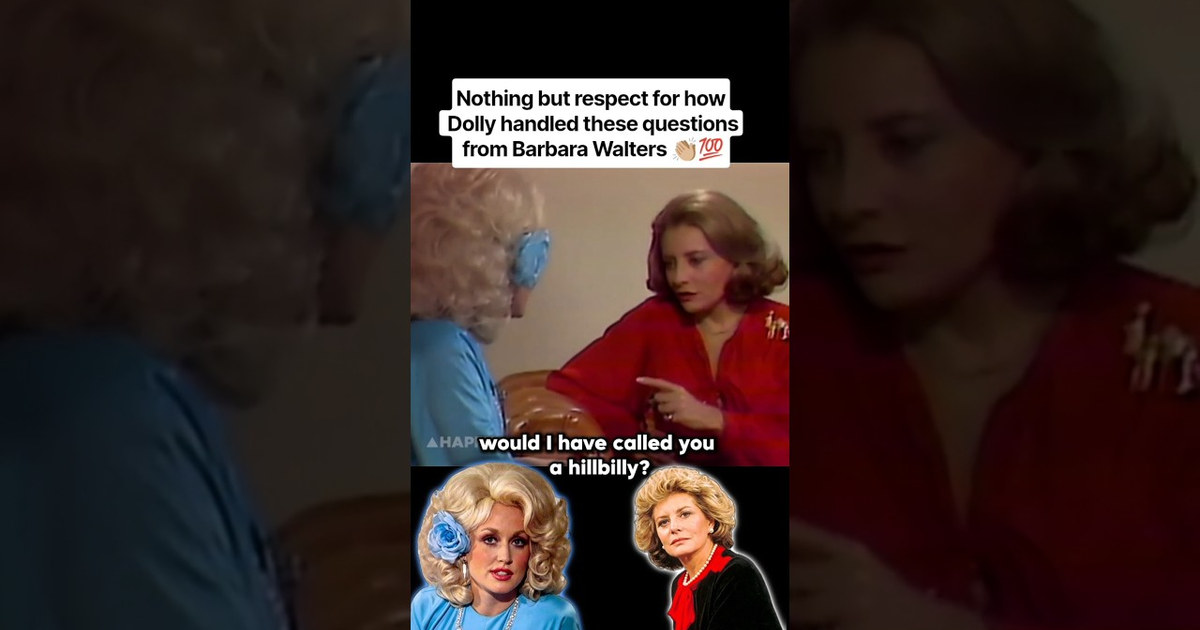
The interviewer leans in. He asks Dolly Parton a simple question. "Where I come from, would I have called you a hillbilly?"
Beat.
Dolly doesn't blink. "If you had of, it would have been something very natural, but I would have probably kicked your shins or something."
Laughter. Real laughter. The kind that catches in the throat. That laugh is the whole movie.
Cut to laugh. Hold. Cut to Dolly's face. She's not joking. Not entirely. The smile is there. The steel is there too. That's the cold open. One line. One reaction. One laugh. It's a three-beat cut: setup, threat, release.
Setup: the word "hillbilly" hangs in the air. Threat: "I'd have kicked your shins." Release: the laugh. But don't let the laugh fool you. The threat was real. The laugh just makes it land.
This is Dolly Parton in conversation. Could be a TV interview. Could be a documentary. Doesn't matter. The frame is tight. The rhythm is perfect. She's not performing. She's responding. And in that response, she defines herself.
She doesn't reject the word "hillbilly." She owns it. Then she adds a physical consequence. That's a character introduction in two seconds. No backstory. No exposition. Just a line and a laugh. You know exactly who she is.
Think about how a trailer editor would cut this. Open on the question. Hold on Dolly's face. She speaks. Cut to the laugh. Hold. Cut back to her. She's still smiling. But the smile says: I meant it. That's the hook.
Dolly Parton has been in the business for over sixty years. She's written thousands of songs. She's acted in films like 9 to 5 (1980), Steel Magnolias (1989), and Straight Talk (1992). She's produced, directed, and starred in TV movies. She's a cultural icon. But in this moment, she's just a woman from the mountains. And she's not apologizing for it.
The interviewer's question is loaded. "Where I come from" — that's a place of judgment. A place where "hillbilly" is an insult. Dolly knows that. She's heard it before. But she doesn't flinch. She doesn't get defensive. She gets even. With a joke. With a threat. With a laugh.
That's the cut. That's the beat. That's the whole movie.
Why does this moment matter? Because it's not just a funny quote. It's Dolly Parton defining herself on her own terms. She doesn't let the interviewer define her. She doesn't let the word "hillbilly" define her. She takes it. She twists it. She throws it back. And she does it with a smile.
That's a masterclass in owning your story. In two seconds, she tells you: I know where I come from. I know what you think of it. And I don't care. Because I'm proud of it. And if you push me, I'll kick your shins.
The laugh is the release. But it's also the weapon. It disarms you. It makes you think she's kidding. But she's not. She's serious. She's just smart enough to make it funny.
This is the Dolly Parton we know. The one who wrote "Jolene" and "I Will Always Love You." The one who built a theme park and a literacy program. The one who says exactly what she means, but makes you laugh while she does it.
But this moment is different. It's raw. It's unscripted. It's a glimpse behind the wig and the makeup. It's the mountain girl who made good. And she's not about to let anyone forget where she came from.
The interviewer asks: "But when I think of hillbillies, am I thinking of your kind of people?"
Dolly answers: "You probably are. The people that grew up where I was were the ones that you would consider the Lil Abner people, Daisy Mae and that sort of thing, but we were very proud people, people with a lot of class. It was country class, but it was a great deal of class and um most of my people were not that educated, but they are very, very intelligent, good common sense, horse sense we called it."
That's the follow-up. That's the second beat. She doesn't just kick shins. She explains. She educates. She tells you who she is. And she does it with pride.
But the first beat is the one that cuts. The shin kick. The laugh. That's the moment that sticks. That's the moment you clip and share. That's the moment that makes you want to know more.
In trailer terms, this is the teaser. The one that plays before the logo. The one that makes you lean forward. The one that says: you're going to want to see this.
And it works because it's real. Dolly Parton isn't acting. She's reacting. She's not reading a script. She's speaking from the gut. And that's why it lands.
The rhythm is setup, threat, release. The interviewer sets it up. Dolly delivers the threat. The laugh releases the tension. But the tension was real. And that's why we remember it.
This is the kind of moment that defines a career. Not the awards. Not the hits. The moments where you show who you really are. Dolly Parton has had many. But this one is special. Because it's so simple. So quick. So sharp.
She doesn't say "I'm proud of where I come from." She shows it. She doesn't say "Don't call me a hillbilly." She says "Call me one and I'll kick your shins." That's a character introduction. That's a thesis statement. That's a cold open.


