Part 2
So when you watch that clip and you laugh—and you should laugh, it is funny—remember what you are actually watching. You are watching a 70-something legend tell a story about a time she was young, broke, and armed in a city that had no idea what to do with her. She won. She always wins. And she does it with a smile.
How Dolly Parton Stays Grounded in a World of Tabloids and Fame
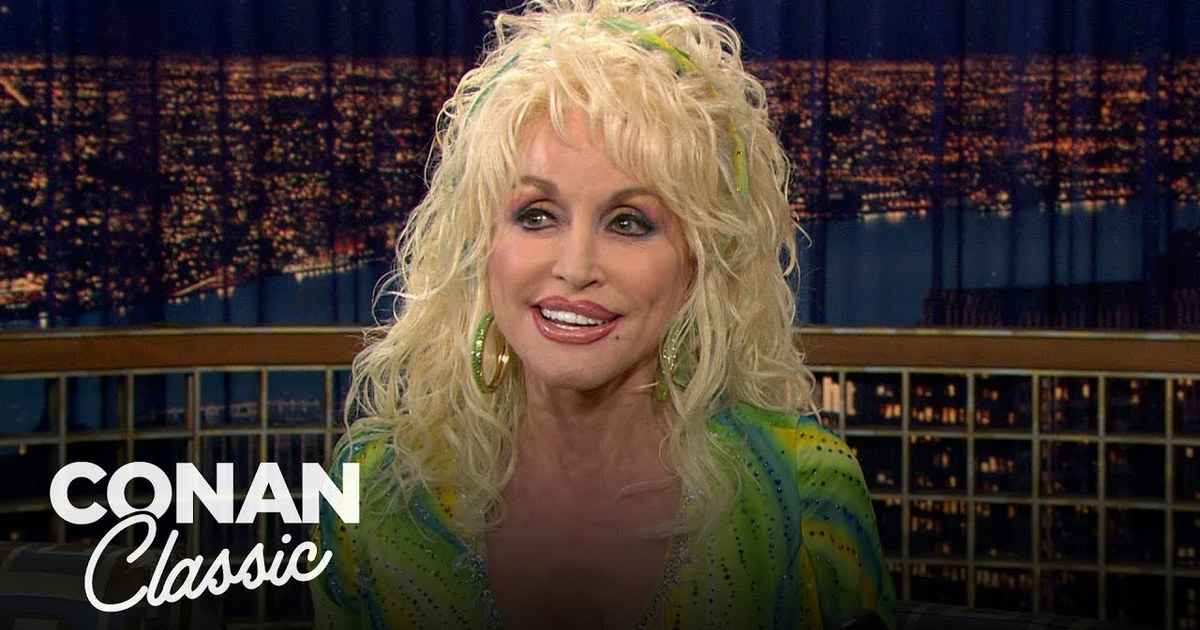
You’ve probably seen the trailer for Dolly Parton’s latest project and thought, “How does she do it?” After decades of surreal success, she remains one of the most beloved and humble figures in entertainment. The New York story proves her resilience, but it also raises a bigger question: How does someone who has achieved such stratospheric fame—chart-topping albums, blockbuster films, a theme park, and a cultural footprint that spans generations—stay so down-to-earth? In a world where tabloids salivate over celebrity meltdowns, Dolly’s grounded nature isn’t just charming; it’s a masterclass in self-preservation. Let’s break down exactly how she pulls it off.
Dolly’s answer is disarmingly simple: she loves what she does, and she’s grateful. “I don’t know how many people really get to live to see their dreams come true,” she says, “but I have a good family, good support system.” That gratitude isn’t a publicity stunt. It’s the bedrock of her entire existence. When you grow up in a one-room cabin in the Smoky Mountains of Tennessee—the fourth of twelve children—you learn early that nothing is guaranteed. Dolly has often said her family was “dirt poor,” but they were rich in love and laughter. That foundation gave her an unshakable sense of self that no amount of fame can erode.
She credits her family for keeping her grounded, and one story in particular illustrates this perfectly. Years ago, her hometown erected a bronze statue of her in the courthouse yard. Dolly was bursting with pride. “I was just bragging, bragging, just because I was proud—not being conceited—but I went on and on about it a little too much,” she recalls. Her father, Robert Lee Parton, listened patiently. Finally, she asked, “Dad, don’t you think that’s great?” He replied, “Yes, I do. I am very, very proud of you. Because I know that to your fans you may be some sort of an idol, but to the pigeons you’re just another outhouse.” That line—equal parts hilarious and humbling—is classic Parton family humor. It’s also a perfect metaphor for Dolly’s philosophy: no matter how high you climb, there’s always something ready to bring you back to earth. In Dolly’s case, it’s a flock of pigeons and a father who refused to let her take herself too seriously.
That grounding influence extends to her inner circle. Dolly has been married to Carl Dean since 1966—a union that has survived decades of tabloid speculation and her own relentless schedule. She’s also fiercely loyal to her siblings, many of whom have worked with her over the years. Her niece, actress and singer Rebecca Seaver, has appeared in Dolly’s projects. And her longtime friend and manager, Danny Nozell, has been by her side through countless ventures. This tight-knit support system acts as a buffer against the noise of celebrity. When you have people who knew you before the rhinestones and the wigs, it’s harder to lose yourself in the hype.
But the tabloids are a different beast. Dolly has been a target for decades, and they’ve written some truly insane things about her. “Lord, I’ve just had everything wrote about me,” she says with a laugh. “They are always talking about my boobs. I don’t know why. They’re not that big—it’s just that I’m little and they’re big in comparison.” The stories range from the absurd to the medically impossible. “They tell all these freak stories about it—that they are so big that I refuse to have them reduced, that they’re ruining my life and my health, that they’re breaking my back. They’ll have things in the tabloids where I’m flat on my back, I can’t move, I can’t get up and down because of the boobs.” Dolly’s response? She laughs it off. “It’s funny, ’cause they do write all these stories that Dolly can’t even get out of bed ’cause her breasts are so big.” Then she delivers the punchline: “They do seem like they’d be heavy, though.” Without missing a beat, she adds, “Well, they are heavy. That’s why I do so many Led Zeppelin songs.” It’s a joke that lands because it’s so unexpected—and because Dolly is in on it.
[[AD]]
That ability to laugh at herself is a superpower. Dolly doesn’t take the tabloids seriously, but she also doesn’t let them define her. She’s mastered the art of acknowledging the absurdity without internalizing it. Compare her to other celebrities who have crumbled under similar scrutiny. Britney Spears in the 2000s is a cautionary tale: constant tabloid coverage of her personal life, her body, and her mental health contributed to a very public breakdown. The media treated Spears’s struggles as entertainment, and the toll was devastating. Dolly, by contrast, has never had a public meltdown. She’s had her share of heartbreak—the death of her father, the loss of close friends, the ups and downs of a long career—but she’s always maintained a sense of perspective. Part of that is temperament. Part of it is the armor she built from humor and self-awareness.


