Part 4
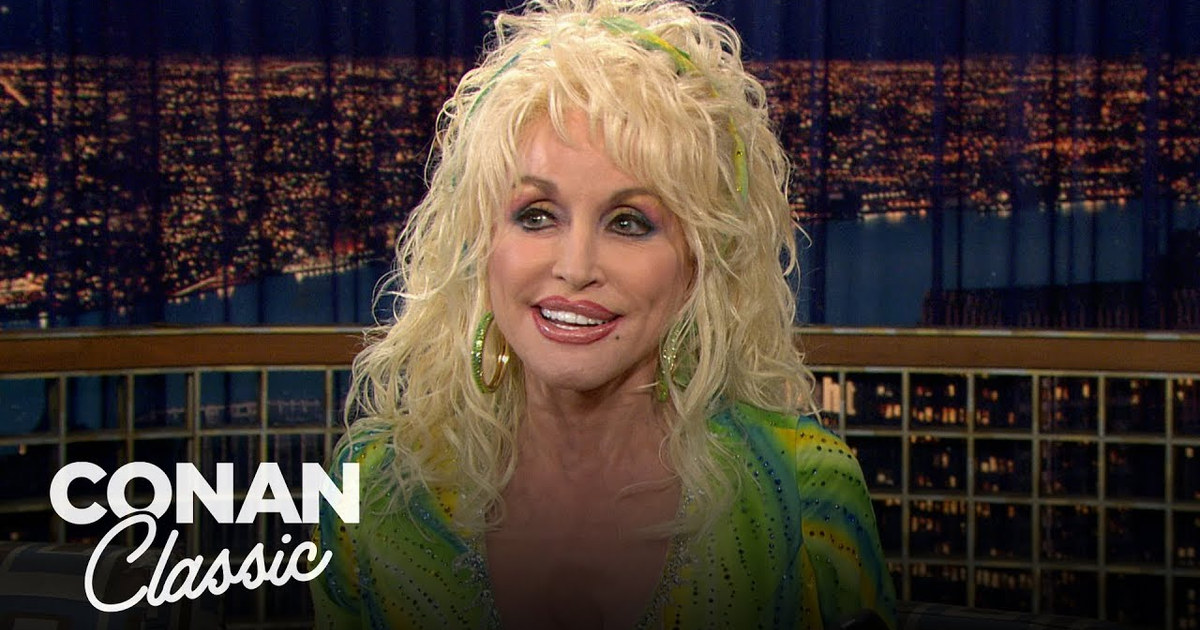
And the Led Zeppelin line isn't just a joke about her chest. It's a joke about range. Dolly Parton covering "Stairway to Heaven" at the 2019 Kennedy Honors — that's a country girl from the Smoky Mountains walking into rock's most sacred text and owning it. The tabloids spent forty years writing about her body. She spent forty years writing her own setlist. Guess which one aged better.
There's a bongo stand joke in the same stretch of the interview, and it lands the same way. She's not defending herself. She's performing. The tabloid story becomes a bit. The bit becomes a laugh. The laugh becomes the only version anyone remembers. That's how you stay grounded in a business that wants to reduce you to a headline: you get to the headline first, and you make it funny.
So when you watch Dolly Parton in any interview from here on out, watch the timing. Watch how fast she turns a hostile question into a callback. Watch how she never raises her voice, never plays the victim, never lets the room get heavy — even when the subject is, literally, heavy. She's been doing this since before most of her interviewers were born, and the tabloids still haven't figured out that they're not the ones writing the story.
What to Watch For: The Dolly Parton Blueprint for Staying Human in Hollywood
The next time Dolly Parton sits down for an interview, watch her eyes the second the first personal question lands. She doesn't flinch. She doesn't pivot to a publicist-approved talking point. She leans in, grins, and tells a story where she is the punchline, not the hero. That's not an accident. That's a lighting setup she's been running since the late 1960s, long before any of today's stars had media coaches telling them to "stay on brand."
I've shot second-unit on enough sets to know that the most powerful thing you can put in front of a lens isn't a filter or a fill light. It's a subject who knows exactly who they are. Dolly Parton is that subject. And her three grounding mechanisms — the gun story, the outhouse line, and the tabloid jokes — form a repeatable blueprint for staying human in a business that usually turns people into mannequins.
Mechanism One: The Gun Story — She's Not a Victim, She's a Problem-Solver
Rewind to that first New York trip in the late '60s or early '70s. Dolly and her friend Judy Ogle get mistaken for hookers, tossed out of their hotel, luggage in the hall. They wind up on 42nd Street, and some guy won't leave her alone. She pulls a gun from her purse and says, "If you touch me one more time, I'm gonna shoot you." He laughs. Judy laughs. The tension breaks. And Dolly later used that exact line in 9 to 5 (1980, directed by Colin Higgins, 109 minutes) — "I'll turn you from a rooster to a hen with one shot."
Watch how she tells it. She's not asking for sympathy. She's not framing herself as a victim of the big bad city. She's the one who solved the problem. That's a key light on her agency, not a soft focus on her fear. In an era when women in country music were often presented as passive, Dolly flipped the script. She was the one holding the gun, the one cracking the joke, the one turning a scary moment into a punchline that ended up in a hit movie.
Mechanism Two: The Outhouse Line — She's Not an Idol, She's a Person
Cut to the courthouse statue in her hometown. Dolly was so proud of that bronze likeness that she bragged about it a little too much. Her dad, Robert Lee Parton, brought her back to earth with one line: "To your fans you may be some sort of idol, but to the pigeons you're just another outhouse." That's a masterclass in grounding, delivered by a man who never needed a media consultant.
Watch for that same energy whenever Dolly talks about her success. She'll thank her family, her support system, her faith. She'll call herself grateful, not great. That's not false modesty — that's a woman who knows the difference between a statue and a soul. In a town where everyone's trying to build a monument to themselves, Dolly's over here laughing about pigeon poop. That's the kind of authenticity that can't be manufactured in a PR meeting.
Mechanism Three: The Tabloid Jokes — She's Not a Target, She's the One Telling the Joke
Then there's the tabloid saga. For decades, the rags have written absurd stories about her breasts — that they're so big she can't get out of bed, that they're ruining her health, that she refuses to have them reduced. Dolly's response? She jokes about it. "They're not that big," she says. "It's just that I'm little and they're big in comparison." She even turns it into a Led Zeppelin punchline. She controls the narrative by mocking it before anyone else can.
Watch how she never lets the tabloids make her the victim. She's the one holding the pen, writing the joke. That's a deliberate media strategy — one she's been running since the late '60s and early '70s, long before "media training" was a thing. Most celebrities react to tabloids with anger or silence. Dolly reacts with a wink and a one-liner. That's not just charm; it's armor.
The Repeatable Strategy — And Why It Still Works
Any public figure could copy this blueprint. Answer personal questions with a self-deprecating story. Turn your flaws into punchlines. Never let the camera convince you you're more than human. But few do it as consistently as Dolly, and even fewer have been doing it for over fifty years. She started in country music in the late '60s, crossed over to pop, starred in 9 to 5, and is still collaborating with modern pop stars and showing up in global headlines. She's not a nostalgia act. She's a working artist who never lost the plot.
That's the Dolly Parton blueprint: be the problem-solver, not the victim; be the person, not the idol; be the one telling the joke, not the target. It's a strategy that works in any era, but Dolly's been running it since before most of today's celebrities were born. And that's why she remains the most grounded superstar in Hollywood.
Next time, we'll look at another celebrity who tried to copy the Dolly playbook and failed — and what that failure reveals about authenticity in the age of social media. Because in a world of curated feeds and scripted apologies, Dolly's superpower isn't her voice or her songwriting. It's that she never let the camera convince her she was anything other than a country girl from Tennessee with a good sense of humor.


